
Giu: Giu is a demon from Mandaean mythology who dwells in the World of Darkness.
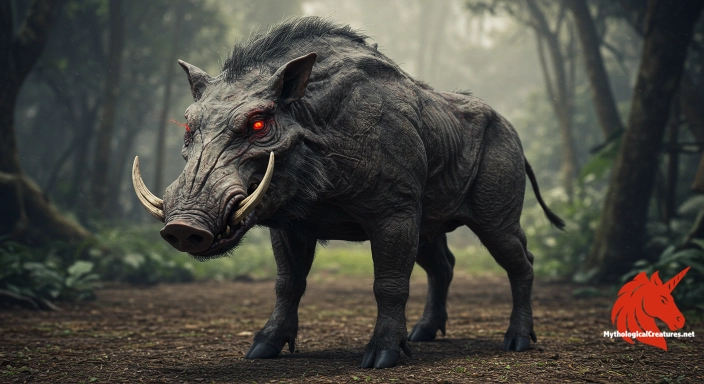
-227996a8-c562-416e-adec-02028643f851_small.webp "Giu - Giu represents the demonic forces within the Mandaean cosmological framework and is a symbol of the eternal struggle between light and darkness.")
Giu
Giu - Giu represents the demonic forces within the Mandaean cosmological framework and is a symbol of the eternal struggle between light and darkness.
Origins & First Encounters
Giu emerges as a distinct demonic presence within the intricate cosmology of Mandaeism, inhabiting the mysterious World of Darkness. His character is interwoven with themes of dualism where the struggle between light and shadow underpins the religion’s theological fabric. First attested in the canonical texts of the Right Ginza, Giu occupies a role emblematic of forces that oppose spiritual ascendance. His appearance during Hibil Ziwa’s descent into the underworld underlines the perpetual conflict between purity and corruption. The origins of this demon are not exhaustively described, yet his inclusion reflects an ancient belief in the inevitability of evil within cosmic order. Over time, the figure of Giu has come to symbolize more than mere malevolence, instead representing the necessary counterbalance to divine light. The narrative context in which he is placed continues to influence interpretations of morality and cosmic justice in Mandaean thought. Embedded within a wider dualistic worldview, his myth serves as a reminder of the eternal interplay between order and chaos.
Source Texts & Tale Variants
The primary literary reference to Giu is found in the Right Ginza, one of the central texts of Mandaean tradition, where he is encountered by the divine figure Hibil Ziwa. This text, particularly in Chapter 1 of Book 5, offers a glimpse into the structured realm of darkness and the complex hierarchy of demonic forces. Other fragments of Mandaean literature, though less explicit, hint at a broader tapestry of demonology that includes Giu as a pivotal figure. Over time, oral traditions and varied scriptural commentaries have enriched his story, contributing to multiple narrative variants. In some recensions of the Right Ginza, slight discrepancies in his portrayal suggest that Giu might have been interpreted in different ways by divergent communities. These variants have sparked discussions among scholars regarding his true nature and the extent of his influence in the underworld. The enduring narrative of Hibil Ziwa's descent, in which Giu plays an essential role, underscores the importance of such encounters in articulating cosmic boundaries. While the canonical sources offer only a concise portrayal, the gaps have allowed later traditions to expand upon Giu’s role and significance.
Form & Powers
Descriptions of Giu’s appearance are primarily symbolic, with ancient texts offering few explicit physical details. He is often envisaged as a formidable, shadow-like entity, his form merging seamlessly with the pervasive darkness of the underworld. Some interpretations suggest that his figure possesses an ambiguous blend of human and bestial features, evoking an unsettling presence that defies ordinary description. Imagined with elongated limbs and a shifting, almost amorphous body, he appears as an embodiment of forbidding power. Later artistic renditions have even suggested the inclusion of horns, wings, or fanged visages to intensify his demonic character. Variations in his depiction across different manuscripts hint at a fluidity of form, where his physicality adapts to the narrative needs of his role as a guardian of darkness. The subtle details, such as a faint, otherworldly glow or an aura of oppressive shadow, serve to symbolise the inexorable connection between his being and the underworld. Even with limited original descriptions, the accumulated imagery surrounding Giu has contributed to a richly textured, if enigmatic, physical portrait.
Regional Faces
Although Giu is rooted in the specific cosmological framework of Mandaeism, his myth has traversed regional boundaries and absorbed local interpretations. In areas where Mandaeism intermingled with the cultural traditions of the Iranian plateau and Mesopotamia, his attributes sometimes acquired additional symbolic layers. Localised renditions have often amplified his association with malevolence and the ominous power inherent in the dark realms. As communities adapted the myth to their own religious and cultural settings, Giu occasionally merged with local demonology, reflecting similarities with indigenous spirits of darkness. Such syncretic transformations have led to variant portrayals wherein his character is sometimes portrayed with a more nuanced moral ambiguity. In some traditions, narratives present Giu not only as an adversary to divine light but also as a necessary force in maintaining cosmic equilibrium. Regional folklore has enriched his story with vivid cautionary tales, transforming him into a cultural emblem that warns against the perils of straying from righteousness. These diverse adaptations underscore the flexibility of his myth, which continues to evolve in response to the local beliefs and artistic expressions of different communities.
Cultural Parallels
In the broader landscape of mythological demonology, Giu’s role resonates with similar dark entities found in other cultural traditions. His presence in the underworld draws intriguing parallels with the embodiment of evil in Zoroastrianism, where forces such as Ahriman represent the antithesis of divine order. Like many demons in ancient lore, Giu stands as a personification of the chaotic elements that challenge spiritual ascendance and moral rectitude. The narrative of a hero’s descent to confront dark forces evokes echoes of journeys in Greek and Near Eastern mythologies, where encounters with shadowy guardians are a recurrent motif. This comparative framework highlights a universal archetype: that of a dark sentinel guarding the boundary between the worlds of light and shadow. In many traditions, such figures are instrumental in defining the moral and existential limits within the cosmos. The shared symbolism found in these diverse mythologies underscores deep, cross-cultural perceptions of good and evil. As scholars compare these narratives, it becomes evident that Giu’s myth occupies a unique yet interconnected niche within the expansive spectrum of ancient demonology.
Legacy & Modern Evolution
The figure of Giu has undergone a significant evolution from its early attestations in the sacred texts of Mandaeism to its presence in modern cultural expressions. Initially portrayed as a stark embodiment of darkness, his character served as a vital counterbalance in a cosmology that revered the eternal struggle between light and shadow. Over time, commentaries and reinterpretations have imbued Giu with layers of symbolism that extend well beyond his original narrative function. In contemporary art, literature, and even film, he is occasionally reimagined as a complex force that encapsulates both the terror and allure of the unknown. Modern interpretations often explore his myth as a representation of the internal battle between light and darkness within the human psyche. This enduring legacy highlights how an ancient demonic archetype can be recontextualised to address timeless questions about the nature of evil and the dualities of existence. Continued scholarly interest in Giu contributes to a deeper understanding of ancient religious visions while also inspiring creative adaptations in popular culture. The evolution of his portrayal thus reflects a dialogue between tradition and modernity, ensuring that the symbolic power of Giu remains relevant and thought-provoking today.
Interesting Fact
Giu’s confrontation with Hibil Ziwa in the Right Ginza is a pivotal moment, symbolising the encounter between celestial light and primordial darkness in Mandaean cosmology.
Partner with Mythological Creatures
Bring your myth-based world into ours
From game settings to narrative worlds, we work with partners who treat myths with care. Share your project for a potential sponsor slot.
Partner with usQuick Creature Info
Origin:
Associations:
Our Mythic Legendary Rating:

Also Sometimes Known As:
Habitat:
Supernatural Powers:
Abilities:
Behavior:
Lore:
References
Discover Another Mythical Legend You May Not Have Heard Of?
Uncover the mysteries of ancient folklore and expand your knowledge of legendary beings from cultures around the world.
Dare to Meet the Babi ngepet....
Curated by the Mythological Creatures Team
Series editor: Mythological Creatures Directory
Primary desk: Hellenic & Ancient Mediterranean Desk
(rev. November 2025)