
La Llorona: La Llorona is a notorious vengeful ghost from Mexican folklore.
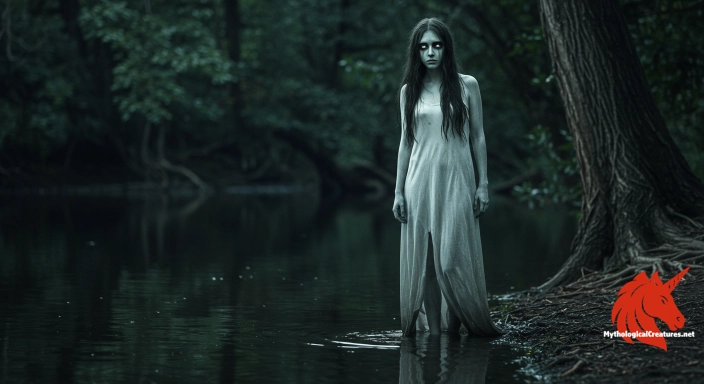
La Llorona
La Llorona - La Llorona serves as a warning against the consequences of jealousy, infidelity, and the loss of familial bonds, while also embodying the tragedy of maternal grief.
Origins & First Encounters
La Llorona is one of Latin America’s most enduring and enigmatic folkloric figures, cast as a tormented spirit whose eternal weeping haunts riverbanks and quiet streams. Born from a blend of indigenous myth and colonial-era narratives, her tale reflects the complex interplay of cultural identities and moral imperatives. Legends recount a heart-wrenching origin in which a woman, overwhelmed by jealousy and despair, committed the unthinkable act of drowning her own children. Over time, her story morphed from a cautionary moral tale into a richly layered narrative of loss, guilt, and punishment for transgressions. Oral traditions from rural Mexican communities tell of her restless wandering, ever in pursuit of redemption or eternal sorrow. Her legacy is rooted in both pre-Columbian rituals and the harsh realities imposed by colonial society, which amplified the moral dimensions of her myth. Often served as a warning to those who stray or act immorally, her lament has been passed down through countless generations. In every whispered recounting, La Llorona becomes a symbol of the profound consequences of human emotions gone awry.
Source Texts & Tale Variants
The story of La Llorona is woven from a rich tapestry of oral traditions, folktales, and literary retellings spanning several centuries. Among the earliest surviving accounts are those that emerged during colonial times, where Spanish chroniclers documented local legends that exposed the stark realities of societal transgressions. Over time, folk storytellers and bards refined her narrative, each adding their own local flavour and moral undertones. Variations of her tale can be found in traditional ballads, local ghost stories, and even in modern reinterpretations found in contemporary novels and films. Some narratives portray her as a wrathful spectre while others imbue her with an overwhelming sense of tragic loss. Different communities have emphasised various elements of her story, from the jealousy that drove her actions to the perpetual mourning that marks her curse. The multiplicity of sources reflects not only the widespread appeal of her legend but also the adaptability of her story to diverse cultural contexts. This diversity of accounts underscores how La Llorona has evolved into a multifaceted figure, resonating with audiences as both a ghostly warning and a tragic heroine.
Form & Powers
Visually, La Llorona is often depicted as a striking and spectral figure, draped in flowing garments that mirror her eternal grief. Her attire tends to vary from pristine white dresses symbolising lost innocence to darker, more tattered robes that evoke the despair of her tragic fate. Many accounts highlight her ghostly pallor, where her face is rendered almost translucent, reflecting the torment of a spirit caught between worlds. Long, dark hair cascades down her back in unkempt strands, sometimes appearing wet as though still stained by the tears of her lament. Her eyes, frequently described as hollow or glowing with an inner sadness, offer a window into the boundless sorrow that has come to define her existence. In some retellings, a faint aura or shimmering glow surrounds her, suggesting an ethereal quality that blurs the line between life and death. Descriptions suggest that despite her often gaunt appearance, there exists an unsettling grace and dignity in her stance, as if bearing the weight of endless remorse with resilience. These detailed portrayals contribute to the haunting visual legacy of La Llorona, making her one of the most memorable figures in supernatural lore.
Regional Faces
The legend of La Llorona varies significantly across geographical regions, each adding unique nuances that reflect local culture and values. In Mexico, her story is deeply embedded in community traditions, where riverbanks and lakes serve as natural stages for her nightly lament. In contrast, in parts of the Southwestern United States and Central America, her tale is interwoven with local warnings against misbehaviour and environmental dangers. Some communities reframe her narrative to focus on the tragedy of a mother overwhelmed by grief rather than solely a figure of malevolence. In regions where indigenous beliefs prevail, La Llorona may be linked with powerful nature deities or spirits, thereby adding layers of cosmic significance to her story. Variations in her depiction—from a vengeful spectre to a sorrowful, almost passive wanderer—reflect the differing emphasis on morality and fate in each locale. Local adaptations often merge her legend with other regional ghost stories or incorporate unique folkloric motifs to address specific communal concerns. This broad spectrum of variations highlights the adaptability of her myth, which continues to serve as a cultural mirror for the values and fears of diverse communities.
Cultural Parallels
Across the globe, La Llorona stands alongside several other mythological figures whose stories intertwine the themes of maternal loss, supernatural warning, and eternal penance. Figures such as the Irish banshee and the weeping banshee of Celtic lore share with La Llorona an ability to foretell misfortune through their mournful cries, marking them as spectral harbingers of sorrow. These international parallels underscore a common cultural fascination with the tragic fate of women compelled by overwhelming emotion. Like La Llorona, many of these figures are both revered and feared, embodying the duality of nurturing care and the repercussions of unchecked despair. The comparative analysis reveals that while regional contexts vary, the essential motif of a sorrowful woman whose personal tragedy resonates with wider communal anxieties is remarkably consistent. This enduring narrative archetype underscores universal concerns about loss, betrayal, and the limits of human agency. In various mythologies, the transformation of personal anguish into a spectral presence serves as a metaphor for the aftermath of societal and familial breakdowns. Thus, La Llorona’s legend not only captivates through its own narrative but also enriches a broader tapestry of mourning and caution that spans continents and cultures.
Legacy & Modern Evolution
Over the centuries, the portrayal of La Llorona has undergone significant evolution, reflecting shifts in cultural attitudes and social norms. Originally rooted in cautionary oral traditions, her narrative was once primarily used to warn children and ill-behaved adults of the dire consequences of moral transgressions. In more recent times, however, artists and writers have reinterpreted her story as a complex interplay between grief, guilt, and the struggles against societal oppression. Modern depictions often cast her as a symbol of resistance against patriarchal constraints, highlighting both her vulnerability and the power dynamics inherent in her tale. Contemporary film and literature present her not solely as a fearsome ghost but also as a tragic figure caught in the tension between redemption and damnation. This evolution in interpretation reflects broader conversations about identity, gender, and the repercussions of lost opportunities for change. Today, La Llorona continues to inspire a myriad of creative works, from graphic novels and feature films to performance art and music, each reimagining her legacy in a modern context. Her lasting presence as a cultural icon speaks to the profound human connection with stories of loss, transformation, and the haunting echoes of unresolved grief.
Interesting Fact
A notable aspect of La Llorona’s legend is the duality in her portrayal as both a cautionary figure and a tragic victim, illustrating deep cultural themes of loss, guilt, and retribution.
Support the directory
Promote your myth project and fund more research
Sponsor placements help keep this directory growing and free to use while giving your work a focused, relevant audience.
Learn how sponsorship worksQuick Creature Info
Origin:
Features:
Associations:
Our Mythic Legendary Rating:

Also Sometimes Known As:
Habitat:
Supernatural Powers:
Physical Attributes:
Abilities:
Behavior:
Lore:
Related Creatures, Tales or Lore
- LLady in White
- LLa Sayona
- BBanshee
References
Discover Another Mythical Legend You May Not Have Heard Of?
Uncover the mysteries of ancient folklore and expand your knowledge of legendary beings from cultures around the world.
Dare to Meet the Macha....
Curated by the Mythological Creatures Team
Series editor: Mythological Creatures Directory
Primary desk: Americas & Indigenous Traditions Desk
(rev. November 2025)