
Weiße Frauen: The Weiße Frauen are enigmatic, elf-like spirits from German folklore.
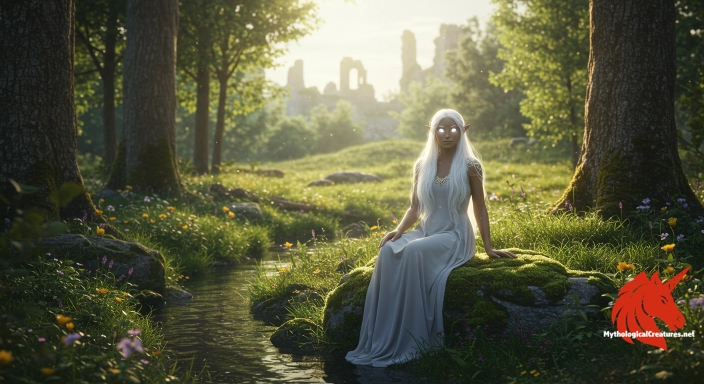
Weiße Frauen
Weiße Frauen - They represent the enduring legacy of pre-Christian beliefs and the interplay between enchantment and mortal reality.
Origins & First Encounters
The Weiße Frauen emerge from a rich tapestry of folklore, embodying the enigmatic spirit of ancient Germanic paganism and the luminescence of light elves. Their origins are interwoven with primordial beliefs that celebrated nature’s mysteries through ethereal beings, and they first appear in narratives dating back to the Middle Ages. The legends speak of their divine beauty and enchanting presence, often witnessed at the zenith of the day when the sun casts its warm glow. Tales portray them as both haunting and benevolent, inviting mortals to engage with forces beyond comprehension. Their depictions blend the human with the supernatural, suggesting that these beings bridge the worlds of the living and the mysterious. The legends carry an undercurrent of melancholy and a sense of unfulfilled longing, as they are forever bound by enchanted spells. Their mystique is amplified by the ambiguous nature of their interactions with mortals, challenging the boundaries of time and tradition. The enduring allure of the Weiße Frauen lies in their ability to symbolise both beauty and sorrow, reflecting deeper truths about the human experience. Their myth continues to inspire awe and curiosity, standing as a testament to the rich cultural heritage of German folklore. Over centuries, these legends have evolved yet maintained core elements that continue to fascinate modern audiences.
Source Texts & Tale Variants
The narrative of the Weiße Frauen is preserved through a diverse range of ancient texts and oral traditions, vividly illustrating the evolution of myth through ages. Early attestations are found in medieval manuscripts and folklore records, which recount the captivating sightings of these spectral figures across Germany and neighbouring regions. Variants of the legends are also discernible in Dutch sources, particularly those referring to the Witte Wieven, a name that intriguingly blends the notions of wisdom and the colour white. In these documents, the elusive figures are simultaneously revered and cautioned against, highlighting a duality that underpins their myth. The stories have been recast countless times in local ballads, folk tales, and even in literary anthologies that reflect the transition of mythology over time. Each version subtly shifts the focus from benevolence to mystery, offering unique insights into the cultural context of their origin. Some sources depict them as guardians of secret treasure, while others note their routine appearances in serene natural settings. The variety of sources contributes to a multifaceted portrait of these beings, capturing both their mysticism and their inherent elusiveness. The richness of these narratives underscores the importance of oral tradition, whereby details are passed down and transformed from one generation to the next. Each recounting, whether steeped in poetic imagery or somber caution, adds a new dimension to our understanding of the Weiße Frauen.
Form & Powers
The physical portrayal of the Weiße Frauen is marked by an ethereal elegance that distinguishes them from ordinary human forms. They are frequently described as possessing a luminous complexion, with skin that seems to reflect the soft light of dawn or the glint of moonbeams. Their eyes are often depicted as deep and reflective, exuding both a timeless wisdom and a hint of melancholy. Flowing, long hair cascades with a silken quality, evoking images of silver streams or strands of light dancing in the breeze. Their attire is typically rendered as diaphanous garments that merge seamlessly with the hues of the sky and the gentle blush of the natural world. Some traditions suggest subtle size variations, occasionally portraying these figures as slight and fairy-like, while in other legends they appear in human proportions with an air of regality. The delicate balance of form and fashion in their depictions bespeaks a natural, almost untouchable beauty. The interplay of shadow and light across their figures reinforces their connection to celestial forces and ancient rites. Each detailed description invites the observer to contemplate the boundary between mortal beauty and divine enigma.
Regional Faces
The myth of the Weiße Frauen takes on a variety of hues when viewed through different regional prisms, each contributing its own local flavour to the legend. In many parts of Germany, these beings are closely associated with ancient castle ruins and secluded groves, where they appear as ethereal keepers of lost secrets. Nearby, in the Dutch tradition, the figures are often known as Witte Wieven, reflecting interpretations that emphasize wisdom and ancestral knowledge as much as spectral beauty. In regions with strong Alpine influences, the legends incorporate elements of rugged landscapes and mystic mountain passes, casting these beings as guardians of nature’s sanctuaries. Local adaptations sometimes accentuate their connection with water, depicting them bathing in clear brooks or emerging from mist-shrouded lakes. Variations in narrative style have resulted in portrayals that range from ominous warnings to gentle, guiding presences. Some communities emphasise a more matronly aspect, imbuing the Weiße Frauen with a nurturing, albeit enigmatic, quality. Despite these differences, the core motif of an ethereal, almost otherworldly presence remains a unifying theme across regions. Each retelling adds layers of local symbolism and practical context, ensuring that the myth adapts to its cultural environment. The regional diversity only deepens the overall mystique and complexity of these legendary figures.
Cultural Parallels
Across various mythological traditions, the Weiße Frauen find intriguing parallels with a host of other supernatural feminine entities. Comparable to the Bean-Sidhe of Celtic mythology, these figures exhibit an ethereal charm mixed with an elusive, sometimes foreboding nature. They share similarities with the fairytale apparitions found in Scandinavian lore, particularly in the depiction of light-infused elves or Ljósálfar who embody both illumination and mystery. In the realm of Slavic myths, echoes of the Rusalka can be detected, particularly in how both types of spirits are intertwined with water and nature. These cultural resemblances point towards a common archetype of elegantly mysterious women who straddle the frontier between the mortal and the ethereal. The recurring motifs, such as radiant beauty, an ambiguous moral nature, and a deep connection to the natural world, resonate through diverse mythologies. Such interlinkages underscore the universality of mythological narratives that explore the tension between beauty and peril. As different cultures have historically grappled with forces beyond their control, similar figures arose to personify the unpredictable interplay of fate and nature. This comparative framework helps to contextualise the Weiße Frauen within a broader tapestry of mysterious female entities. The cross-cultural echoes emphasise both shared human experiences and the unique nuances that differentiate regional legends, enriching the collective mythos with layered meanings.
Legacy & Modern Evolution
The historical evolution of the Weiße Frauen reflects shifting societal attitudes, where medieval mystique has gradually blended with contemporary reinterpretations. Originally immortalised in dark, enigmatic folklore and cautious oral tradition, these figures have become symbols of an enduring and adaptable mythic past. Over the ages, their spectral images have been re-imagined not only as haunting apparitions in crumbling castles but also as icons resonating with themes of nature and feminine resilience. In modern literature and art, they are often depicted as both enigmatic and empowering, bridging the gap between ancient superstition and current cultural expressions. Contemporary portrayals tend to highlight their dual nature—capturing the beauty and isolation of their original myths while infusing them with a sense of personal agency. Television, film, and digital media have all contributed to a revitalisation of their legend, positioning them as timeless muses that challenge established narratives. Modern scholarship and creative reinterpretation have both embraced and critiqued their portrayal, lending fresh perspectives on age-old warnings and the empowerment narrative that accompanies them. The Weiße Frauen now serve as a versatile symbol, reflecting the interplay of tradition and modernity. Their legacy, therefore, is not a static relic but a continuously evolving tapestry that mirrors the dynamic relationship between humanity and the mysteries that lie beyond tangible reality. In this way, the myth endures, adapting to contemporary values while preserving its ancient, alluring essence.
Interesting Fact
An interesting aspect of the Weiße Frauen is the dual interpretation of their name; while translated as 'White Women' for their ethereal beauty, the original term 'Wise Women' suggests a legacy of deep, enigmatic wisdom.
For indie creators
Give your myth project a permanent home
Indie authors, artists, small studios, and makers can secure an annual, non-intrusive sponsor slot that meets readers where they explore.
Obtain more informationQuick Creature Info
Origin:
Associations:
Our Mythic Legendary Rating:

Also Sometimes Known As:
Habitat:
Supernatural Powers:
Physical Attributes:
Abilities:
Behavior:
Lore:
Related Creatures, Tales or Lore
- LLjósálfar
- HHuldra
- FFairy
References
Discover Another Mythical Legend You May Not Have Heard Of?
Uncover the mysteries of ancient folklore and expand your knowledge of legendary beings from cultures around the world.
Dare to Meet the Orphan Bird....

Curated by the Mythological Creatures Team
Series editor: Mythological Creatures Directory
Primary desk: Northern & European Folklore Desk
(rev. November 2025)