
Xezbeth: Xezbeth is a demon renowned for its deceitful nature and mastery in fabricating false legends.
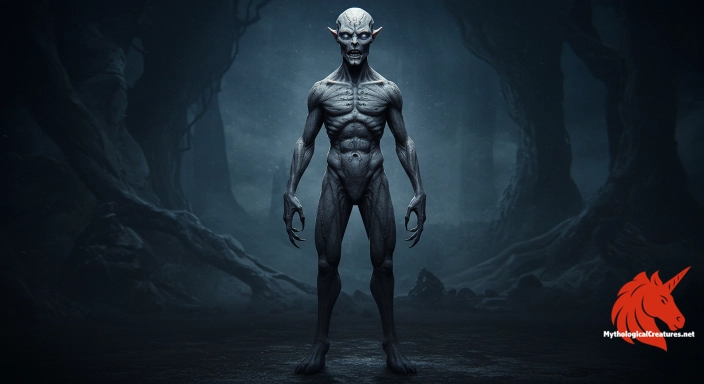
Xezbeth
Xezbeth - Xezbeth embodies the concept of deception in myth, illustrating the power of false narratives and the destabilizing effect of lies in both celestial and mortal realms.
Origins & First Encounters
Xezbeth, also known as Shezbeth, emerges from the shadowy corridors of demonology as a singular embodiment of deceit and the crafting of false tales.
The demon’s origins are steeped in ancient occult traditions where myths intertwine with cautionary narratives about the perils of baseless lies.
Its Arabic name, al-Kadhāb, meaning 'The Liar', encapsulates the very essence of its nature—a being dedicated to the invention of untrue tales and the corruption of truth.
Although it first appears prominently in 19th-century occult literature, its roots may well extend back to earlier folkloric traditions that warned against the seductive allure of deception.
The figure of Xezbeth occupies a complex cultural space, simultaneously revered and reviled as he disrupts the boundary between myth and reality.
Legends frequently portray this demon as a force that delights in subverting conventional wisdom, challenging the audience to discern fact from fiction.
Its myth serves as a symbolic reflection on the instability of truth in human society, urging caution against the acceptance of easy falsehoods.
Countless disciples are ascribed to its chaotic influence, suggesting a network of deception that spans the unseen realms of the occult.
The enduring allure of Xezbeth lies in his ability to mirror the timeless conflict between veracity and illusion.
Source Texts & Tale Variants
The primary narrative of Xezbeth finds its earliest detailed mention in Collin de Plancy’s Dictionnaire Infernal, a seminal work that catalogues myriad demonic entities with vivid descriptions of their roles and attributes.
In this influential text, the demon is portrayed not merely as a creature of chaos but as an architect of lies, whose endless disciples contribute to an intricate web of deceit.
Beyond the pages of the Dictionnaire Infernal, various grimoires and occult manuscripts have alluded to a similar spirit, though the specifics of his myth differ from one source to another.
The diversity of references allows for a range of interpretations, some emphasising his role as a corrupter of human expectation while others focus on his mystical aspect as a purveyor of untruth.
Several story variants depict Xezbeth as an ever-changing presence, whose elusive nature challenges investigators to separate historical fact from the elaborate fabrications he himself inspires.
The multitude of accounts in period texts, both obscure and celebrated, underscores the demon’s significant impact on the study of occult lore.
Some regional compilers have incorporated local embellishments into his tale, thus enriching the overall narrative with distinct flavours of mystery and mischief.
Despite the limited direct references, the consistent motif of innumerable disciples dedicated to his cause has cemented his status as an iconic figure among demonologists and myth enthusiasts alike.
This layered tapestry of sources contributes to our contemporary understanding of Xezbeth’s role in the broader mythological landscape.
Form & Powers
Although early texts offer few details about Xezbeth’s appearance, imaginative interpretations suggest that his form is as elusive and mutable as the lies he weaves.
Some depictions envision him as a being composed of shifting shadows and indistinct silhouettes, evoking the transient nature of deception.
Transient glimmers of form hint at piercing, enigmatic eyes that seem to reveal both mischief and malice beneath ever-changing features.
The demon is sometimes portrayed with skin that shimmers like dark, cryptic ink, embossed with patterns that might resemble ancient symbols or indecipherable runes.
In some accounts, wisps of smoke or tendrils of shadow dance about his form, giving him the appearance of an ethereal trickster who defies the confines of physical reality.
Occasional descriptions include subtle hints of animalistic features, such as delicate horns or an unsettling, asymmetrical visage, which serve to reinforce his otherworldly nature.
This fluidity in his physical depiction symbolises not only the deceptive nature of his tales but also the idea that truth itself is rarely fixed.
The variability of his size—from a compact, almost inconspicuous presence to an overwhelming, towering figure—mirrors the spectrum of deceit that can either whisper in a shadow or overwhelm the senses entirely.
Every narrative detail contributes to a portrait of a creature whose very appearance is designed to confound and beguile, much like the false stories he is famed to invent.
Regional Faces
Across diverse cultural landscapes, Xezbeth’s myth adapts to local traditions, each imbuing him with attributes that resonate with regional conceptions of deceit.
In Arab cultures, his name, al-Kadhāb, is intertwined with local legend, and he is often envisaged as a spectral trickster whose cunning subverts not only truth but also social order.
Some traditions merge his character with that of jinn or other enigmatic spirits, highlighting an intrinsic connection between mischief and the supernatural in the folklore of the region.
Meanwhile, in Western occult literature, particularly within French traditions, the demon’s elusive nature is emphasised, portraying him as a master of layered untruths whose influence is nearly impossible to quantify.
This regional plurality illustrates how societies have historically used Xezbeth as a personification of the dangers inherent in the spread of lies and misinformation.
Local adaptations may also cast him as a cautionary emblem, provoking reflection on the moral decay that can accompany the unchecked proliferation of false narratives.
Each cultural variant adds a unique hue to the demon’s overall image, whether by incorporating elements of local myth or by connecting him to broader themes of cosmic trickery.
The interplay between universal and localized traits in his depiction emphasises that the struggle against deceit is a shared human concern, transcending geographical boundaries.
This dynamic interaction between cultures ensures that the legend of Xezbeth remains both richly contextual and continually evolving.
Cultural Parallels
Xezbeth occupies a fascinating niche when compared to trickster archetypes and deceptive spirits from around the world, offering a vivid exploration of how different cultures interpret the concept of falsehood.
His association with the invention of untrue tales draws a natural parallel with figures like the Norse god Loki or the cunning coyote of Native American lore, each embodying the complex interplay of mischief and wisdom.
While many such figures are celebrated for their ability to disrupt order, Xezbeth stands apart by symbolising the dangers of deception itself, rather than its transformative or humorous aspects.
This distinctive focus on falsehood creates a thematic bridge linking him not only to mythic tricksters but also to cautionary figures who warn against the erosion of truth in society.
His narrative echoes through various cultural canons, reinforcing recurring motifs of trickery and the perilous allure of fabricated realities.
Comparative myths reveal similar warnings about the corrosive impact of persistent deceit, whether in ancient fables or modern parables.
The cross-cultural presence of such figures enriches the understanding of how fundamental the concept of deception has been in shaping societal values and personal morality.
These analogues offer fertile ground for analysing the universal tension between truth and illusion that pervades human storytelling.
In many respects, Xezbeth serves as a symbolic nexus where mythical narratives of cunning and deceit converge, offering insights into the shared human experience of navigating complex social truths.
Legacy & Modern Evolution
Over the centuries, the myth of Xezbeth has evolved from a character in esoteric grimoires to an enduring symbol whose lessons remain relevant in modern discourse.
Early depictions in the annals of demonology painted him as a sinister architect of lies, whose influence was as vast as it was unknowable.
As the narrative matured, his image began to transform—adapting to the intellectual and cultural anxieties of successive eras.
In more recent times, Xezbeth has come to embody the modern dilemmas surrounding misinformation and the manipulation of truth, reflecting concerns that resonate deeply in an age dominated by digital communication.
Literature, art, and even film have reimagined his persona, often portraying him as a metaphor for the pervasive spread of unfounded narratives in contemporary society.
This evolution from an occult demon to a cultural symbol of deceit underscores a broader shift in how myth interprets and incorporates the changing landscape of human communication.
Occult enthusiasts and scholars alike have found new layers of meaning in his story, viewing him as both a relic of ancient lore and a prescient harbinger of modern challenges.
The continuing fascination with Xezbeth is a testament to the enduring allure of myths that question the integrity of truth and the consequences of its manipulation.
In reinterpreting his legacy, modern narratives invite audiences to reflect on the uncertain boundaries between reality and illusion, emphasising the timeless relevance of his cautionary tale.
Interesting Fact
One intriguing aspect of Xezbeth is the claim that its number of disciples is uncountable, reflecting the overwhelming nature of deceit in the realms it inhabits.
Curated sponsor space
One subtle banner. Thousands of myth lovers.
We offer a small number of curated sponsor spots for relevant books, courses, games, and art. No clutter, just well-matched partners.
Partner with usQuick Creature Info
Features:
Associations:
Our Mythic Legendary Rating:

Also Sometimes Known As:
Habitat:
Supernatural Powers:
Physical Attributes:
Abilities:
Behavior:
Weaknesses:
Lore:
References
Discover Another Mythical Legend You May Not Have Heard Of?
Uncover the mysteries of ancient folklore and expand your knowledge of legendary beings from cultures around the world.
Dare to Meet the Memphre....

Curated by the Mythological Creatures Team
Series editor: Mythological Creatures Directory
Primary desk: Hellenic & Ancient Mediterranean Desk
(rev. November 2025)