
Yuqiang: Yuqiang is a Chinese mythological deity known as the god of the north sea and wind.
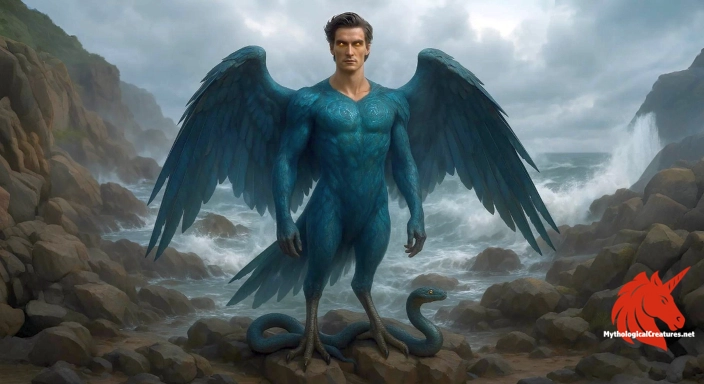
Yuqiang
Yuqiang - Represents the fusion of avian and serpentine elements with divine authority over natural forces
Origins & First Encounters
Yuqiang emerges as a compelling figure in Chinese mythology, intricately linked to both celestial ancestry and natural phenomena. He is celebrated as one of the descendants of Huang Di, the revered Yellow Emperor, a lineage that cements his significance in ancient lore. His mythic origins are steeped in a duality that blends the divine with the elemental, reflecting deep connections to both the sea and the wind. As the god of the north sea and a wind deity, his attributes symbolise the unpredictable and vast powers of nature. The legacy of his parentage, with Yuhao as his father and noted sea god, further anchors him in a tradition where lineage and destiny are intertwined. First recorded in ancient texts, Yuqiang’s narrative quickly became a part of the broader mythological canon that celebrated nature’s forces. His story encapsulates an ancient worldview that honoured the seamless interaction between the terrestrial and the divine. The cultural context of his myth emphasises a harmonious yet dynamic connection between the elements and the deities who govern them. Over time, his tale has evolved, reflecting the ongoing dialogue between natural phenomena and mythic interpretation. This enduring relevance contributes to his status as both a protector and a personification of the transformative powers of nature.
Source Texts & Tale Variants
Ancient records such as the Shanhaijing serve as foundational texts that vividly recount aspects of Yuqiang’s persona and exploits. Multiple accounts detail his unique depiction, ensuring that his myth has been preserved through a variety of written traditions. Scholars note that different chapters, notably chapters 8 and 17, offer insights into his spectacular form and divine attributes. Oral storytelling traditions further enriched his character, allowing local communities to adapt and recount his exploits in ways that resonated with the local milieu. These diverse narrative strands have led to the emergence of various story variants that sometimes emphasise his dominion over the winds and other times highlight his maritime prowess. In some traditions, his serpent mounts are described with meticulous detail, symbolising a mystical mode of travel across elemental realms. The textual fragments from ancient manuscripts have been complemented by later compilations and annotations that continue to add layers of meaning to his narrative. There is a fluidity in the accounts that invites comparisons between early recorded descriptions and later imaginative renditions. This convergence of sources testifies to the multifaceted character of Yuqiang, whose story was shaped by both literary and oral contributions. Thus, his myth offers a fascinating glimpse into a dynamic tradition that has spanned centuries, uniting disparate tales into a cohesive, if complex, deity mythos.
Form & Powers
Descriptions of Yuqiang draw a remarkable portrait that mingles human attributes with the features of avian and serpentine beings. He is often depicted with a human face that carries an expression of both wisdom and otherworldly grace. His body, however, is rendered in the likeness of a bird, suggesting agility and freedom, as well as a connection to the ethereal skies. Remarkably, each of his feet is supported by a serpent mount, which not only symbolises the fluidity of movement but also links him to the mystique of ancient water deities. This hybrid anatomy creates an arresting visual that few other mythological figures can match. The combination of feathered form and slithering appendages invites interpretations of his ability to navigate both the wind-swept heavens and the turbulent seas. Variations in his depiction are common, with some sources portraying him as more humanised in stature while others amplify his avian characteristics. His eyes, often depicted as sharp and discerning, complement the overall aura of vigilance and transcendence. The interplay between the human and animalistic elements in his design encapsulates the ancient belief in the interconnectedness of all natural forces. Such a vivid portrayal has allowed artists and storytellers alike to reimagine his image across different eras and mediums.
Regional Faces
Across different regions of ancient China, Yuqiang’s identity was shaped by local interpretations that placed varied emphasis on his dual dominion over the sea and the wind. In coastal communities, he was revered foremost as a sea god whose serpentine patrons symbolised the mercurial nature of the ocean. Inland regions, conversely, often celebrated his avian features, imbuing him with qualities that underscored the importance of wind and air in arid localities. Variations in his name, such as Yujiang or Yujing, further illustrate how regional dialects and traditions influenced the lore surrounding his figure. In some local myths, he emerges as a formidable protector against tempests, while in others he is portrayed as a benevolent guardian of maritime routes. The divergence in his depiction not only highlights the flexibility of myth but also reflects the distinct environmental and cultural landscapes across ancient China. Ritual practices and festivals in different provinces sometimes featured unique iconographies of Yuqiang, tailored to local symbols of water, wind, or abundance. These regional adaptations underscore the dynamic interplay between the mythic narrative and local belief systems. His multifaceted regional portrayals reveal how communities integrated his myth into their own cosmological frameworks, thereby ensuring its continual evolution. The regional variance makes Yuqiang a versatile emblem of nature’s dual spirit, celebrated in many forms yet universally acknowledged as divine.
Cultural Parallels
When comparing Yuqiang to similar figures in global mythologies, one can observe a fascinating interplay of human and animal traits that resonate across different cultures. Hybrid creatures often appear in myth, and Yuqiang’s amalgamation of human, avian, and serpentine features finds echoes in other legendary beings. For instance, aspects of his divine nature can be loosely paralleled with the Egyptian deity Horus, who also bears avian characteristics that symbolise vigilance and power. The serpentine elements of his depiction evoke images of deities from Mesoamerican traditions, where serpents are seen as embodiments of transformation and the life-giving forces of nature. Moreover, his association with both wind and sea bears similarities to figures in Greek mythology, such as Aeolus and even Poseidon, albeit with a distinctive blend that is uniquely Chinese. These cross-cultural links enhance an understanding of how ancient societies used natural imagery to express complex ideas about the cosmos. The merging of aerial and aquatic symbols in Yuqiang’s myth reinforces a motif common to many traditions, where the boundaries between realms are fluid. His form serves as a bridge between the tangible and the mystical, echoing the universal narrative of humans seeking to explain the uncharted mysteries of nature. Such comparative analysis highlights the adaptability of myth, as similar archetypes emerge in disparate cultural settings to symbolise shared human experiences. Ultimately, Yuqiang stands as a unique yet comparable figure in the global tapestry of myth, reflecting a common heritage of blending the extraordinary with the everyday.
Legacy & Modern Evolution
Over the centuries, Yuqiang’s portrayal has undergone significant transformation, reflecting the changing tides of cultural and literary trends. Initially recorded in ancient chronicles, his myth evolved as it was passed down through generations, absorbing local traditions and artistic innovations. During various historical periods, his image was reinterpreted to symbolise the interplay of natural elements, often serving as a metaphor for dynamic environmental forces. In the modern era, his distinct hybrid form has captured the imagination of artists, writers, and filmmakers, who have reimagined him as a symbol of both resilience and transformation. Contemporary artistic renditions often fuse traditional motifs with modern aesthetics, breathing new life into his ancient mythos. Yuqiang’s enduring presence in popular culture attests to his ability to adapt to changing societal values and artistic sensibilities. His representation now spans a wide array of media, from classical literature to animated portrayals, each contributing to a renewed dialogue about nature and divinity. Modern interpretations frequently emphasise his role as a mediator between elemental forces, resonating with contemporary concerns about environmental balance. As scholars and enthusiasts continue to explore his storied past, Yuqiang remains a potent reminder of the timeless connection between myth and the natural world. The evolution of his depiction not only honours his rich heritage but also underscores the adaptive power of myth in addressing the human experience across ages.
Interesting Fact
Yuqiang is notable for his striking hybrid anatomy and the symbolic serpent mounts, which uniquely represent the integration of aerial and marine elements in Chinese mythology.
Limited sponsor opportunity
One slot, carefully chosen partners
We only feature a small number of relevant sponsors at any time. If you create serious myth content, we would like to hear from you.
Partner with usQuick Creature Info
Features:
Associations:
Our Mythic Legendary Rating:

Also Sometimes Known As:
Habitat:
Supernatural Powers:
Physical Attributes:
Abilities:
Behavior:
Lore:
Related Creatures, Tales or Lore
- JJingwei
- FFenghuang
- FFeng Po Po
References
Discover Another Mythical Legend You May Not Have Heard Of?
Uncover the mysteries of ancient folklore and expand your knowledge of legendary beings from cultures around the world.
Dare to Meet the Rati....
Curated by the Mythological Creatures Team
Series editor: Mythological Creatures Directory
Primary desk: Asian & Pacific Myth Cycles Desk
(rev. November 2025)