
Yurba: Yurba is an uthra, an angelic celestial being in Mandaean cosmology, known as 'the fighter' and identified with the sun.
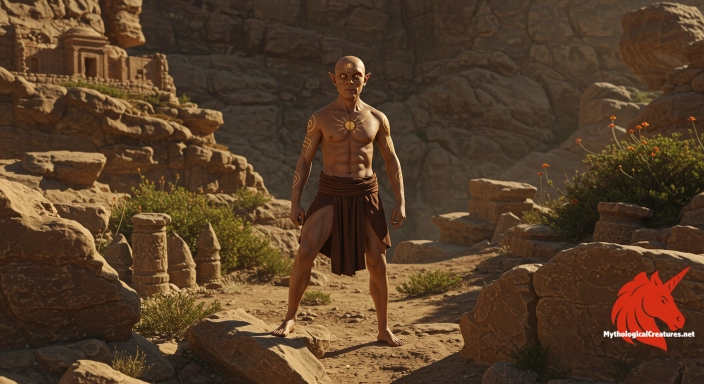
Yurba
Yurba - Represents the eternal battle between light and darkness and serves as a messenger in the Mandaean cosmological hierarchy.
Origins & First Encounters
Yurba is a fascinating celestial figure within the rich tapestry of Mandaean cosmology, revered as an uthra whose presence bridges the divine and the human.
He emerges in the ancient texts of Mandaeism, where his origins are enshrouded in the mystery of early Gnostic traditions.
Within these traditions, Yurba is known by various names, including Yorabba and the fighter, a title that hints at his martial and protective attributes.
He is intricately associated with the solar deity Shamish, which lends his character an aura of radiant power and cosmic authority.
Early attestations of Yurba occur alongside other celestial beings, situating him firmly in a period when the interplay of light and darkness was a central theme in spiritual practices.
The cultural context of Mandaeism, deeply rooted in the ancient Near East, provides a backdrop in which Yurba’s dual nature as both guardian and warrior is vividly portrayed.
His dialogues with figures such as Ruha further illustrate his role in maintaining cosmic balance and engaging in profound theological debates.
The character of Yurba not only encapsulates the solar might of his heritage but also reflects a broader tradition of angelic beings whose stories have been handed down through generations.
Thus, his enduring presence in Mandaean literature reinforces his significance as a mediator between mortal realms and divine mysteries.
Source Texts & Tale Variants
The primary sources for the figure of Yurba are found in canonical Mandaean texts, notably the Right Ginza and the Mandaean Book of John.
These texts offer a multifaceted narrative that casts him as a celestial guardian and a pivotal interlocutor in theological discussions.
Within the Right Ginza, Yurba is mentioned in several chapters, where his interactions and emblematic roles range from being a matarta guardian to a figure equated with Adonai.
Variations in manuscript traditions reveal different spellings and interpretations, with scholars like Lidzbarski referring to him as Jōrabba.
Additional narrative layers emerge in passages where his converse with Ruha underscores his dynamic presence within the divine hierarchy.
Scholars such as Gelbert have further expanded on these narratives, linking his identity with historical figures like Rabbula and even alluding to associations with Yao.
This complex web of sources exemplifies the syncretic nature of Mandaean mythology, blending myth, theology, and historical allusion.
These accounts, though varied, collectively enrich our understanding of Yurba as a figure of immense spiritual and cultural resonance.
Form & Powers
In descriptions drawn from the Mandaean tradition, Yurba is portrayed as a being of exceptional radiance and commanding presence.
His association with the sun implies a body aglow with a golden luminescence that mirrors the brilliance of celestial fire.
The imagery often suggests that he exudes a warrior-like mien, complete with the regalia of a celestial fighter adorned in radiant armour.
Ancient texts hint that his form is both resplendent and fluid, capable of adopting multiple appearances that underscore his divine origins.
The interplay of light in his depiction suggests that he may possess features such as luminous wings or a halo-like aura, symbols found in many angelic portrayals.
This exceptional physicality serves as a visual metaphor for his role as a guardian of cosmic order.
His presence in the narrative is not rooted in earthly anatomy alone but is imbued with transcendental properties that defy conventional physical norms.
Thus, the physical characterisation of Yurba is less about a fixed form and more about embodying the ideal qualities of divine light and protective strength.
Regional Faces
Within the diverse cultural landscape of the ancient Near East, the interpretation of Yurba has seen subtle regional variations that reflect local beliefs and artistic conventions.
In regions where Mandaeism flourished, particularly in parts of southern Iraq and Iran, depictions of Yurba have been coloured by indigenous sensibilities that emphasise his solar attributes.
Local iconography often highlights his role as an embodiment of divine light, reinforcing his connection with other solar deities present in neighbouring cultures.
These regional adaptations have led to variations in his epithets, with some traditions accentuating his warrior aspect while others focus on his status as a celestial mediator.
Despite these differences, the core attributes of strength, radiance, and guardianship remain consistent across local narratives.
Artistic renditions from various regions sometimes blend these perspectives, portraying him with a combination of traditional Mandaean symbolism and local stylistic influences.
Such regional variations not only enrich the mythological tapestry surrounding Yurba but also underscore the broader intercultural exchanges that have shaped religious iconography in the area.
The regional interpretations of his character provide a fascinating insight into how a singular mythic figure can be adapted to resonate with diverse audiences over time.
Cultural Parallels
When set against the broader backdrop of ancient mythologies, Yurba’s character resonates with several comparable celestial figures from cultures both near and far.
His solar attributes, for instance, invite comparisons with Shamash, the Mesopotamian sun god known for his role in administering justice and illuminating the world.
In a similar vein, the association of Yurba with Adonai in Mandaean texts echoes the shared themes of divine authority and protective guardianship found in Judaic traditions.
Other mythological traditions, such as those of Zoroastrianism, also celebrate luminous warrior figures whose roles intersect with themes of cosmic order and the battle between light and darkness.
The convergence of these motifs in Yurba’s narrative illustrates a syncretism that transcends regional boundaries and religious distinctions.
This intermingling of identities not only highlights the fluidity of myth-making but also underscores the universality of certain archetypal symbols.
Comparative analysis reveals that established figures in Greco-Roman and early Christian angelologies share similar characteristics, including the embodiment of protective power and divine radiance.
Such cross-cultural connections enrich our understanding of how myths evolve and reinforce shared human experiences concerning the sacred and the sublime.
Legacy & Modern Evolution
Over the centuries, the legacy of Yurba has evolved as his image and narrative have been reconsidered in light of changing theological and cultural milieus.
Once regarded solely as a celestial guardian, his portrayal has expanded to incorporate themes of cosmic conflict and the eternal struggle between light and darkness.
Modern scholarship has revisited the connections between Yurba and historical figures such as Rabbula, probing the deeper layers of symbolic interpretation.
This evolving perspective has influenced contemporary representations, with modern artistic renditions capturing his radiant, warrior-like essence in striking visual forms.
As the interests of both scholars and practitioners in Mandaeism have grown, so too has the examination of Yurba as an emblem of divine protection and spiritual resilience.
In modern Mandaean communities, his legacy is celebrated through liturgical narratives and visual arts that mirror the dual themes of illumination and combative strength inherent in his character.
The transformation in his depiction, from ancient manuscripts to modern interpretations, serves as a testament to the enduring power of myth.
Ultimately, Yurba continues to symbolise a potent confluence of historical, theological, and cultural influences that highlight the timeless appeal of the divine warrior archetype.
Interesting Fact
Yurba's identification with the sun, combined with his role as a guardian and fighter, highlights the intricate blend of cosmic light and martial prowess in Mandaean theology.
For serious myth projects
Feature your work alongside the legends
From academic works to story-rich games, we highlight projects that respect world mythologies. Talk to us about a measured, long-term placement.
Start a conversationQuick Creature Info
Origin:
Features:
Associations:
Our Mythic Legendary Rating:

Also Sometimes Known As:
Habitat:
Supernatural Powers:
Physical Attributes:
Abilities:
Behavior:
Lore:
Related Creatures, Tales or Lore
- SShamash
- AAdonai
- YYao
References
Discover Another Mythical Legend You May Not Have Heard Of?
Uncover the mysteries of ancient folklore and expand your knowledge of legendary beings from cultures around the world.
Dare to Meet the Fouke Monster....

Curated by the Mythological Creatures Team
Series editor: Mythological Creatures Directory
Primary desk: Hellenic & Ancient Mediterranean Desk
(rev. November 2025)