
Zwodziasz: Zwodziasz is a diabolic creature from Slavic mythology, often depicted in the guise of a nightjar.
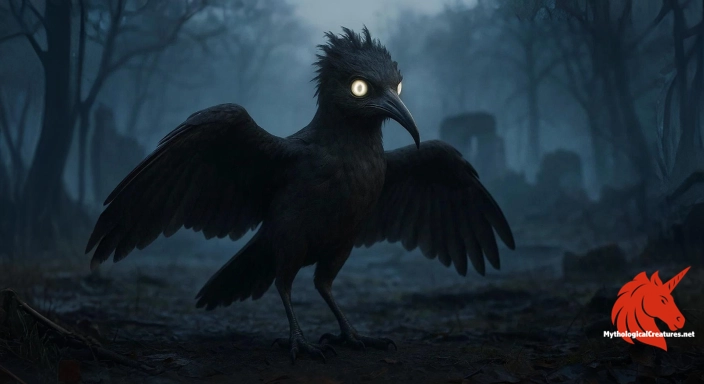
Zwodziasz
Zwodziasz - Represents the dangers of straying from safe paths; serves as a cautionary figure in local folklore.
the legend in five swipes.
the legend in five swipes.
How old is the legend of Zwodziasz?
Zwodziasz is a mysterious, diabolic entity woven deeply into the fabric of Slavic mythology, emerging from a blend of ancient superstitions and cautionary tales. Its earliest echoes arise from vibrant oral traditions in rural communities, where whispers of its nefarious deeds have been passed down through generations. The creature is reputed to misguide unwary travellers, luring them into desolate wastelands where the boundary between life and death becomes perilously thin. In these narratives, its actions are often the catalyst for unforeseen tragedies, leaving a trail of loss and lamentation in its wake. Local lore, particularly around the regions of Kalisz and Sieradz, imbues Zwodziasz with an almost otherworldly malevolence that resonates with the natural fears of isolation and the unknown. It is portrayed not only as a physical deceiver but also as a symbol of nature’s capricious spirit and the ever-present threat of misfortune. Vibrant accounts of its ambiguous nature underscore its role as both a literal and metaphorical guide into the perilous dark. The myth encapsulates the tension between the allure of exploration and the inherent dangers posed by straying beyond familiar paths. Its story has long served as a cultural reminder to respect nature’s rhythms and the wisdom of ancient caution.
How did the story of Zwodziasz change over time?
Sources for the myth of Zwodziasz are predominantly found in the oral traditions and local folklore of central Poland, particularly in villages around Kalisz and Sieradz where the creature is alternatively known as zwodzijos. Although scarce in formal manuscript records, numerous folk songs, local legends, and anecdotal recountings have kept its memory alive over the centuries. The narrative has been transmitted through community storytelling, with elders recounting eerie encounters on lonely, moonlit nights that vividly capture its malevolent intent. In some retellings, the creature is directly identified with a nightjar, seamlessly merging avian imagery with supernatural dread. Variations in the story suggest that while some accounts emphasise its more animalistic features, others lend it an ethereal quality that defies easy categorisation. Different versions also adjust the creature’s role; in some, it acts as a mischievous spirit, while in others its interference is seen as a portent of imminent death. Despite the variations, a constant theme emerges: a being whose every appearance is a portent of danger. Scholars of folklore have noted that even the most subtle mentions of Zwodziasz have been intrinsically linked with broader Slavic mythological motifs of deception and fate. This tapestry of narratives collectively enriches the myth, ensuring that its cautionary message endures.
Zwodziasz: What Manner of Being?
Physical descriptions of Zwodziasz are as elusive as the creature itself, frequently drawing parallels with the nightjar—a bird known for its shadowy, enigmatic presence. Witness accounts often describe it as having dark, mottled plumage that seems to absorb the surrounding light, an attribute that enhances its spectral quality. Its eyes are frequently portrayed as glowing with an eerie intensity, capable of holding a hypnotic allure that spells doom for those who dare to meet its gaze. The creature’s wings are said to unfold silently and expansively, creating a sense of foreboding as they blend with the nocturnal landscape. Folk illustrations sometimes hint at a subtle distortion in its outline, suggestive of its ability to shift shape or manifest in multiple forms. The beak or snout, described in various accounts, carries hints of curvature and sharpness, reinforcing its reputation as a harbinger of misfortune. In some depictions, a faint luminescence is observed around its form, adding to an otherworldly visual that marks it as more than a mere mortal creature. Overall, while its size is modest, the intensity and detail of each feature imbue Zwodziasz with an unforgettable, almost hypnotic beauty interlaced with menace. These elaborate portrayals serve to highlight its role as a spectral deceiver in the realm of myth and nature.
What do different regions call Zwodziasz?
Regional variations of Zwodziasz’s myth reveal a dynamic interplay between local belief systems and the universal themes of warning and deception. In Sieradz, where the creature is also known as zwodzijos, the emphasis is often on its spectral qualities, with tales recounting eerie sightings during the dead of night. Local narratives in the Kalisz area frequently focus on its role as a nocturnal trickster, one that misdirects travellers away from safe paths into dangerous, uncharted territories. In some communities, subtle shifts in its portrayal paint it as an entity with dual aspects—sometimes benign in its mischievousness, yet invariably dangerous when its true nature is revealed. Other regions add layers of complexity, attributing to it supernatural abilities such as distorting landscapes or luring its victims with a bewitching call. These variations underscore differing local attitudes towards nature and fate, interpreting the creature’s manifestation as a direct commentary on regional challenges and environmental uncertainties. Despite these differences, the central figure of a deceptive, night-bound presence remains constant across the folklore of these areas. The shared elements across these regional tales reinforce a collective cultural memory, while also celebrating local creativity in reimagining a common myth. Such regional adaptations ensure that Zwodziasz not only survives but continues to evolve with the society that remembers it.
Zwodziasz: Related Figures Across Cultures
Zwodziasz shares striking thematic similarities with a range of deceptive entities found in diverse mythological traditions. Much like the European will-o’-the-wisp, it embodies the peril of being led astray by an alluring yet treacherous force in the dead of night. Its manifestation as a nightjar ties it to numerous omens in global folklore where birds serve as messengers of death or misfortune, comparable in some respects to the ominous owls of Greco-Roman myths. In several cultures, there exists an archetype of the deceptive guide—a being that appears benign but ultimately leads individuals into harm’s way—which finds an echo in the haunting tales of Zwodziasz. Similar deceptive spirits also populate Celtic and Nordic legends, where they are often employed as metaphors for the unexpected twists of fate. This cross-cultural motif highlights a universal anxiety regarding the unknown and the dangers that lurk at the fringes of human civilisation. Additionally, the creature’s ambiguous blend of animal and supernatural features aligns it with various shapeshifters and trickster beings celebrated in indigenous traditions worldwide. Such comparative analysis reveals not only the depth of the Slavic mythological landscape but also the enduring human desire to explain the unexplained through the embodiment of nature’s capricious power. In this way, Zwodziasz is part of a larger mosaic of myth that resonates with shared cultural fears across the globe.
How has the image of Zwodziasz evolved?
The evolution of the Zwodziasz myth reflects the shifting cultural landscape from medieval superstition to modern reinterpretation and artistic reimagining. Early depictions present it as a tangible, almost corporeal force—embodying the stark dangers of a wild and unpredictable natural world. As centuries passed, its image absorbed symbolic meanings, transforming into a metaphor for moral and existential misdirection. In times of social change, local storytellers and artists reinterpreted Zwodziasz not only as a literal deceiver but also as an emblem of the uncertainty that shadows human endeavours. This evolution has seen the creature traverse from fear-inducing folklore into a broader symbol used to question the balance between fate and free will. Modern portrayals often fuse gothic aesthetics with contemporary sensibilities, appearing in literature, visual art, and independent theatre as a reminder of our enduring fascination with the dark and mysterious. Digital media and paranormal investigations have further perpetuated its legend, ensuring its presence in both popular and subcultural narratives. Contemporary reinterpretations, while varied, consistently underscore its role as a cautionary figure—a spectral reminder of dangers both seen and unseen. In this way, the legacy of Zwodziasz remains a dynamic and influential element of modern myth-making, continuously adapted to reflect the idiosyncrasies of each new era.
Interesting Fact
Zwodziasz's portrayal as an ordinary nightjar blurs the line between natural fauna and supernatural malevolence, deepening the mystery of its existence in Slavic folklore.
Mythological Treasures
Greek Myths: A field guide to the monsters of ancient Greece
Every monster here earned its place in legend, and each gets a full page of artwork and the story behind it.
Norse Sagas: A field guide to the beasts of the Viking world
Drawn from the saga accounts themselves, with the powers, weaknesses and doom of each being set out.
Egyptian Legends: A field guide to the gods and monsters of ancient Egypt
Guardians of the living and devourers of the dead, with the role each played in judgement.
the legend in five swipes.
Support the directory
Promote your myth project and fund more research
Sponsor placements help keep this directory growing and free to use while giving your work a focused, relevant audience.
Learn how sponsorship worksQuick Creature Info
Features:
Associations:
Our Mythic Legendary Rating:

Also Sometimes Known As:
Habitat:
Supernatural Powers:
Physical Attributes:
Abilities:
Behavior:
Lore:
References
Discover Another Mythical Legend You May Not Have Heard Of?
Uncover the mysteries of ancient folklore and expand your knowledge of legendary beings from cultures around the world.
Dare to Meet the Aoandon....
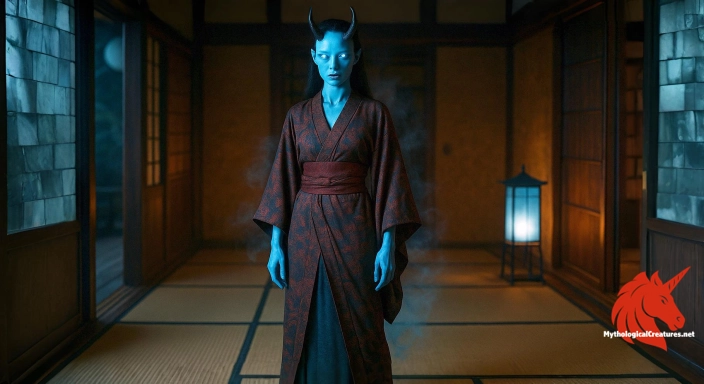
The Mythological Creatures Book Series
Yokai, Greek, Norse, Egyptian & Chinese. Five illustrated field guides to the creatures the old stories either warned or told you about.


Curated by the Mythological Creatures Team
Series editor: Mythological Creatures Directory
Primary desk: Northern & European Folklore Desk
(rev. November 2025)