
Abaia: Abaia is a huge magical eel from Melanesian mythology that dwells at the bottom of freshwater lakes.
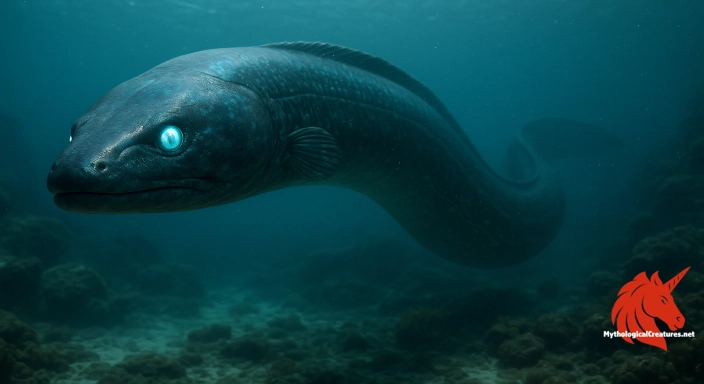
Abaia
Abaia - Abaia symbolizes the sanctity of natural bodies of water and the consequences of disrupting the balance of nature.
Origins & First Encounters
The Abaia emerges from the depths of Melanesian mythology as a formidable and mystical creature whose origins are woven into the fabric of island lore. Its legend is deeply embedded in the traditions of the Fiji, Solomon, and Vanuatu Islands, where the natural world and the supernatural intertwine. Revered as a guardian spirit of the freshwater lakes, the creature is celebrated for its role in maintaining a balance between nature and human endeavour. It is depicted as a massive eel that nurtures every aquatic creature within its domain, symbolising both protection and the power of nature. The story of Abaia reflects the early human attempts to understand and personify the forces of water and the many mysteries that reside beneath its surface. Rooted in ancient oral narratives, the myth served both as an explanation for natural phenomena and as a cautionary tale. Over generations, the legend has been preserved through storytelling, becoming integral to the cultural identity of the Melanesian peoples. Its enduring presence is a vivid reminder of how traditional beliefs shape a community’s respect for the natural world. The legend not only continues to captivate but also invites a reflective appreciation of nature’s formidable power.
Source Texts & Tale Variants
The earliest accounts of Abaia are found within the oral traditions of Melanesian communities, where the creature's tale has been recounted with great care over centuries. Narratives often centre on a fateful confrontation between local villagers and the guardian eel, a story that underscores the consequences of disturbing the aquatic balance. One popular variant recounts the story of a man who discovers a lake abundant with fish and unknowingly disturbs Abaia’s realm. The legend recounts how the creature protects its offspring and sacred habitat, retaliating against those who overexploit the natural bounty. In some versions, the eel’s fury is expressed through immense waves while in others, it is manifested as torrential rain and flooding. Multiple story variants exist across the islands, each adding unique details to the creature’s mythic powers and responsibilities. These diverse narratives reflect the collective memory and the natural environment of the island communities. The variations found in storytelling highlight how Abaia has been adapted to different cultural contexts within Melanesia. This wealth of oral literature ensures that Abaia remains a central figure in the mythology, symbolising the delicate balance between man and nature.
Form & Powers
Descriptions of Abaia are as fluid and variable as the water it inhabits, yet consistent in its portrayal as a colossal, sinuous eel. Its body is often depicted with shimmering scales that capture the light of the underwater realm, lending it an almost iridescent quality. The creature’s form is both sleek and muscular, suggesting a natural design perfected for navigating the murky depths of freshwater lakes. Observers in these legends speak of its disproportionately powerful tail, capable of stirring the waters into turbulent waves. The head of Abaia is typically described as enigmatic, with deep-set eyes that seem to hold the accumulated wisdom of the lake’s secrets. In certain accounts, the eel’s skin appears to bear a subtle luminescence, echoing the mysterious glow of the underwater world at night. Some regional retellings exaggerate its size, portraying it as a leviathan whose proportions dwarf ordinary aquatic life. The detailed physical depictions provide a vivid mental image that blends elements of natural biology with the whimsy of the supernatural. This combination of physical might and otherworldly grace cements Abaia’s reputation as a formidable force in Melanesian lore.
Regional Faces
Across the islands of Melanesia, the legend of Abaia takes on various local flavours, each shaped by the unique natural and cultural environment of the region. In Fiji, the creature is often revered as a divine protector, its immense power intertwined with local traditions of respect for natural forces. Solomon Island traditions tend to emphasise the creature’s dual nature as both nurturer of life and punisher of impiety, a narrative that resonates with the local emphasis on ecological balance. In Vanuatu, Abaia is occasionally woven into broader mythic cycles that connect aquatic deities with ancestral powers and rituals. These regional variations highlight subtle differences in interpretation, such as the manner in which Abaia’s protective rage is triggered. Local retellings frequently adapt the tale to emphasise moral lessons relevant to the community’s relationship with its environment. Artists and traditional storytellers infuse regional details into the myth, sometimes incorporating natural landmarks or unique water formations as part of the creature’s domain. Despite these variations, the underlying themes of protection, retribution, and a deep respect for nature remain consistent throughout Melanesian narratives. Such regional adaptations enrich Abaia’s myth, making it a living legend that evolves with its cultural context.
Cultural Parallels
The legend of Abaia finds intriguing parallels with other water-centric myths from around the world, reflecting a universal human connection to nature’s mysteries. Much like the serpentine dragons of East Asia or the water spirits in indigenous American lore, Abaia embodies the dual themes of creation and destruction. Its protective stance over the aquatic community resonates with similar figures who have been depicted as guardians of nature and enforcers of its laws. In several mythologies, such as those found in Celtic or Scandinavian traditions, grand serpents and eels occupy a space that bridges the natural and supernatural worlds, much like Abaia does in Melanesia. These cross-cultural similarities suggest that the depiction of powerful, water-dwelling beings is a common motif in human storytelling, transcending geographical boundaries. The creature’s ability to mete out natural retribution for human transgressions is a narrative thread that connects varied myth systems. While each culture adapts its legends to reflect local values and environmental realities, the figure of the guardian spirit remains a shared symbol. Comparative analysis reveals that these myths serve both as a celebration of nature’s bounty and as a warning against the exploitation of natural resources. Such connections underscore the universal reverence for the unpredictable power of water as a life-giving and sometimes destructive force.
Legacy & Modern Evolution
Through the passage of time, the image of Abaia has evolved from a strictly fearsome guardian into a rich symbol of environmental harmony and cultural identity. Early storytellers often portrayed the creature as an unyielding force of nature whose wrath was a clear consequence of human interference in the natural world. In modern times, this ancient myth has been reinterpreted to highlight issues of ecological conservation and sustainable living, providing a timeless lesson that remains relevant. Contemporary narratives often depict Abaia as an embodiment of nature’s resilience, bridging traditional wisdom with modern environmental ethics. Artists, writers, and filmmakers have reinvented the tale, blending traditional iconography with creative modern twists that resonate with today’s audiences. The transformation of the creature’s depiction reflects a broader shift in societal attitudes towards nature and the imperative to protect vulnerable ecosystems. This enduring myth now serves as both a cautionary reminder of ecological imbalance and a celebration of the natural world’s inherent power. Moreover, the legacy of Abaia continues to inspire educational discussions, cultural festivals, and environmental campaigns throughout Melanesia. Its mythological journey from ancient oral tradition to modern symbolism highlights the timeless interplay between nature, culture, and the human imagination.
Interesting Fact
The legend of Abaia might have originated from real encounters with giant, undiscovered eels, blending natural phenomena with myth to explain sudden floods and massive waves.
For publishers and studios
Your next readers are already here
Many of our visitors are looking for books, campaigns, and resources that deepen their journey into myth. Position your title or setting here.
Discuss a placementQuick Creature Info
Origin:
Associations:
Our Mythic Legendary Rating:

Habitat:
Supernatural Powers:
Physical Attributes:
Abilities:
Behavior:
Lore:
Related Creatures, Tales or Lore
- NNaga
- JJormungandr
- BBakunawa
References
Discover Another Mythical Legend You May Not Have Heard Of?
Uncover the mysteries of ancient folklore and expand your knowledge of legendary beings from cultures around the world.
Dare to Meet the Nana....
-b291363d-e9e4-45e0-b440-f0ff9d85daff_small.webp "Depiction of Nana")
Curated by the Mythological Creatures Team
Series editor: Mythological Creatures Directory
Primary desk: Asian & Pacific Myth Cycles Desk
(rev. November 2025)