
Achelois: Achelois is a multifaceted figure in Greek mythology whose name means 'she who drives away pain'.

Achelois
Achelois - Her diverse depictions reflect the complexity of ancient Greek myth, where a single name can signify both benevolence and danger.
Origins & First Encounters
Achelois is a captivating figure deeply rooted in Greek mythology, known for her association with water and healing energies. Her name, meaning 'she who drives away pain', hints at her role as a divine alleviator of suffering. In ancient narratives, she appears in various forms that illustrate the layered complexity of mythic archetypes. One tradition sees her as a surname of the Sirens, whose mesmerizing calls both enchant and caution seafarers.
In another account, her name is applied to water-nymphs, emphasising the life-giving and restorative aspects of flowing waters. There is also a compelling tradition that identifies Achelois as one of the daughters of Pierus, grouped among the Pierides, which highlights her genealogical ties within myth. Ancient communities revered her not only as an emblem of beauty but also as an embodiment of nature’s unpredictable temperament. Her myth encapsulates the interconnectedness of natural forces and human emotion. Over time, Achelois has come to be celebrated for both her benevolent healing qualities and her enigmatic mystique, bridging the realms of transformation and allure.
Source Texts & Tale Variants
Primary sources pertaining to Achelois are fragmentary yet offer a mosaic of her multifaceted identity. Textual references appear in works such as Columella’s treatises, where water-nymphs—termed Acheloides—are mentioned as companions to the Pegasids. Classical Greek literature also assigns her the surname of the Sirens, thereby linking her to the tradition of both enchantment and subtle peril. Some inscriptions and mythographical accounts further intertwine her with narratives of healing, underscoring an inherent duality.
Local cult practices and regional rituals added further dimensions to her persona, including variations where she is identified as a daughter of Pierus among the Pierides. Multiple story variants reveal how her character was adapted over time to fit diverse local needs and artistic interpretations. Although the surviving texts are not exhaustive, each source contributes to an enduring image of transformation and the alleviation of pain. These sources also illustrate the fluid boundaries between oral tradition and written lore in ancient myth-making. The continuous reinterpretation of her myth suggests that Achelois served as a symbolic canvas for expressing the complex interplay between nature, healing, and danger.
Form & Powers
The visual representations of Achelois, while not as numerous as those of major deities, evoke a striking air of ethereal beauty and water-bound mystery. In many depictions, she is portrayed with a graceful, fluid form that mirrors the gentle ripples of a calm stream. Her hair is often rendered as a cascade of soft, wavelike tresses, reminiscent of water in perpetual motion. Artists have imbued her countenance with an almost luminescent quality, suggesting both compassion and enigmatic depth.
Additional iconographic details include adornments of shells, pearls, and subtle marine motifs that symbolise protection and renewal. The variations found in ancient art allow for a creative latitude where some portrayals emphasise a robust and mysterious quality while others lean towards delicate, almost ethereal beauty. Her eyes are frequently described as reflective, mirroring the deep, serene pools of sacred waters. Even in instances where physical details are sparse, the emphasis remains on her inherent luminosity and the transient, ever-changing nature that defines her essence. Such depictions collectively highlight Achelois as a figure of both tangible beauty and elusive mystique.
Regional Faces
Regional interpretations of Achelois reveal a dynamic integration of local traditions with broader Hellenic themes. In coastal communities, her character is often accentuated as a Siren, revered for her connection with the vast, unpredictable sea and its calming, yet formidable presence. Conversely, in inland regions, Achelois is more closely aligned with the water-nymphs, symbolising the nurturing and curative aspects of freshwater sources. These local adaptations frequently resulted in distinctive rituals and festivities that honoured her dual power to both heal and bewitch.
In various parts of Greece, artistic representations and local lore reimagined her with unique adornments and iconographic elements that reflected the surrounding natural landscape. Rural communities, in particular, celebrated her as part of agricultural and seasonal cycles, intertwining her myth with notions of fertility and renewal. The contrasts between coastal and inland depictions demonstrate how environmental contexts shaped her mythic persona. Such diverse regional portrayals underscore not only the adaptability of her character but also the cultural importance of water as a symbol of life, danger, and transformation. The multiplicity of these local narratives speaks to a rich tradition of communal identification with nature’s dualities.
Cultural Parallels
An analysis of Achelois in the broader context of water mythology reveals striking parallels with other ancient deities. Her synthesis of healing power and enchanting allure is reminiscent of the Naiads, who are celebrated for their rejuvenating influence across various Greek narratives. Similar dualities appear in the legends of Celtic water spirits, where the interplay between benevolence and danger forms a central theme. In Roman traditions, figures linked to water balance echo these qualities, demonstrating how the element itself is emblematic of both renewal and unpredictability.
This cross-cultural comparison extends to other mythic symbols like Aphrodite, where beauty and potential peril are intertwined. While Achelois may occupy a more subtly defined role within the Greek pantheon, her amalgamation of nurturing and seductive attributes resonates universally. The many parallels drawn between her and other water-associated deities highlight a shared archetype that celebrates the ambivalent nature of water. By reflecting both the promise of healing and the reminder of nature’s capricious side, Achelois embodies a common mythological thread that transcends regional boundaries. These comparative insights deepen our understanding of the symbolic language of water across ancient cultures.
Legacy & Modern Evolution
Throughout the centuries, Achelois has undergone a profound evolution, transitioning from a relatively obscure figure in ancient lore to an emblem of resilience and transformative power. Early depictions focused on her as a healer and a gentle water spirit, a role that subtly intertwined with the more dangerous allure of the Sirens. Such foundational portrayals, preserved through local cults and ancient texts, provided a basis for later reinterpretations and artistic explorations. Over time, the evolution of her myth mirrored broader cultural shifts, enabling her attributes to resonate with successive generations.
In the modern era, Achelois has re-emerged in literature, visual art, and even within neopagan practices as a symbol of natural healing and metamorphosis. Contemporary storytellers and scholars have embraced her as a metaphor for the delicate balance between pain and recovery, lending her myth renewed relevance. This reinvigoration within modern artistic and academic circles underscores how ancient symbols can be adapted to address contemporary themes. Her legacy, rich in symbolic nuance and layered meanings, continues to inspire creative works and spiritual practices, bridging the ancient past with modern sensibilities.
Interesting Fact
The name Achelois is used to refer to multiple figures in Greek mythology, illustrating how ancient cultures could imbue a single name with a rich tapestry of attributes and narratives.
Curated sponsor space
One subtle banner. Thousands of myth lovers.
We offer a small number of curated sponsor spots for relevant books, courses, games, and art. No clutter, just well-matched partners.
Partner with usQuick Creature Info
Origin:
Associations:
Our Mythic Legendary Rating:

Also Sometimes Known As:
Habitat:
Supernatural Powers:
Physical Attributes:
Abilities:
Behavior:
Lore:
References
Discover Another Mythical Legend You May Not Have Heard Of?
Uncover the mysteries of ancient folklore and expand your knowledge of legendary beings from cultures around the world.
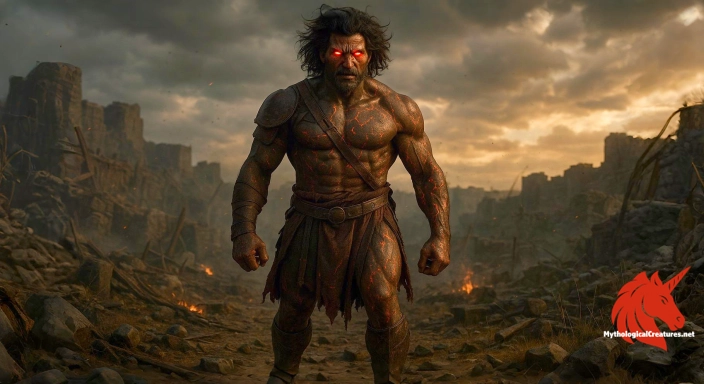
Dare to Meet the Kydoimos....
Curated by the Mythological Creatures Team
Series editor: Mythological Creatures Directory
Primary desk: Hellenic & Ancient Mediterranean Desk
(rev. November 2025)