
Acheri: The Acheri is a ghostly spirit of a murdered or abused little girl, often referred to as a hill fairy.

Acheri
Acheri - The Acheri serves as a cautionary figure in folklore, warning of untimely death and the perils of encountering a vengeful, cursed spirit.
Origins & First Encounters
The Acheri is a spectral presence carved from the depths of tragic folklore, a ghostly figure whose origins lie in the untimely demise and abuse of a young girl. Born of sorrow and injustice, the legend of the Acheri has been whispered through the ages in isolated hill regions and mountain retreats. Her story is interlaced with themes of loss, retribution, and the persistent echo of neglected cries for help. She is often referred to as a 'hill fairy', a term that both softens and paradoxically deepens her haunting character. Local narratives portray her as a restless spirit who haunts the high places during the night, emerging when the veil between worlds is at its thinnest. The mystique of the Acheri is enhanced by her connection to harsh natural landscapes, linking her existence with the rugged and untamed environments she inhabits. Her silent vigil during the day contrasts starkly with the night-time vigour of her lamentations, each note a portent of adversity. Embedded within her lore is a cautionary message urging respect for those who have suffered, as well as the natural order of life and death. The enduring power of her myth lies in its ability to evoke empathy alongside fear, ensuring that her tragic visage is never forgotten. This narrative, steeped in both beauty and terror, continues to resonate with communities long after its inception.
Source Texts & Tale Variants
The roots of the Acheri legend are found in a rich tapestry of oral traditions and regional folklore passed down through generations. Early mentions of the spirit appear in manuscripts collected by local travellers and storytellers who chronicled the eerie happenings on remote hilltops. While ancient texts are sparse, the oral accounts provide a diverse range of narratives that capture the multifaceted nature of this ghostly child. Some storytellers focus on her melancholy existence as a victim of abuse and abandonment, whereas others emphasise her role as an omen of impending doom. These varied portrayals have led to multiple story variants, each echoing the cultural and moral preoccupations of its time. Narratives frequently mention her eerie tam-tam and the unsettling song that heralds misfortune, creating a consistent thematic thread across disparate sources. Over time, these stories have evolved, with each retelling adding layers of nuance and detail to her character. Local bards and chroniclers have preserved these accounts in both spoken word and written folklore, ensuring that her cautionary tale endures. Despite the variations, a core element remains: the unshakable link between the Acheri and the ominous signs she brings with her presence. This multiplicity of sources underscores the power of myth to adapt and survive through centuries of cultural transformation.
Form & Powers
The Acheri is depicted with a deeply unsettling physical presence that combines elements of both spectral beauty and dread. Her eyes are portrayed as dark and unnaturally luminous, exuding an otherworldly glow that hints at the abyss of her sorrow. The ghostly child’s face is fraught with a skeletal pallor, a stark reminder of the fragility and decay that accompany her tragic fate. A distinctive feature is the skin dress she is said to wear, an eerie garment that appears almost as if it is part of her disintegrating form. This unusual attire contributes to her appearance, imbuing her with an air of both vulnerability and menace. Artists and storytellers often render her as diminutive in stature, reflective of the innocence lost to her violent end. Her silhouette is delicate yet haunting, as if it struggles to retain substance in the boundaries between life and death. Tangled, unkempt hair sometimes adds to the spectral quality of her visage, flowing like dark tendrils in the night air. Every detail in her appearance—from the hollow gaze to the tattered, flesh-like garment—serves as a visual metaphor for the tragedy that shaped her existence. The Acheri’s form is a potent blend of innocence and horror, carefully crafted to evoke both empathy and fear in those who gaze upon her tale.
Regional Faces
Across various regions, the legend of the Acheri has acquired distinct local flavours that highlight the interplay between geography and myth. In many hill and mountain communities, she is unerringly synonymous with the eerie ambiance of rugged landscapes and desolate summits. Certain locales depict her primarily as a malevolent spirit whose appearance signals impending calamity, while other traditions hint at a more ambiguous nature, sometimes even evoking pity for her tragic past. The term 'hill fairy' is embraced in some areas to lend a mystical, albeit sinister, charm to her persona. In rural regions, where the isolation of nature intensifies the sense of the supernatural, the Acheri’s nocturnal wanderings are commonly recounted as markers of communal misfortune. Local custom has even dictated specific protective rituals, such as wearing red ribbons or bright red garments, to ward off her curse. Storytellers in these communities adapt her narrative to reflect local anxieties and moral lessons, particularly those concerning the care of the vulnerable. Variations in her musical accompaniment, such as the type of tam-tam or local rhythmic influences, further demonstrate the rich regional adaptations of her myth. This linguistic and visual diversity ensures that while the overarching narrative remains recognisable, each cultural retelling adds its own unique hue to the legend of the Acheri.
Cultural Parallels
The myth of the Acheri finds intriguing parallels in numerous global traditions, where the apparitions of wronged or tragic young spirits serve as omens of death and misfortune. Much like the Irish Banshee, whose mournful wail signals imminent loss, the Acheri issues a haunting melody that portends sorrow. Both figures share a spectral presence that blurs the line between mournful warning and vengeful punishment, yet while the Banshee is typically an elder spirit, the Acheri embodies the lost innocence of youth. Similar themes are evident in East Asian legends, where yūrei haunt the living with unresolved grievances and deep emotional pain. Latin American folklore also reveres forlorn female apparitions that echo the Acheri’s themes of untimely loss and societal neglect. These cultural parallels underscore a shared human impulse to personify grief and the consequences of unresolved trauma. In comparative analysis, the Acheri’s distinctive musical ritual and protective counter-measures—such as the use of red ribbons—further differentiate her narrative within a broader spectrum of ghostly omens. This interconnected web of myth serves as a reminder of the universal impact of tragedy on community conscience. By exploring these similar legends, one can appreciate how diverse cultures use spectral figures as conduits for discussing morality, grief, and the impermanence of life.
Legacy & Modern Evolution
Over time, the image of the Acheri has undergone a profound transformation while remaining deeply emblematic of loss and retribution. Early depictions, stark and unyielding, have gradually given way to more nuanced portrayals that intertwine her tragic history with contemporary themes of social justice and emotional healing. Modern reinterpretations cast her not only as an omen of death but also as a symbol of the unresolved anguish faced by the vulnerable in society. In recent years, films, literature, and visual arts have reimagined her spectral visage to explore issues such as childhood trauma and the long shadows of abuse. Contemporary artists often highlight the juxtaposition of her inherent innocence with the darker aspects of her legacy, painting a picture that resonates with modern psychological narratives. The protective symbolism of the red ribbon and related charms remains a powerful motif, reflective of enduring human attempts to stave off malevolent influences. Discussions on digital platforms have widened the myth’s reach, allowing a new generation to engage with and reinterpret her story. As the folklore community and modern media continue to evolve, the Acheri embodies both a cautionary tale and a call to acknowledge and address past injustices. Her enduring presence in cultural discourse acts as a bridge connecting ancient warnings with modern sensibilities. This evolving legacy confirms that, although centuries may pass, the spectral lament of the Acheri continues to echo in the collective memory of many societies.
Interesting Fact
An intriguing aspect of the Acheri is the protective use of red, a motif that echoes across various cultures as a means to ward off malevolent spirits.
Limited sponsor opportunity
One slot, carefully chosen partners
We only feature a small number of relevant sponsors at any time. If you create serious myth content, we would like to hear from you.
Partner with usQuick Creature Info
Features:
Our Mythic Legendary Rating:

Also Sometimes Known As:
Habitat:
Supernatural Powers:
Physical Attributes:
Behavior:
Weaknesses:
Lore:
Related Creatures, Tales or Lore
- BBanshee
- PPontianak
- LLa Llorona
References
Discover Another Mythical Legend You May Not Have Heard Of?
Uncover the mysteries of ancient folklore and expand your knowledge of legendary beings from cultures around the world.
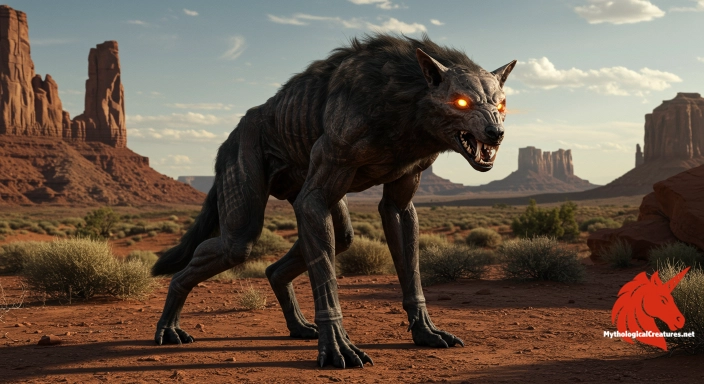
Dare to Meet the Skin-walker....
Curated by the Mythological Creatures Team
Series editor: Mythological Creatures Directory
Primary desk: Asian & Pacific Myth Cycles Desk
(rev. November 2025)