
Actaea: Actaea, also known as Actaeä or Aktaia, is a Greek sea-nymph and one of the fifty Nereids associated with rocky shores.
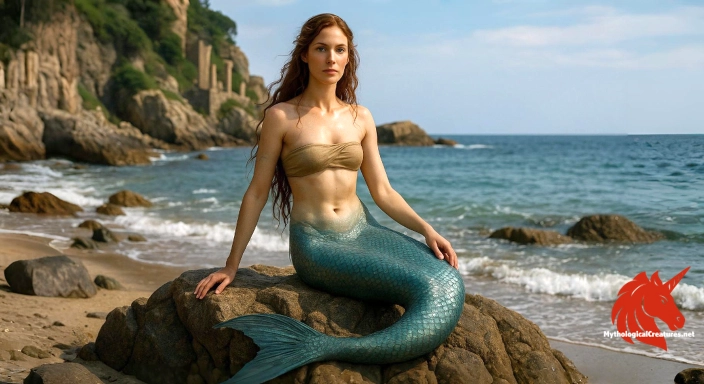
-0372a734-03a3-435e-b37c-6e4cc64ef66b_small.webp "Actaea - As one of the fifty Nereids, Actaea exemplifies the nurturing and sustaining aspects of the marine environment and is part of the rich tapestry of sea deities in Greek mythology.")
Actaea
Actaea - As one of the fifty Nereids, Actaea exemplifies the nurturing and sustaining aspects of the marine environment and is part of the rich tapestry of sea deities in Greek mythology.
the legend in five swipes.
the legend in five swipes.
Actaea: How the Story Began
Actaea stands as an evocative personification of the rugged coastal landscape in Greek mythology, embodying the wild and enduring spirit of rocky shores. Her name, meaning 'the dweller on coasts', immediately connects her with the interface of land and sea, an area both beautiful and formidable. Emerging from ancient myth, she is counted among the fifty Nereids, the sea nymphs who grace Greek lore with their ethereal presence. Born of Nereus, the venerable Old Man of the Sea, and Doris, the Oceanid, Actaea’s origins underscore a divine lineage steeped in the mysteries of nature. She appears in mythic narratives at moments of profound human emotion, notably when she stands with her sisters to comfort Thetis during times of great sorrow. Her character symbolises a deep respect for the natural forces that shape the coastal world, reflecting both its allure and its unpredictability. The early attestations of her myth are interwoven with the broader tapestry of sea deities, echoing the ancients’ reverence for forces beyond human control. In her mythological role, Actaea bridges the gap between the tangible landscape and the divine, weaving local geographical features into a story of cosmic significance. Her enduring presence in myth highlights the ancient Greeks’ desire to personify the elements of their natural environment and to find solace in the idea that even the harsh, rocky coasts possess an inner beauty and mystery. Actaea remains a testament to the timeless dialogue between humanity and the natural world, a dialogue that continues to inspire awe and reflection across the ages.
Actaea: From Oral Tale to Written Record
Ancient poetic sources offer only fleeting glimpses of Actaea, with her name occasionally appearing amidst the chorus of Nereids celebrated in epic poetry. Classical texts, though not dedicated solely to her, mention her as part of the radiant assembly of sea nymphs that attend to the gods of the deep. Variants of her name can be found in different manuscripts, reflecting the fluid nature of oral tradition and transcription over time. Some literary fragments suggest that she was invoked during critical moments in myth, such as the communal expressions of grief and prayer by those touched by the sea’s caprice. Although detailed narratives about her individual exploits are sparse, her inclusion in the celebrated retellings of maritime marvels cements her role in the pantheon of water deities. Diverse traditions, passed down through generations, have enriched her background with subtle local embellishments that vary in tone and detail. Some secondary compilations hint at regional ceremonies where the Nereids were celebrated as both guardians and guides of the coastal realm. As a result, Actaea’s myth has been transmitted through a tapestry of texts and oral lore, each contributing to her enigmatic charm. These sources collectively form a mosaic that underlines her importance as a symbol of the untamable ocean and its ever-changing moods.
Did Actaea have any weaknesses?
Actaea is often envisioned with an aura of otherworldly grace that mirrors the undulating beauty of the sea itself. Her form is slender and elegant, with a semblance of fluidity that suggests the gentle flow of ocean waves across a stony shore. Artistic depictions frequently portray her with long, flowing hair that cascades like sea foam over smooth rocks, enhanced by subtle hints of the ocean’s myriad blues and greens. Her skin is said to carry a luminous quality, as though lit by the soft light of dawn or the reflective shimmer of the moon above the restless tide. Delicate features, imbued with both strength and vulnerability, lend her an enigmatic presence that captivates the beholder. Traditional iconography sometimes accentuates the ethereal transparency of her form, evoking the idea of water merging with air in a perpetual dance of transformation. Accents of pearl or shell often adorn her, emphasising her intimate connection with the coastal environment. Some ancient artworks reveal her in dynamic compositions, nestled among jagged rocks that symbolise the raw and untamed aspects of nature. Through these artistic interpretations, Actaea's physical attributes highlight the duality of beauty and danger inherent in the sea’s rocky borders. Her visual portrayal serves as a reminder of both the allure and the peril that define the enigmatic interface between land and water.
Actaea: The Same Figure in Different Places
Local traditions infuse Actaea’s legend with unique flavours that reflect the diverse landscapes of the Mediterranean. In regions where rocky shores are a dominant feature, coastal communities have embraced her as a protective spirit and a vital emblem of their natural heritage. Variations in her portrayal emerge in different locales, with some traditions casting her as a benevolent guardian who ensures safe passage for fishermen and sailors. On certain islands, local myths enrich her narrative by intertwining her identity with regional natural landmarks, thereby creating a more intimate connection with the community’s environment. These regional adaptations often blend elements from neighbouring mythological traditions, resulting in hybrid figures that share traits with local water or earth deities. In some coastal settings, she is depicted less as a high-born divine figure and more as a personification of the tangible, rugged beauty of cliffs and boulders. Folk art and local festivals have, over time, celebrated her through varied ceremonial expressions that echo both reverence and gratitude. Her attributes and the stories surrounding her continue to evolve, reflecting the ongoing dialogue between age-old myth and the specific experiences of regional life. Thus, through a spectrum of local interpretations, Actaea embodies a shared cultural identity that is as multifaceted as the coastal landscapes themselves.
Legends Comparable to That of Actaea
When compared with similar water deities across various traditions, Actaea stands as a distinct emblem of the rugged and untamed aspects of the sea. Her association with rocky shores finds a parallel in other cultures, where the natural elements of the coastline are personified by local spirits and nymphs. In the Celtic tradition, for instance, there exist water figures whose mysterious allure and connection to the land echo the essence of Actaea’s myth. Comparable to certain Slavic water entities, her imagery often merges beauty with an inherent unpredictability, symbolising nature’s dual potential for nurture and destruction. Like other mythological sea nymphs, she illustrates the human desire to understand and articulate the complex relationship between the natural environment and divine power. This cross-cultural dialogue is further enriched by the consistent motif of feminine embodiment of natural forces seen in various traditions. The portrayal of Actaea, with her intricate blend of vulnerability and strength, resonates with similar figures whose legends have shaped local folklore. Modern reinterpretations in art and literature continue to draw on these shared themes, framing her as a bridge between ancient maritime lore and contemporary environmental narratives. In this way, the comparative study of coastal deities highlights a universal fascination with water’s transformative and enigmatic power. Actaea, therefore, occupies an important place in a broader mythological framework that transcends cultural boundaries and spans across both time and space.
Actaea: From Folklore to Pop Culture
The evolution of Actaea’s myth reveals a gradual shift from a fragmentary figure in ancient texts to a symbolic emblem in modern creative expressions. Over centuries, her representation has transformed from subtle allusions in epic narratives to a vibrant icon in visual arts and literary works. Early depictions, often rendered in ceramics and classical sculptures, showcased her as a delicate yet formidable facet of the sea’s identity. In more recent times, contemporary artists have reimagined her visage to highlight themes of environmental conservation and the enduring majesty of the natural world. As ecological concerns have grown, Actaea has been embraced as a metaphor for the resilience of coastal ecosystems facing modern challenges. Her myth now straddles the realms of classical tradition and present-day interpretation, with creative renditions appearing in digital art, film, and literature. This modern legacy underscores a renewed human interest in reconnecting with nature and reassessing ancient wisdom. Through evolving visual and narrative depictions, Actaea continues to inspire a dialogue about the balance between human progress and the preservation of natural heritage. Ultimately, her enduring image symbolizes the timeless interplay between myth, nature, and the evolving spirit of cultural expression.
Interesting Fact
The very name Actaea, which translates to 'the dweller on coasts', highlights the close relationship between ancient Greek communities and the natural landscapes of their maritime environment.
Mythological Treasures
Greek Myths: A field guide to the monsters of ancient Greece
Every monster here earned its place in legend, and each gets a full page of artwork and the story behind it.
Japanese Yokai: A field guide to the spirits and demons of Japanese folklore
Fifteen spirits, with the signs to watch for and what the old tales say to do if you meet one.
Norse Sagas: A field guide to the beasts of the Viking world
Drawn from the saga accounts themselves, with the powers, weaknesses and doom of each being set out.
the legend in five swipes.
For myth educators and toolmakers
Built a resource for mythology learners?
If you offer courses, teaching tools, or research platforms focused on myth and folklore, consider a discrete placement on our reference pages.
Introduce your resourceQuick Creature Info
Origin:
Associations:
Our Mythic Legendary Rating:

Also Sometimes Known As:
Habitat:
Supernatural Powers:
Physical Attributes:
Abilities:
Behavior:
Lore:
Related Creatures, Tales or Lore
- TThetis
- AAmphitrite
- GGalatea
References
Discover Another Mythical Legend You May Not Have Heard Of?
Uncover the mysteries of ancient folklore and expand your knowledge of legendary beings from cultures around the world.
Dare to Meet the Eulimene....
The Mythological Creatures Book Series
Yokai, Greek, Norse, Egyptian & Chinese. Five illustrated field guides to the creatures the old stories either warned or told you about.




Curated by the Mythological Creatures Team
Series editor: Mythological Creatures Directory
Primary desk: Hellenic & Ancient Mediterranean Desk
(rev. November 2025)