
Ægir: Ægir is a jötunn and the personification of the sea in Norse mythology, known for hosting the gods in his grand underwater halls.
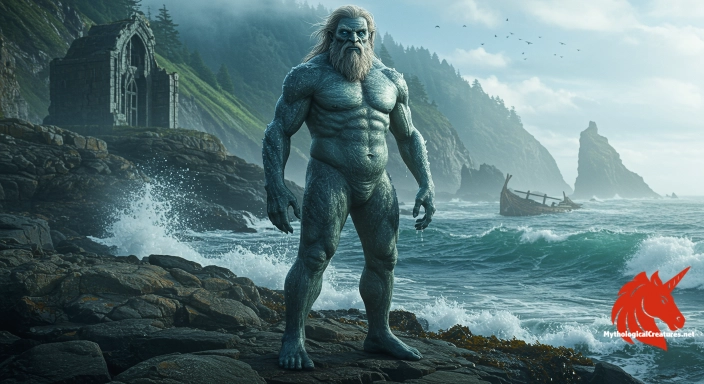
Ægir
Ægir - Ægir embodies the power and mystery of the sea while also symbolising hospitality through his legendary feasts.
the legend in five swipes.
the legend in five swipes.
Who first told stories about Ægir?
Ægir emerges in Norse mythology as a personification of the inexhaustible sea, a figure whose very essence embodies both the beauty and the peril of the ocean. His origins are deeply interwoven with the mythic tapestry of the Norse, where he is identified as a jötunn whose colossal presence mirrors the relentless power of the waves. The earliest records depict him not merely as a force of nature but also as an influential host, welcoming the gods into his sprawling underwater halls. His traditional role as a provider of ale during divine feasts highlights a dual nature: one that celebrates life's bounty and reminds mortals of nature's capricious temperament. Through his association with his consort Rán and the symbolic progeny of waves and snow, his family cast reflects the diverse phenomena of the sea. Tales of Ægir encapsulate both hospitality and warning, a dichotomy that has lent his myth an enduring appeal among maritime communities. His story is set against a cultural backdrop where the sea was both a vital source of sustenance and a mysterious frontier fraught with danger. Over time, the legend of Ægir has evolved to symbolise the ever-changing interplay between human endeavour and the natural world's indomitable force.
Where can you read about Ægir?
Ægir is primarily encountered in seminal Norse texts such as the Prose Edda and the Poetic Edda, where his myth weaves through verses and narratives with captivating subtlety. These ancient sources provide varied accounts that sometimes paint him as a benevolent host dispensing merriment and ale, while in other instances they underscore his tenuous connection to the chaotic might of the sea. In the prose narratives, his identity often blurs with that of Gymir, leading to intriguing confusions and alternative versions of his lineage. Diverse skaldic poems also mention Ægir, each rendition adding layers to his persona by intermingling the celebratory and the ominous. Some fragments hint at his role in shaping not only the physical but also the symbolic landscape of the ocean. Regional recensions further enrich his lore, offering narrative details that have shifted over generations. Story variants sometimes stress his ritualistic feasts with the gods as central events in the divine calendar. The mosaic of these sources illustrates how oral tradition and literary craftsmanship preserved and transformed his myth over time.
Ægir: Powers, Strengths and Vulnerabilities
Ægir is rarely confined to a single, fixed physical form, his appearance evoking the ever-changing character of the sea. He is imagined as a towering jötunn whose presence echoes the tumult of storm-driven waves and deep ocean currents. His skin is often likened to the dark, churning waters of the abyss, speckled with hints of silver that recall the reflective shimmer of moonlight on the sea. In some poetic depictions, his eyes mirror the stormy sky, shifting in hue like the weather over a raging tempest. His hair is envisioned as a cascade of flowing currents, reminiscent of seaweed adrift in the churning surf. Despite the rarity of detailed descriptions in the sources, artistic interpretations have imbued him with a striking balance of harsh, unyielding form and graceful, elemental fluidity. The dynamic interplay of light and shadow upon his figure often symbolises the dual capacity to nurture and devastate. Some traditions portray him as an aged, weathered giant replete with the wisdom of ancient maritime lore, while others hint at a more vigorous, untamed spirit. These varied descriptions combine to form a composite image that is as elusive and mutable as the sea itself.
Where was Ægir best known?
The legend of Ægir adapts intriguingly as it traverses different Norse and Scandinavian cultural landscapes. In regions where the sea shapes daily life, his myth is often imbued with local maritime customs and attitudes. Norse sagas from coastal areas vividly portray him as an omnipresent guardian of the ocean, whose temper reflects the unpredictable nature of local weather and tides. Across parts of Denmark and Norway, geographical features such as Læsø and Lejre are thought to be intrinsically linked to his persona, thereby enshrining his legacy in the very fabric of the land. Community-specific variations have occasionally emphasised his generosity, celebrating his role in hosting feasts for the divine as a form of natural bounty. Other accounts, particularly in seafaring communities wary of the capricious weather, focus on his fearsome aspect as the harbinger of destructive tempests. Local adaptations of his myth reveal how communities interpret natural phenomena through the lens of ancient deities. This regional diversity reinforces the idea that Ægir is not merely a fixed figure but a dynamic symbol shaped by the experiences of different peoples.
Ægir: Echoes in Other Mythologies
Ægir shares thematic resonances with a number of sea deities across various mythological systems, thus highlighting a universal human engagement with the ocean's might. His character is often compared with that of Poseidon, whose control over the sea and tempest mirrors Ægir’s own dual role as both a nurturer and a harbinger of nature's fury. Unlike the predominantly militaristic and wrath-driven depictions of Poseidon in later classical traditions, Ægir is celebrated for his hospitality and his ability to transform the harsh sea into a stage for divine revelry. This nuanced portrayal finds common ground with other water deities who balance benevolence with the potential for chaos, underscoring a shared cultural recognition of the sea's multifaceted character. The dualism inherent in Ægir's myth parallels figures in Indo-European mythologies, where deities are often depicted as both life-giving and fearsome in their destructive capacity. Such comparisons reveal a cross-cultural dialogue about nature's volatile yet life-sustaining properties. Moreover, his association with ale and festivity provides a unique counterpoint to more martial associations found in other traditions. These cultural parallels invite a broader reflection on how societies have historically conceptualised and revered the enigmatic qualities of the ocean.
How is Ægir remembered today?
The myth of Ægir has journeyed through time, evolving from ancient saga and verse to a modern cultural icon that speaks to contemporary sensibilities. Early depictions underscored his crucial role as a capricious sea personification, perfectly capturing the reverence and dread inspired by an elemental force of nature. Over successive centuries, his image has been reshaped not only in literary sources but also in art, where he has come to symbolise the enduring mystery of the marine world. During the medieval period and later into modernity, the narrative of Ægir’s lavish feasts and turbulent nature adapted gracefully to reflect changing attitudes towards the natural environment. Contemporary reinterpretations in literature, film, and gaming have further cemented his legacy, often emphasising themes of transformation, communal celebration, and nature's unpredictable course. His myth now resonates in a world increasingly aware of ecological fragility and the timeless power of natural elements. As a figure who embodies both festivity and fatality, Ægir continues to inspire creative explorations and reinterpretations. Today, he stands as a bridge between the ancient poetic visions of the Norse and the modern quest to understand the natural world, a reminder of how myth endures through the ages.
Interesting Fact
Ægir’s association with ale brewing not only highlights his role as a host to the gods but also reflects the cultural importance of communal feasting in Norse society.
Mythological Treasures
Norse Sagas: A field guide to the beasts of the Viking world
Drawn from the saga accounts themselves, with the powers, weaknesses and doom of each being set out.
Chinese Beasts: A field guide to the dragons and demon kings of Chinese myth
From river dragons to demon kings, with the legends that shaped five thousand years of storytelling.
Japanese Yokai: A field guide to the spirits and demons of Japanese folklore
Fifteen spirits, with the signs to watch for and what the old tales say to do if you meet one.
the legend in five swipes.
For indie creators
Give your myth project a permanent home
Indie authors, artists, small studios, and makers can secure an annual, non-intrusive sponsor slot that meets readers where they explore.
Obtain more informationQuick Creature Info
Origin:
Features:
Associations:
Our Mythic Legendary Rating:

Also Sometimes Known As:
Habitat:
Supernatural Powers:
Physical Attributes:
Abilities:
Behavior:
Lore:
Related Creatures, Tales or Lore
References
Discover Another Mythical Legend You May Not Have Heard Of?
Uncover the mysteries of ancient folklore and expand your knowledge of legendary beings from cultures around the world.
Dare to Meet the Goumang....
The Mythological Creatures Book Series
Yokai, Greek, Norse, Egyptian & Chinese. Five illustrated field guides to the creatures the old stories either warned or told you about.


Curated by the Mythological Creatures Team
Series editor: Mythological Creatures Directory
Primary desk: Northern & European Folklore Desk
(rev. November 2025)