
Goumang: Goumang, also known as Jumang, is an auxiliary god of the Fuxi family in Chinese mythology.
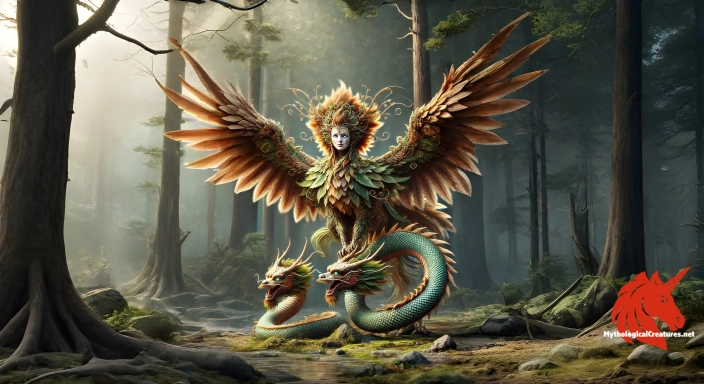
Goumang
Goumang - Embodies renewal, vitality, and the harmonious balance of nature and life
Origins & First Encounters
Goumang, also recognised by his alternate name Jumang, emerges as a fascinating auxiliary deity within the ancient mythos of the Fuxi family. His origins trace back to the earliest layers of Chinese cosmology when the forces of nature and divinity were interwoven in the tapestry of creation. As the god of wood and spring, he embodies the rejuvenating energy that transforms barren winter landscapes into vibrant scenes of life. His role in the pantheon is subtle yet essential, serving as a guardian of life and a nurturer of health amid nature’s perpetual cycles. The deity’s presence is indicative of a time when the seasonal shifts were deeply interlaced with ritual and natural philosophy. Born from a tradition that revered both human innovation and the untamed powers of nature, he presided over the balance of growth and decline. His early depictions appear in texts like the Classic of Mountains and Seas, anchoring him within a storied lineage that continues to influence cultural perceptions. Celebrated for bestowing vitality and fostering regeneration, Goumang remains a symbol of the eternal bond between humankind and the natural world.
Source Texts & Tale Variants
The literary footprint of Goumang begins with the Classic of Mountains and Seas, a compendium that has preserved his striking image over the epochs. Within this ancient text, he is succinctly described yet his mystical attributes inspire expansive interpretation. Various fragments of folklore and lesser-known treatises have since added layers to his narrative, illustrating how oral traditions reworked his myth for different audiences. Some accounts accentuate his status as the harbinger of spring and the patron of life, while others highlight his deep-rooted connection to the element of wood. Over time, regional storytellers have woven his character into local myths, imbuing him with qualities reflective of their unique environmental and societal concerns. This narrative mosaic underscores the fluidity of his identity and the diverse contexts in which he has been revered. Commentaries during later Chinese dynasties further enriched his legend, revealing a complex interplay between ritual, art, and narrative. Although the literary sources are few in number, their poetic fragments testify to a legacy that has long captivated the imagination. The collective corpus of ancient writings and local anecdotes solidifies his standing as a guardian of nature’s renewal and the inviolable spirit of health.
Form & Powers
The physical portrayal of Goumang captivates the observer by blending the characteristics of both the animal and the human. Artistic renditions often depict him with the lithe body of a bird, suggesting a natural grace and an agile essence that defies earthly constraints. His human face, set in serene contemplation, conveys wisdom and benevolence, qualities that echo his role as a nurturer of life. This duality of form—a fusion of the instinctual and the intellectual—embodies the ancient belief in the oneness of nature’s forces. One of the most arresting elements of his imagery is his depiction astride two flowing dragons, a symbol of cosmic power and the seamless integration of terrestrial and celestial energies. The dragons themselves are rendered in fluid, sinuous lines with intricate detailing that accentuates their otherworldly stature. Subtle embellishments, such as motifs reminiscent of blossoming wood or emerging spring, further enhance his aura of renewal. Through these dynamic visual elements, Goumang’s appearance becomes a metaphor for transformation and the cyclical nature of existence. His striking composite form continues to inspire both traditional artisans and modern reinterpretations alike.
Regional Faces
The depiction of Goumang varies delicately across different regions, reflecting the diverse cultural landscapes of ancient China. In the warmer southern provinces, he is often celebrated as the quintessential harbinger of spring, his image imbued with the vibrant hues of budding flora and renewed earth. Conversely, in the northern territories, his myth intertwines with narratives of transitioning from the harshness of winter to the gentleness of spring, symbolising hope and the promise of regeneration. Local legends frequently adapt his visual portrayal, merging his attributes with indigenous nature deities and spirits unique to each region. Rural festivals and temple iconography further accentuate these regional nuances, often showcasing his divine connection to the cycles of agriculture and the rhythms of the land. Storytellers in diverse communities emphasise different aspects of his character, from his avian agility to his nurturing influence, aligning him with locally revered traditions. Even subtle variations in his attire or the style of his dragons can signal regional adaptations. These multifaceted interpretations underline how Goumang’s myth is not static but evolves with local environmental and cultural influences, cementing his role as a continuously relevant symbol in communal celebrations of life and renewal.
Cultural Parallels
The hybrid form of Goumang, which marries the physicality of a bird with the humanity of a face, finds many echoes in global mythological traditions. Similar to the Egyptian god Horus, who is depicted with a falcon’s head and revered as a symbol of sky and sovereignty, Goumang’s imagery bridges the gap between the earthly and the divine. In the rich tapestry of Mesoamerican lore, figures such as Quetzalcoatl also fuse avian elements with human qualities, creating deities that are revered as bringers of life and harbingers of regeneration. Across various cultures, the concept of a being that transcends ordinary boundaries to combine animal instinct with human insight is a recurring theme. These similarities have allowed scholars and enthusiasts alike to draw fascinating parallels between disparate myth systems. In many ways, such analogues affirm a universal human fascination with the duality of nature, blending symbolisms of transcendence with mortal experience. Moreover, these hybrid figures often serve as intermediaries, mediating between realms and offering guidance on the cyclical nature of life and death. The comparative study of such deities highlights the enduring allure of myth as a means to articulate the mysteries of natural and supernatural worlds. This shared symbolic language, cutting across cultural and geographical divides, accentuates the profound unity underlying human myth-making traditions.
Legacy & Modern Evolution
The evolution of Goumang’s myth mirrors the broader arc of Chinese cultural transformation, where ancient figures are continually reinterpreted to address contemporary experiences. Over the centuries, as dynasties rose and fell, his image absorbed new symbolic meanings, reflecting the shifting priorities of societies attuned to the cycles of nature. Although initially depicted in succinct mythic accounts, his association with wood, spring, and health gained prominence in local rituals and seasonal celebrations throughout history. In more recent times, Goumang has been reinvigorated as an emblem of renewal and holistic well‐being, echoing modern concerns about environmental sustainability and the interdependence between human life and nature. Contemporary art and literature have embraced his rich, hybrid iconography, often invoking his imagery in explorations of transformation and balance. Urban cultural festivals and digital media projects celebrate his mystique, bridging ancient symbolism with modern sensibilities. His evolving narrative has also inspired a reimagining of nature deities, positioning him as a quiet yet potent reminder of the perennial bond between humanity and the natural world. As traditional iconography meets innovative reinterpretation, Goumang endures as a compelling figure whose legacy transcends time, embodying both the wisdom of ancient myth and the dynamic pulse of modern life.
Interesting Fact
Goumang's striking composite appearance combines elements of the natural world with human form, highlighting the intricate interplay between divine creativity and earthly phenomena.
Limited sponsor opportunity
One slot, carefully chosen partners
We only feature a small number of relevant sponsors at any time. If you create serious myth content, we would like to hear from you.
Partner with usQuick Creature Info
Associations:
Our Mythic Legendary Rating:

Also Sometimes Known As:
Habitat:
Supernatural Powers:
Physical Attributes:
Abilities:
Behavior:
Lore:
Related Creatures, Tales or Lore
References
Discover Another Mythical Legend You May Not Have Heard Of?
Uncover the mysteries of ancient folklore and expand your knowledge of legendary beings from cultures around the world.
Dare to Meet the Chariclo....
Curated by the Mythological Creatures Team
Series editor: Mythological Creatures Directory
Primary desk: Asian & Pacific Myth Cycles Desk
(rev. November 2025)