
Chariclo: Chariclo is a Greek mythological nymph renowned for her role as the wife of the centaur Chiron and the nurturing mother of several mythological figures.

Chariclo
Chariclo - Chariclo is recognized for her nurturing role, being wife to the wise centaur Chiron and nurse to Achilles, thereby influencing key mythological narratives.
the legend in five swipes.
the legend in five swipes.
Chariclo: How the Story Began
Chariclo emerges as an essential yet enigmatic figure in Greek mythology, woven into an intricate tapestry of divine narratives and heroic legacies. She is most notably recognised as the devoted consort of the learned centaur Chiron, whose guidance nurtured many a legendary hero. Her life is painted with mystery, as various accounts present her as a nurturing nymph whose divine origins have been traced to Apollo, Perses, or Oceanus. This multiplicity of parentage not only elevates her status among mythic beings but also enriches her character with an ethereal quality that transcends mortal bounds. Her role extends beyond personal symbolism, influencing the destinies of her children and even reaching into the early care of the young Achilles. The early mentions of her in scholia and poetic fragments reveal subtle layers of character—one that is as nurturing and compassionate as it is steeped in mystic provenance. Her narrative, imbued with both beauty and strength, has resonated with audiences across the ancient world and endures as a symbol of gentle wisdom. By intertwining the divine with the human, Chariclo’s legend encapsulates the harmonious union between nature, myth, and the heroic spirit. Her story remains a testament to the transformative power of care and the timeless influence of nurturing figures in myth.
Chariclo: From Oral Tale to Written Record
The historical record of Chariclo is preserved through a rich array of ancient texts and scholia that invite varied interpretations of her myth. A notable reference appears in a scholium on Pindar, where her intricate lineage is discussed, placing her among the ranks of divinely touched figures. These early annotations underline the ambiguity of her origins, with different traditions ascribing her birth to revered deities such as Apollo, Perses, or Oceanus. Additional literary sources, though fragmentary, hint at her integral role as the wife of Chiron, blending the themes of wisdom, caregiving, and heroic mentorship. The primary texts often focus on her familial connections, exploring how her nurturing nature influenced the lives of her children and even extended to the care of young Achilles. Other minor variants in ancient compendiums treat her as a character whose identity gracefully shifts according to the narrative context in which she is portrayed. There exists a noticeable divergence in the retelling of her myth, reflecting how various local traditions adapted her story to fit broader cultural and moral themes. The scattered references across ancient literature serve as a mosaic of interpretations that enrich her character with layers of mythic complexity. These diverse sources collectively sustain a legacy that is as much about the transmission of heroic values as it is about the mystery of divine ancestry. The enduring presence of such textual variants continues to captivate scholars and enthusiasts alike.
Chariclo: Appearance and Abilities
Chariclo is often imagined with an ethereal beauty that epitomises the grace and elegance traditionally associated with nymphs. Her features are portrayed as luminous and refined, mirroring the quiet splendour of a dewdrop glistening in the early light. Artistic depictions have her with long, flowing hair that seems to capture shades of nature’s own palette, hinting at her connection to both the divine and the natural world. The soft contours of her face exude a serene calm, while her eyes are described as reflective and full of ancient wisdom. Often, she is depicted clad in garments that evoke the verdant hues of pastoral landscapes, underscoring her role as a nurturer and guardian. Some representations subtly integrate elements of her union with Chiron, suggesting a touch of the wild in her otherwise refined appearance. The balance between strength and gentleness in her physique is consistently highlighted in vase paintings and frescoes from antiquity. This blend of delicate beauty with an inner luminosity reinforces her image as a timeless emblem of maternal care and divine grace. Each portrayal not only celebrates her physical allure but also symbolises the enduring vitality of nature itself. The visual narratives surrounding Chariclo have invariably reinforced her status as a paragon of nurturing allure and ethereal charm.
Chariclo: Regional Versions and Local Names
Across the varied landscapes of the ancient Greek world, the myth of Chariclo acquired distinctive local flavours that reflect the diverse cultural milieus in which she was recounted. In the mainland, she is often celebrated as a maternal figure whose close ties to nature and heroic lineages underscore her pivotal role in the education of future legends. On the Aegean islands, oral traditions embellish her story with local nuances, sometimes portraying her as a benevolent spirit associated with the sea and its mysteries. Such interpretations highlight her as a guardian of both land and water, aligning her with the natural cycles revered by island communities. In regions influenced by the rich tapestry of Magna Graecia, her narrative intertwines with local rites that emphasise fertility and pastoral abundance, adapting her myth to local aesthetic and spiritual values. Variations in her visual depiction—ranging from subtler facial features to distinct attire—mirror the regional artistic styles and cultural aesthetics unique to each locale. Some local adaptations also stress her relationship with nature, casting her as a symbol of the life force that animates both the earth and the cosmos. This regional diversity not only enhances the richness of her myth but also illustrates the flexibility of local narratives in incorporating wider pan-Hellenic themes. Each regional variant serves as a testament to her enduring appeal, resonating with communities through tailored interpretations that celebrate both beauty and wisdom. The multiplicity of regional portrayals reaffirms that Chariclo’s legacy is both universally significant and locally cherished.
Which other cultures tell a story like that of Chariclo?
When set alongside similar mythological figures, Chariclo’s narrative reveals intriguing parallels that span various cultural traditions. Her role as a nurturer and guardian finds echoes in other mythic beings who similarly traverse the realms of divine care and mortal mentorship. Echoing aspects of her nurturing nature can be seen in figures like Thetis, whose involvement in the early life of heroes underscores a shared commitment to protecting the fragile potential of youth. Comparable archetypes appear in other pantheons as well, such as the benevolent nature spirits of Norse and Celtic mythologies who are revered for their nurturing influence over heroes and communities alike. Her dual essence—both maternal and imbued with a touch of the otherworldly—resonates with the universal motif of divine caretaking that transcends cultural boundaries. In many traditions, care-giving deities serve as bridges linking the human experience with the mysteries of the divine, a role that Chariclo fulfils with understated elegance. The similarities across these cultural narratives highlight a common thread of reverence for figures who nurture and shape heroic destinies. Such cross-cultural comparisons illuminate how diverse societies have revered the transformative power of compassionate guidance and the enduring influence of mythic care. The comparative analysis thus positions Chariclo not merely as a solitary character, but as part of a broader tapestry of mythic figures who champion the ideals of sustenance, wisdom, and growth.
Chariclo: From Folklore to Pop Culture
Over time, the myth of Chariclo has evolved, reflecting both the shifting cultural landscapes and the enduring fascination with her nurturing essence. Her early appearances in ancient scholia have given way to more elaborate portrayals in later literary and artistic traditions, where she is celebrated as a symbol of divine maternal care. Renaissance artists and classical revivalists found inspiration in her tender and enigmatic qualities, often portraying her in allegorical contexts that highlighted the unity of nature and wisdom. In modern reinterpretations, Chariclo has been embraced as a figure who transcends her mythic origins, serving as a powerful emblem of transformation, resilience, and ethical guidance. Contemporary adaptations in literature and digital media reimagine her role, often casting her as a mentor who fosters heroism and bridges the gap between the earthly and the celestial. Her image is frequently invoked in discussions related to timeless archetypes of nurturing, illustrating how ancient symbols can be repurposed to address modern themes. The evolution of her myth reflects a continuous dialogue between tradition and innovation, where each generation imbues her legacy with new layers of meaning. As academic and popular interest in classical mythology continues to grow, Chariclo remains a poignant reminder of the enduring allure of mythic narratives. Today, her story not only enriches our understanding of ancient beliefs but also inspires modern interpretations that underscore the transformative power of compassion and care. Her legacy, thus, retains a vibrant presence in both scholarly discourse and creative expression.
Interesting Fact
A notable aspect of Chariclo's myth is her role as a caregiver to Achilles, which underscores the often-overlooked influence of nymphs in shaping the destinies of legendary heroes.
Mythological Treasures
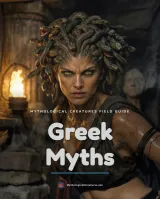
Greek Myths: A field guide to the monsters of ancient Greece
Every monster here earned its place in legend, and each gets a full page of artwork and the story behind it.
Japanese Yokai: A field guide to the spirits and demons of Japanese folklore
Fifteen spirits, with the signs to watch for and what the old tales say to do if you meet one.
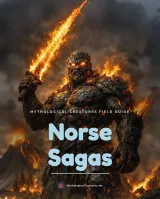
Norse Sagas: A field guide to the beasts of the Viking world
Drawn from the saga accounts themselves, with the powers, weaknesses and doom of each being set out.
the legend in five swipes.
Reach myth fans
Connect your myth-driven brand with this audience
Our readers are writers, educators, gamers, and collectors who care about mythology. Enquire about a limited sponsor placement on creature pages.
Enquire about sponsorshipQuick Creature Info
Origin:
Our Mythic Legendary Rating:

Habitat:
Supernatural Powers:
Physical Attributes:
Abilities:
Behavior:
Lore:
References
Discover Another Mythical Legend You May Not Have Heard Of?
Uncover the mysteries of ancient folklore and expand your knowledge of legendary beings from cultures around the world.
Dare to Meet the Lotis....
-57fbe2ea-015d-4933-b657-1698fc4de995_small.webp "Depiction of Lotis")
The Mythological Creatures Book Series
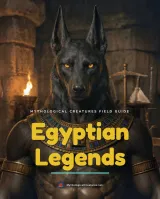
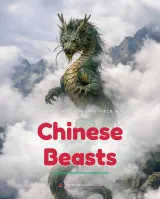
Yokai, Greek, Norse, Egyptian & Chinese. Five illustrated field guides to the creatures the old stories either warned or told you about.

Curated by the Mythological Creatures Team
Series editor: Mythological Creatures Directory
Primary desk: Hellenic & Ancient Mediterranean Desk
(rev. November 2025)