
Agrotera: Agrotera is an epithet of Artemis, the revered Greek goddess of the hunt and protector of Attic hunters.

Agrotera
Agrotera - Central to Attic hunting rituals and military traditions, notably celebrated for her role in triumphs such as the Battle of Marathon
the legend in five swipes.
the legend in five swipes.
When was Agrotera first written about?
Agrotera, meaning 'the huntress', embodies a dynamic aspect of the revered goddess Artemis, celebrated for her wild and protective nature. In the ancient Greek religious landscape, she emerged as a potent symbol of both the untamed forces of nature and the disciplined art of hunting. Her early worship is closely linked to the site at Agrae on the Ilissos, where a dedicated temple served as a centre for ritual and communal gathering. This epithet reinforced the idea that the divine was not only a nurturer of life but also a guardian in times of strife, especially among Attic hunters. The cult of Agrotera was intimately connected with martial vows and the spirit of battle, intertwining the thrill of the hunt with the resolve of warriors. Her character, both fierce and nurturing, offered a paradigm of harmony between human endeavour and nature’s wild unpredictability. Over time, her myth was interlaced with significant historical events that underscored her protective essence and strategic power in battle. Ritual acts, such as the ceremonial sacrifice of goats, symbolised the deep bond between her divine qualities and the earthly challenges faced by communities. The enduring narrative of Agrotera continues to resonate as a reminder of the symbiosis between humanity and the natural world. In every retelling, she is celebrated as a vital force that inspires both reverence and resilience.
Agrotera: From Oral Tale to Written Record
Ancient texts and local inscriptions provide glimpses into the vibrant cult of Agrotera, reflecting a legacy that transcends mere myth. The temple at Agrae on the Ilissos, where her statue proudly bore a bow, serves as a key primary source attesting to her importance in classical Athens. Ritual accounts, notably those detailing the Boedromia festival, recount the solemn procession and the sacrifice of 600 goats, emphasising her role in securing divine favour before battles. These ceremonial narratives underline how vital Agrotera was in mediating the relationship between divine intervention and martial success. In parallel, various regional records mention her worship in places such as Aigeira and Sparta, thereby enriching our understanding of her multifaceted identity. Later commentators, including figures like Eustathius, provided alternative explanations for her epithet, linking it to geographical roots and local town names. Despite the fragmentary nature of many accounts, the surviving descriptions paint a picture of a goddess revered for both her protective and combative attributes. Multiple story variants reflect how communities adapted her myth to their societal needs, ensuring her tale remained relevant over time. Oral traditions and archaeological findings also contribute to this mosaic of sources, offering insights into the cultural practices that celebrated her. The diverse spectrum of evidence highlights the enduring cultural impact of Agrotera’s cult on ancient society.
What abilities did Agrotera have?
Depictions of Artemis in her Agrotera aspect present a striking visual narrative, where physical elegance meets martial readiness. Statues from antiquity commonly capture her with a lean, athletic form that exudes both grace and strength, reflecting the perfect harmony of beauty and power. She is frequently shown wielding a bow, poised in a moment of decisive action that symbolises her role as a huntress. Her countenance is marked by a focused gaze, imbued with both the serenity of nature and the ferocity of battle. Artists often embellished her image with natural motifs—such as garlands of leaves or intertwined branches—that subtly echo her deep connection to the wild. In some representations, details of her attire include hints of animal pelts or armours, underscoring the duality of her character as both a nurturer and a protector. The vivid expressions in her eyes and the dynamic posture of her limbs convey a readiness to confront any encroachment upon her realm. Variations in her iconography over time demonstrate differing regional aesthetics and evolving cultural ideals. These artistic interpretations not only celebrate her physical prowess but also encapsulate the enduring spirit of the hunt. The consistent symbolism of the bow and agile form remains an iconic representation of Agrotera’s mythic identity.
Agrotera: Regional Versions and Local Names
The cult of Agrotera was not confined to a single locale but flourished across various regions of the Greek world, each adapting her image to local customs and ideals. While her primary sanctuary was at Agrae on the Ilissos, communities in places like Aigeira and Sparta embraced her as an emblem of martial vigour and natural mastery. In Sparta, for instance, her identity was interwoven with the city’s own valorous ethos, emphasising aspects of protection and warfare. Within Attica, Agrotera came to symbolise a nurturing guardian of the rural landscapes and the untamed frontiers that bordered urban civilisation. Local festivals and solemn processions tailored to her worship showcased unique ceremonial practices, including elaborate animal sacrifices and dedicated rites that resonated with regional histories. The adaptability of her myth allowed each community to blend indigenous cultural elements with the established iconography of Artemis. This syncretism resulted in variations where she could appear as both a wild huntress and a disciplined warrior. The regional diversity in her portrayal speaks to the flexible nature of myth-making in ancient Greece. As a result, her legends have a layered complexity that mirrors the diverse environmental and societal landscapes in which she was revered. The multifaceted regional interpretations continue to add depth to the overall legacy of Agrotera.
Which other cultures tell a story like that of Agrotera?
Agrotera’s character finds intriguing parallels in a broader tapestry of hunting deities and divine protectresses across various cultural traditions. Her essential attributes resonate strongly with those of Diana, the Roman counterpart of Artemis, who similarly embodies the spirit of the hunt and protection of the wilderness. Within the pantheon of deities, her narrative aligns with figures like the Norse goddess Skadi, whose association with winter landscapes and the hunt also underscores the universal appeal of nature-centric divinities. Both Agrotera and her counterparts symbolise the delicate balance between beauty and ferocity, a duality that unites disparate mythological traditions. The thematic echoes extend further as these deities often serve as mediators between the human and natural worlds, inspiring reverence for the wild while offering protection in times of need. Comparative study reveals that while cultural contexts may influence the specifics of iconography and ritual, the underlying archetype of the huntress remains remarkably consistent. These parallels accentuate not only the regional uniqueness but also the shared human fascination with the untamed forces of nature. The interweaving of martial and natural symbolism in her character offers a rich field for comparative mythology. In every tradition, the huntress archetype speaks to a deep-seated need for connection with the wilderness and the virtues of resilience. Ultimately, these cross-cultural comparisons enrich our understanding of Agrotera as a multifaceted figure whose influence traverses geographical and temporal boundaries.
Where does Agrotera appear in films and games?
The legacy of Agrotera extends far beyond the ancient rituals and grand temples that first enshrined her myth, resonating deeply within both historical narratives and modern cultural discourse. In antiquity, her veneration was marked by elaborate festivals and sacrificial rites that symbolised divine protection in battle and the sanctity of the hunt. Although her temple at Agrae on the Ilissos was destroyed in 1778 during the Ottoman era, the physical remnants and historical records have continued to evoke her once-magnificent presence. The ruins now stand as a poignant emblem of a richly woven past, inspiring contemporary movements to preserve and restore ancient cultural sites. Modern reinterpretations of Agrotera have broadened to encompass themes of environmental stewardship and empowerment, reflecting evolving societal values. Her narrative has been reimagined through art, literature, and scholarly research, where she is increasingly portrayed as a symbol of resilience and natural harmony. The transformation in her representation over the centuries highlights the fluidity of myth and its capacity to adapt to changing cultural landscapes. Contemporary festivals and academic explorations serve to rekindle interest in her story, bridging the gap between ancient ritual and modern identity. As communities and heritage organisations continue to champion the restoration of her temple, Agrotera’s myth remains a vibrant dialogue between the past and the present. Her enduring spirit, captured in both legend and stone, continues to inspire a profound appreciation of the ancient world and its timeless wisdom.
Interesting Fact
It is intriguing that the epithet Agrotera bridges both divine and nymph identities, reflecting the complex and evolving nature of ancient Greek religious practices.
Mythological Treasures
Greek Myths: A field guide to the monsters of ancient Greece
Every monster here earned its place in legend, and each gets a full page of artwork and the story behind it.
Japanese Yokai: A field guide to the spirits and demons of Japanese folklore
Fifteen spirits, with the signs to watch for and what the old tales say to do if you meet one.
Norse Sagas: A field guide to the beasts of the Viking world
Drawn from the saga accounts themselves, with the powers, weaknesses and doom of each being set out.
the legend in five swipes.
Reach myth fans
Connect your myth-driven brand with this audience
Our readers are writers, educators, gamers, and collectors who care about mythology. Enquire about a limited sponsor placement on creature pages.
Enquire about sponsorshipQuick Creature Info
Origin:
Associations:
Our Mythic Legendary Rating:

Also Sometimes Known As:
Habitat:
Supernatural Powers:
Physical Attributes:
Abilities:
Behavior:
Lore:
Related Creatures, Tales or Lore
- DDiana
- FFlidais
- SSkadi
References
Discover Another Mythical Legend You May Not Have Heard Of?
Uncover the mysteries of ancient folklore and expand your knowledge of legendary beings from cultures around the world.
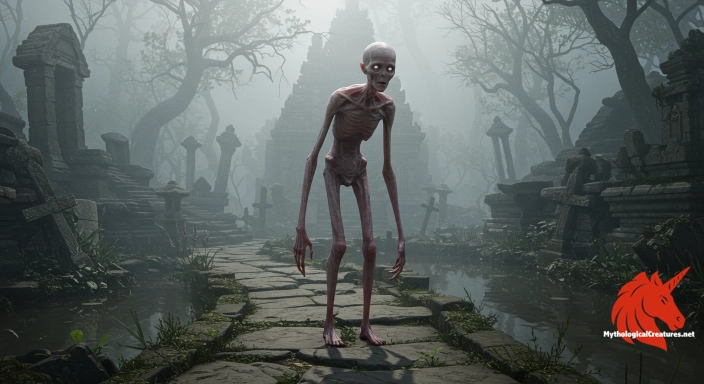
Dare to Meet the Preta....
The Mythological Creatures Book Series
Yokai, Greek, Norse, Egyptian & Chinese. Five illustrated field guides to the creatures the old stories either warned or told you about.




Curated by the Mythological Creatures Team
Series editor: Mythological Creatures Directory
Primary desk: Hellenic & Ancient Mediterranean Desk
(rev. November 2025)