
Aguara: Aguara is a mythological fox revered in Ava Guaraní and Chané traditions, known as a trickster and cultural hero.
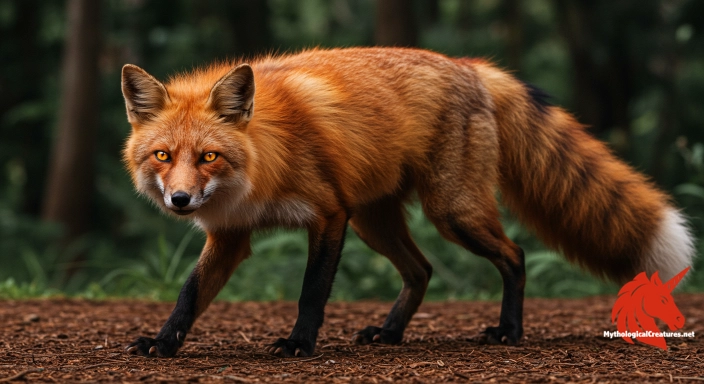
Aguara
Aguara - Aguara embodies dual aspects of malevolent trickery and beneficent innovation, influencing creation myths and cultural practices through his legendary exploits.
the legend in five swipes.
the legend in five swipes.
The Origin Story of Aguara
Aguara emerges from the rich tapestry of Ava Guaraní and Chané traditions as a beguiling and multifaceted mythological fox. His origins are deeply embedded in a pre-colonial spirituality, where oral narratives have long celebrated a figure who embodies both mischief and heroic innovation. Often revered under the honoured name Aguara-tunpa, he is as much a sacred icon as he is a trickster, whose deeds inspire both admiration and wariness. His earliest attestations are found in age-old oral traditions, passed down through generations that blend moral lessons with ritualistic symbolism. Intricately, his narrative interweaves episodes of cunning deception with acts that foster human creativity, such as the legendary theft of algarroba seeds. His adventures frequently unfold against a backdrop of nature, emphasising his role in bridging the earthly with the divine. In many stories, his interactions with humans reveal a complexity that challenges conventional moral boundaries, leaving a legacy that oscillates between benevolence and malevolence. The association with celestial configurations, notably the constellation Scorpius, lends his character a cosmic dimension. Overall, the myth of Aguara is an enduring emblem of the dynamic interplay between chaos and order in the natural and supernatural realms.
Which texts first mention Aguara?
The narrative of Aguara is preserved chiefly through vibrant oral traditions that have been handed down over countless generations. Various indigenous communities offer rich, albeit sometimes contrasting, story variants that accentuate different facets of his trickster nature. In several accounts, the addition of the sacred suffix ‘tunpa’ not only dignifies his persona but also hints at a deeper, ritualistic significance embedded in his myth. One celebrated narrative recounts how he cunningly stole precious algarroba seeds from the elusive Viscacha, setting the stage for humanity’s unexpected gift of rubber. Equally compelling are the tales of his conflict with Tatu-tunpa, a fabled armadillo whose rivalry with Aguara becomes symbolic of nature’s inherent dualities. Other stories illuminate his multifarious interactions with human communities, where his deceptive charm often results in both blessings and hardships. These diverse versions capture not only varying moral interpretations but also reflect the fluidity of indigenous storytelling traditions over time. Occasional written records emerging in later centuries echo these oral accounts, adding layers of interpretation to his mythic persona. The composite of these sources forms a mosaic that continues to intrigue and inspire both storytellers and cultural historians alike.
Aguara: Size, Shape and Strange Features
Descriptions of Aguara are as elusive and mutable as the myths that celebrate him, capturing the imagination with images of a cunning, otherworldly fox. Traditionally, he is envisioned with a lustrous, fiery red coat intermingled with hints of gold, a palette that symbolises both vitality and his innate craftiness. His eyes are often said to glow with a mysterious gleam, suggesting an intelligence that borders on the supernatural. Numerous accounts attribute special significance to his tail, sometimes depicted as unusually long or even multi-branched, echoing the celestial curve of the scorpion’s tail. Artistic renditions portray him in mid-leap, embodying both grace and the poised alertness of a predator. Intricate markings across his slick fur evoke ancient motifs, perhaps representing agricultural symbols or cosmic designs. In some narratives, his form is so fluid that he appears capable of shifting between a tangible animal and an ethereal spirit. Variations in size also surface in various depictions, with some communities granting him a human-like stature while others cast him as an almost larger-than-life presence. These detailed physical portrayals not only capture Aguara’s enigmatic allure but also reflect his role as a bridge between the natural and the supernatural worlds.
What do different regions call Aguara?
Local renditions of the Aguara myth vary widely, reflecting the rich cultural diversity found among indigenous groups in South America. Within Ava Guaraní traditions, he is consistently portrayed as a cunning figure whose seemingly erratic actions often yield unexpected benefits for society. In contrast, certain Chané accounts paint him in a more ambivalent light, where his trickery occasionally casts a shadow of malevolence over his heroic deeds. The myth often adapts to local environmental and social contexts, with different regions accentuating his role in natural cycles such as the harvest or the creation of essential resources like rubber. Some local narratives emphasise his fabled rivalry with Tatu-tunpa, imbuing the conflict with a deeper symbolic resonance that mirrors regional struggles between order and chaos. Community storytellers have also highlighted his seductive charm and the way his engagements with human affairs underscore broader cultural dynamics. Diverse environmental settings—ranging from arid plains to lush river basins—further colour the portrayal of his adventures, making him a versatile emblem in varying contexts. Despite these regional variations, a unifying theme persists: Aguara’s inherent capacity to unsettle established norms while simultaneously enriching cultural heritage. Such regional adaptations ensure that his myth remains alive, evolving with the nuances of each community’s values and experiences.
Do other traditions know Aguara by another name?
Aguara’s myth resonates with a number of trickster figures found in disparate mythological traditions, highlighting common themes of transformation and subversion. His cunning nature and uncanny ability to blur moral boundaries draw compelling parallels with the Japanese kitsune, where foxes are also revered as shapeshifters endowed with mystical powers. Similar comparisons emerge when considering Native American lore, such as that of the coyote, renowned for its unpredictable antics and moral ambiguity. In a broader sense, his narrative aligns with trickster traditions symbolised by characters like Anansi or Reynard, whose adventures encapsulate both the humorous and catalytic aspects of transgression. Aguara’s role in the creation of rubber for mankind mirrors the archetypal motif of culture heroes who, through their daring acts, bestow vital resources upon humanity. This cross-cultural dialogue illustrates how similar archetypes emerge independently across diverse societies, each reflecting unique environmental and social challenges. The interplay between mischief and benefaction in his stories speaks to a universal human fascination with beings who defy easy categorisation. These comparative motifs not only enrich our understanding of Aguara but also underscore the shared narrative threads that connect disparate mythologies. In essence, his myth becomes a vibrant point of convergence for global themes of transformation, resilience, and the subversion of conventional norms.
Aguara: Then and Now
Over the centuries, the legend of Aguara has evolved significantly, adapting to the shifting landscapes of cultural identity and social values. Enduring oral traditions have continuously reshaped his myth, ensuring that each generation imbues his narrative with fresh perspectives and contemporary relevance. In recent times, his character has been reimagined in literature, visual arts, and performance, thereby reaffirming his status as both a cultural relic and a modern symbol. Modern indigenous movements have embraced his tale as a powerful emblem of resilience, often invoking his trickster spirit as a form of defiance against cultural homogenisation. Contemporary interpretations emphasise not only his cunning misadventures but also his role as an ingenious benefactor, whose antics have left a lasting impact on human creativity. Artistic representations blend traditional iconography with modern design, celebrating his capacity to transform chaos into constructive change. Scholars and cultural critics alike find in his myth a fertile ground for discussions about the interplay between ancient wisdom and modern life. The celestial tie to the constellation Scorpius continues to intrigue astronomers and myth enthusiasts, adding a layer of cosmic symbolism to his legacy. Through these varied reinterpretations, Aguara endures as an icon of cultural heritage, inspiring both pride and critical reflection within indigenous communities and beyond.
Interesting Fact
Aguara's myth intertwines natural elements, celestial symbolism, and the very origins of significant cultural commodities like rubber, making him a uniquely complex character in South American mythology.
Mythological Treasures
Norse Sagas: A field guide to the beasts of the Viking world
Drawn from the saga accounts themselves, with the powers, weaknesses and doom of each being set out.
Egyptian Legends: A field guide to the gods and monsters of ancient Egypt
Guardians of the living and devourers of the dead, with the role each played in judgement.
Chinese Beasts: A field guide to the dragons and demon kings of Chinese myth
From river dragons to demon kings, with the legends that shaped five thousand years of storytelling.
the legend in five swipes.
For serious mythcraft
Your project belongs among the legends
If your work deepens how people understand, play with, or teach mythology, a sponsor placement here keeps it in front of the right readers all year.
Submit a sponsorship enquiryQuick Creature Info
Origin:
Associations:
Our Mythic Legendary Rating:

Also Sometimes Known As:
Habitat:
Supernatural Powers:
Physical Attributes:
Abilities:
Behavior:
Weaknesses:
Lore:
Related Creatures, Tales or Lore
- CCoyote (Native American Mythology)
- KKitsune (Japanese Mythology)
- RReynard the Fox (European Folklore)
References
Discover Another Mythical Legend You May Not Have Heard Of?
Uncover the mysteries of ancient folklore and expand your knowledge of legendary beings from cultures around the world.
Dare to Meet the Archangel....

The Mythological Creatures Book Series
Yokai, Greek, Norse, Egyptian & Chinese. Five illustrated field guides to the creatures the old stories either warned or told you about.

Curated by the Mythological Creatures Team
Series editor: Mythological Creatures Directory
Primary desk: Americas & Indigenous Traditions Desk
(rev. November 2025)