
Alammuš: Alammuš, also known as Alammush, is a Mesopotamian deity who served as the attendant of the moon god Nanna.
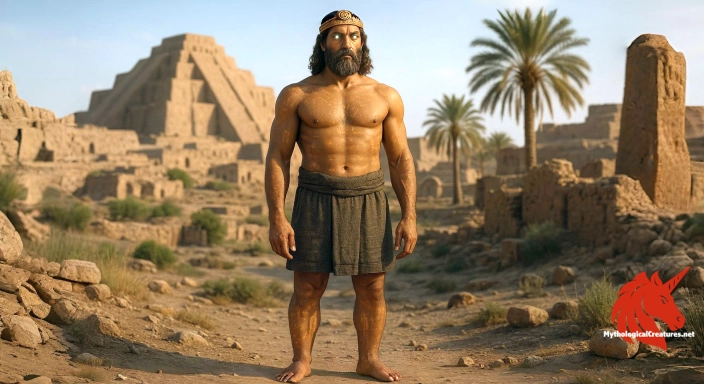
Alammuš
Alammuš - He played a vital role in the celestial hierarchy by serving as the attendant to the moon god Nanna and is noted in astronomical texts as a twin to Ningublaga.
the legend in five swipes.
the legend in five swipes.
Alammuš: First Encounters and Early Records
Alammuš is a distinctive deity from the ancient Mesopotamian pantheon who served as the divine attendant to the revered moon god Nanna. Emerging from a complex religious framework in Ur, his role was integral to the functioning of celestial administration. His designation as a sukkal highlights his responsibility as both a messenger and an executor of divine orders. The early records place him at the heart of a cosmological system that intricately linked the cycles of the moon with earthly rituals. His origins are intertwined with the sophisticated structure of Mesopotamian urban religion, reflecting the belief in hierarchical divine order. He is also noted for his close association with the cattle god Ningublaga, a relationship that in some texts is expressed through the imagery of twin brothers. This twin motif added further layers to his character, suggesting a duality in his cosmic responsibilities. The city of Ur, as a major centre of worship, provided the cultural and ritual context that helped shape his mythological profile. Throughout his narrative, Alammuš remains a compelling example of how even attendant deities could embody profound aspects of celestial order.
Who wrote down the legend of Alammuš?
Ancient cuneiform tablets and ritual inscriptions provide the primary evidence for the existence and functions of Alammuš. His name frequently appears in administrative records where his service to Nanna is meticulously detailed. Textual fragments from the Ur III period offer insights into his role within divine court proceedings and celestial hierarchies. The available liturgical hymns and mythological cycles often depict him as both a mediator and a guardian of divine decrees. In various astronomical texts, his close connection with Ningublaga is emphasised, casting the pair as twin entities within the cosmic order. Some literary variants subtly adjust his narrative, reflecting changes in religious attitudes over time. The multiplicity of sources – from ritual instructions to astronomical registers – illustrates how his character was embedded in both practical worship and celestial observation. These diverse texts collectively reveal the nuanced and evolving role of Alammuš in the fabric of ancient Mesopotamian mythology. Overall, his presence in the ancient records continues to provide crucial perspectives on the interplay between myth, ritual, and astronomy.
What did people say Alammuš looked like?
While direct visual depictions of Alammuš are limited, artistic and iconographic traditions offer clues to his likely appearance. He is presumed to have been portrayed with a dignified countenance, perhaps marked by a stylised, neatly trimmed beard typical of divine figures in Mesopotamian art. His iconography may have included an elaborate headdress or diadem, signifying his elevated status despite being an attendant deity. The artistic conventions of the time suggest that his attire was adorned with intricate motifs and divine symbols that resonated with celestial themes. Representations on seals and reliefs indicate that while he might have been shown as slightly subordinate in size compared to primary deities like Nanna, he nonetheless exuded authority and precision. His posture, often captured in dynamic poses, implies readiness and an agile spirit, attributes befitting a messenger of the gods. Scholars infer that elements such as sceptres or inscribed tablets could have been part of his regalia, symbolising his role in governance and record keeping. Although variations occur in surviving fragments, these visual cues collectively foster an image of a restless yet composed divine aide. Consequently, the reconstructed iconography of Alammuš adds depth to our understanding of his multifaceted role within the mythic hierarchy.
Alammuš Across Different Regions
Although Alammuš was primarily venerated in the ancient city of Ur, his worship and depiction reveal notable regional variations across Mesopotamia. In the southern regions, his identity remains closely tied to that of Nanna, reflecting the centralised cult practices of lunar worship. In contrast, some northern localities appear to have emphasised his relationship with Ningublaga, sometimes portraying him with a more pronounced twin dynamic. These regional reinterpretations allowed local communities to adapt his functions to suit their particular religious and cultural contexts. Artistic depictions from different city-states occasionally exhibit subtle differences in his regalia, hinting at the influence of local workshops and regional aesthetic preferences. In some areas, the presence of attendant deities like Alammuš was amplified to reinforce the administrative structure of the divine assembly. The assimilation of indigenous religious motifs with his established iconography reflects a broader trend of cultural syncretism within Mesopotamia. Such local adaptations not only enriched his mythic narrative but also ensured that his worship remained relevant to diverse communities. Thus, the regional diversity in his portrayal underscores the flexible and evolving nature of ancient Mesopotamian religion.
Is Alammuš unique, or found elsewhere?
Alammuš’s role in the Mesopotamian pantheon invites comparisons with attendant figures found in other ancient mythologies. His function as a divine messenger and executor is reminiscent of the Greek deity Hermes, who similarly bridged the gap between the celestial and mortal realms. The twin association he shares with Ningublaga finds a parallel in the theme of divine duality, much like the Dioscuri in Greek tradition who symbolise both unity and balance. This recurring motif of paired deities appears in various cultures, highlighting a universal inclination to represent cosmic order through complementary forces. The integration of an attendant figure into a larger divine hierarchy is a common narrative across ancient religions, showcasing the human tendency to imbue administrative roles with spiritual significance. In many ways, Alammuš’s functions echo those of minor deities in other traditions who, despite their subordinate status, are crucial to the maintenance of cosmic harmony. His depiction as both a servant and a celestial mediator illustrates the cross-cultural motif of divinely sanctioned bureaucracy. Comparative analysis thus enriches our understanding of how different cultures approached the structuring of their pantheons and the roles of auxiliary deities. Overall, the study of Alammuš alongside his counterparts in other mythologies underscores the universality of certain divine archetypes in the human imagination.
Alammuš: The Legend's Second Life
Over the course of millennia, the portrayal of Alammuš evolved in response to shifts in religious practice and political culture within Mesopotamia. Early inscriptions underscore his importance as a dedicated servant within a well-established divine hierarchy in the flourishing urban centre of Ur. As new cultural and political influences emerged, later texts and iconographic records began to reinterpret his functions, sometimes highlighting his astronomical and twin aspects more prominently. This evolution reflects the fluid nature of myth, where even subordinate deities could acquire additional dimensions over time. In modern scholarship, Alammuš is an important symbol for understanding the interplay between divine service and astronomical observation in the ancient world. His story has also been revisited in contemporary cultural works, ranging from academic research to creative reinterpretations in literature and digital media. These modern engagements with his myth underscore the lasting impact of Mesopotamian religious ideas on current perceptions of ancient civilisation. The gradual transformation of his narrative from a functional attendant to a subject of academic inquiry speaks to the enduring legacy of Mesopotamian myth-making. In this way, Alammuš continues to offer valuable insights into the complexities of divine hierarchy and the perpetual search for cosmic order.
Interesting Fact
Alammuš is uniquely recognised in astronomical texts as the twin brother of Ningublaga, symbolising the intricate relationships between celestial deities in Mesopotamian mythology.
Mythological Treasures
Chinese Beasts: A field guide to the dragons and demon kings of Chinese myth
From river dragons to demon kings, with the legends that shaped five thousand years of storytelling.
Japanese Yokai: A field guide to the spirits and demons of Japanese folklore
Fifteen spirits, with the signs to watch for and what the old tales say to do if you meet one.
Greek Myths: A field guide to the monsters of ancient Greece
Every monster here earned its place in legend, and each gets a full page of artwork and the story behind it.
the legend in five swipes.
For indie creators
Give your myth project a permanent home
Indie authors, artists, small studios, and makers can secure an annual, non-intrusive sponsor slot that meets readers where they explore.
Obtain more informationQuick Creature Info
Origin:
Features:
Associations:
Our Mythic Legendary Rating:

Also Sometimes Known As:
Habitat:
Supernatural Powers:
Abilities:
Behavior:
Lore:
Related Creatures, Tales or Lore
- NNinshubur
- PPapsukkal
References
Discover Another Mythical Legend You May Not Have Heard Of?
Uncover the mysteries of ancient folklore and expand your knowledge of legendary beings from cultures around the world.
Dare to Meet the Víðarr....

The Mythological Creatures Book Series
Yokai, Greek, Norse, Egyptian & Chinese. Five illustrated field guides to the creatures the old stories either warned or told you about.


Curated by the Mythological Creatures Team
Series editor: Mythological Creatures Directory
Primary desk: Hellenic & Ancient Mediterranean Desk
(rev. November 2025)