
Víðarr: Víðar is a Norse god renowned as the avenger of his father Odin, destined to kill the wolf Fenrir during Ragnarök.
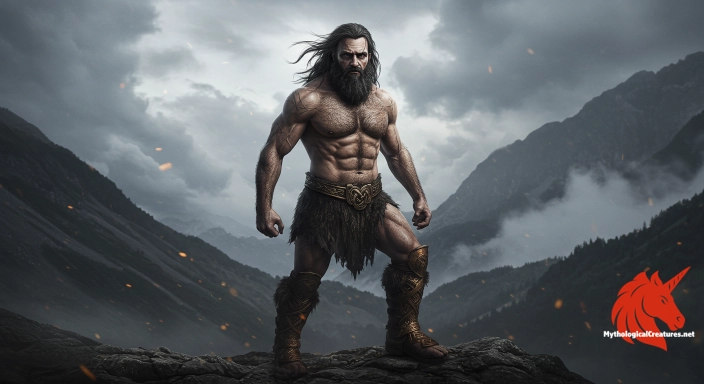
Víðarr
Víðarr - Víðar plays a crucial role in the Ragnarök narrative, embodying retribution and the restoration of divine order after cosmic upheaval.
Origins & First Encounters
Víđarr emerges as a formidable figure in the Norse pantheon, celebrated as the stoic avenger destined to confront chaos at the end of days.
Born of Odin and the jötunn Gríðr, his dual heritage sets him apart in a realm where divine purpose and elemental forces intertwine.
The etymology of his name, often translated as 'wide ruler,' hints at an expansive strength and influence that belies his often silent demeanour.
He is most renowned for his fated role in avenging his father by slaying the monstrous wolf Fenrir during Ragnarök.
Despite his critical destiny, Víđarr is characterised by a quiet determination rather than loud heroics, lending a mystique to his narrative.
The earliest attestations of his character reside in the Poetic Edda and the Prose Edda, where his impending act of vengeance is both forewarned and revered.
Cultural contexts of the Norse world imbue him with an air of inevitability and profound restraint, making him a symbol of measured retribution.
His presence in the mythic cycle underlines not only the inevitability of destiny but also the complex interplay between fate and free will in ancient myth.
Source Texts & Tale Variants
The primary sources chronicling Víđarr’s mythos are the Poetic Edda and the Prose Edda, texts that have preserved numerous Norse legends over the centuries.
These medieval compilations, though written in the 13th century, draw on older oral traditions that imbued his story with timeless elements.
In these texts, the detailed narrative surrounding his confrontation with Fenrir is interwoven with broader themes of cosmic retribution and renewal.
Multiple story variants exist, with some accounts providing scant detail and others suggesting symbolic layers such as the notion of ritual silence.
Skaldic poetry and later folklore have occasionally expanded on his character, hinting at the enigmatic nature of his birth and purpose.
The inscription on artefacts like the Gosforth Cross provides an additional visual testimony to his myth, indicating a wider cultural recognition.
While some medieval sources concentrate more on the overall narrative of Ragnarök, Víđarr’s specific role as the silent avenger remains a focal point among scholars.
This multilayered presence across various sources continues to spur both academic debate and popular reinterpretation.
Form & Powers
Descriptions of Víđarr’s physical form, though sparse, have been richly reimagined by later interpretations and artistic representations.
He is often envisioned as a towering and robust figure whose presence exudes both quiet power and resolute determination.
Some accounts allude to a distinctive, somber attire that mirrors the gravity of his destined task.
Innovative scholarship and iconography suggest that the very design of his armour – sometimes depicted as bearing mystical engravings – symbolises his unyielding spirit.
His facial features and stance are commonly rendered with an unexpressive mien, a silent testament to the burden of impending vengeance.
Variations in artistic portrayals sometimes illustrate him with an almost otherworldly calm, in stark contrast to the chaotic forces he must defeat.
The size and musculature attributed to him underscore a figure who is both physically imposing and emotionally resolute.
Even in the absence of detailed textual descriptions, his traditionally inferred attributes continue to capture the imagination of artists and scholars alike.
Regional Faces
While Víđarr is primarily a figure of Norse mythology, his portrayal reveals subtle regional variations that reflect local cultural nuances.
In Scandinavian traditions, he is often depicted as the epitome of quiet strength and resolute avengement, a figure revered for his singular duty to restore cosmic balance.
Icelandic sources, in particular, tend to emphasise his ritualistic silence and almost mystical detachment from the more tumultuous aspects of the pantheon.
On the mainland, folk depictions sometimes incorporate elements that resonate with local heroic archetypes, blending the divine with earthly traditions.
These regional adaptations have allowed Víđarr to be interpreted in multiple ways, from a somber guardian to a relentless executor of justice.
Artistic renditions across northern Europe have further cemented his image with variations in his iconography, such as the inclusion of symbolic motifs reflective of local mythic themes.
Despite these differences, the core narrative of his fated confrontation remains intact, uniting diverse regions through a shared mythic heritage.
This rich tapestry of regional interpretations underscores the dynamic nature of myth-making in the ancient and modern worlds.
Cultural Parallels
Víđarr’s character finds intriguing parallels in mythologies beyond the Norse tradition, reflecting a recurring theme of silent avengers across cultures.
The archetype of a divine retribution figure appears in various Indo-European traditions, where gods or heroes are tasked with righting cosmic wrongs.
In many respects, his quiet yet potent nature invites comparisons with other mythic figures who embody the idea of steadfast vengeance against overwhelming odds.
For instance, some Eastern European legends celebrate warriors who, much like Víđarr, channel restrained fury to confront existential threats.
There is also a notable thematic resonance with figures in Celtic lore, where the unspoken, deeply determined hero navigates the space between destiny and free will.
This cross-cultural connection underscores the broad appeal of the avenger archetype, which transcends regional boundaries.
Such comparative analysis enriches our understanding of Víđarr, aligning him with a wider spectrum of mythological narratives that combine silence with lethal purpose.
These similarities not only highlight shared cultural values about retribution and resilience, but also demonstrate how ancient symbols adapt across diverse mythic landscapes.
Legacy & Modern Evolution
Over the centuries, Víđarr’s myth has evolved from a peripheral tale in early Norse texts into an emblem of enduring strength and silent resilience.
Modern interpretations have reimagined him beyond the narrow confines of ancient verse, casting him as both a mythic avenger and a metaphor for unspoken determination.
Artistic depictions have flourished, particularly in northern European art, where his image on monuments like the Gosforth Cross continues to inspire creative reinterpretations.
His narrative has been woven into contemporary literature, graphic novels, and digital media, each medium exploring different facets of his stoic character.
In recent years, scholars and enthusiasts alike have revisited his role within the cosmic cycle of destruction and rebirth, highlighting his relevance in discussions about fate and free will.
The evolution of his portrayal reflects a broader trend in modern myth-making where ancient figures are rediscovered and imbued with new symbolic significance.
This gradual reinvention underscores how Víđarr remains a dynamic and compelling figure, continually adapted to reflect modern values and existential themes.
The silent god of vengeance endures as a powerful symbol whose legacy resonates both in academic circles and everyday cultural discourse.
Interesting Fact
A fascinating aspect of Víðar is his portrayal as a god of silence, which has led some scholars to interpret his reserved nature as a powerful, almost enigmatic form of resistance against the chaos of Ragnarök.
Partner with us
Sponsor this space
Reach thousands of mythology enthusiasts with a curated placement on our creature pages.
Learn about sponsorshipQuick Creature Info
Origin:
Our Mythic Legendary Rating:

Also Sometimes Known As:
Habitat:
Supernatural Powers:
Physical Attributes:
Abilities:
Behavior:
Weaknesses:
Lore:
References
Discover Another Mythical Legend You May Not Have Heard Of?
Uncover the mysteries of ancient folklore and expand your knowledge of legendary beings from cultures around the world.
Dare to Meet the Camael....
Curated by the Mythological Creatures Team
Series editor: Mythological Creatures Directory
Primary desk: Northern & European Folklore Desk
(rev. November 2025)