
Almops: Almops is a giant from Greek mythology, known as a son of Poseidon and the half‐nymph Helle.
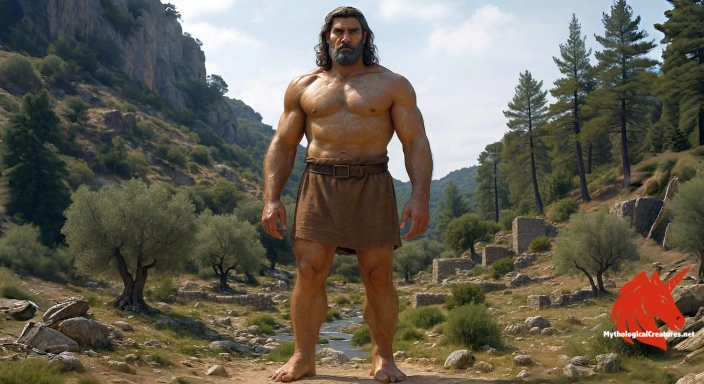
Almops
Almops - Almops is credited with lending his name to the region of Almopia in Macedonia, reflecting his lasting cultural impact.
Origins & First Encounters
Almops stands out as a distinctive figure in Greek mythology, emerging from the potent union between Poseidon and the half‐nymph Helle. His birth not only signifies divine lineage but also marks the intertwining of sea prowess with the mysterious forces of the natural world. He is identified as a giant, a being whose monumental frame echoes the power and unpredictability of his maritime father. Although his myth is concise, early traditions in Greece hint at his role in bridging both divine chaos and earthly order. The ancestral heritage attributed to Almops links him with other legendary offspring of the gods, thereby enriching the tapestry of mythic genealogies. His legacy is further enshrined in the very name of Almopia, a region where the echoes of his presence were once celebrated by the inhabitants. Early attestations likely emerged from localized oral traditions and fragmented texts, which revered such giants as embodiments of both might and mystery. The cultural context surrounding him reflects ancient efforts to explain natural phenomena through divine ancestry and heroic lineage. Even in its brevity, his myth conveys the timeless appeal of melding cosmic power with regional identity.
Source Texts & Tale Variants
The surviving accounts of Almops are scattered among the sparse genealogical fragments of ancient literature, where his existence is noted in relation to more prominent deities. His mention appears in select catalogues of divine progeny, suggesting that even minor figures were important in the overall mythic narrative. Some texts and local legends, though few in number, hint at his valor and extraordinary birthright amid the pantheon of Poseidon's children. Variations of his story can be found in differing regional accounts, with some traditions referring to him with slight name adaptations or alternate epithets. The preservation of his myth in these brief citations highlights the fluid nature of oral tradition and regional storytelling. While classical sources offer only modest details, they do provide enough insight to suggest a complex interweaving of myth and local history. Different ancient communities appear to have appropriated his figure to explain natural phenomena and solidify cultural identity. In some poetic fragments, his character is paired with other giants, reinforcing the idea that even peripheral legends held symbolic power. Such diverse narrative strands continue to stimulate both scholarly curiosity and local pride.
Form & Powers
Almops was envisioned as an imposing giant whose very stature set him apart in the mythic landscape of ancient Greece. His towering form, reputed to soar high above mortal men, exuded both brute strength and a sublime beauty inherited from divine ancestry. Artistic renditions and poetic descriptions have often ascribed to him a physique marked by broad, powerful limbs and a robust, muscular build that reflected the might of Poseidon. His skin is imagined to carry the rugged texture of weathered stone, interspersed with hints of the shimmering depths of the sea. The depiction of his facial features, notably a strong brow and piercing eyes, lends him an air of noble severity and mysterious allure. Flowing, wild hair and a thick beard, akin to tempestuous ocean waves, have been used by ancient storytellers to symbolise his untamed nature and elemental connection. Subtle marks or scars on his body, possibly acquired in mythic battles or as emblems of divine favour, further augment his legendary presence. Variations in his portrayal across sources underscore a duality where he can appear both refined and barbaric, marrying beauty with the raw force of nature. Overall, his physical description encapsulates the mythical blend of artistry, awe, and the inexorable power of the natural world.
Regional Faces
The myth of Almops carries a strong regional significance, particularly in Macedonia, where the ancient land known as Almopia derives its name from his legendary figure. Local lore has transformed him into more than a mythological giant, endowing him with a role as a cultural and ancestral emblem. In various traditions, Almops is celebrated as a guardian whose divine blood helped shape the geography and identity of the region. His connection to the local landscape is portrayed as intrinsically tied to the natural elements, with folklore suggesting that the rugged terrain of northern Greece was, in part, sculpted by his mighty presence. Some local narratives even incorporate ceremonies or rites that pay homage to his power, underscoring how myth and place become interwoven over time. Differences in regional storytelling have led to adaptations in his character, sometimes emphasising his martial prowess and at other times his nurturing influence upon the land. These local interpretations serve to reinforce a sense of communal identity, as the inhabitants of Almopia view themselves as natural descendants or spiritual heirs to his legacy. Over centuries, his myth has been adjusted to reflect both the challenges and the beauty of the regional environment. Through these varied depictions, Almops evolves from a mere mythological figure into a symbol of regional pride and historical continuity.
Cultural Parallels
Almops shares several thematic parallels with other mythological giants across different cultures, reflecting a common archetype of divine-human hybridity. Much like the Titans or the famed demigods, his immense stature and potent heritage epitomise the clash and convergence of celestial power with mortal traits. His lineage, directly linked to Poseidon, aligns him with other sea-associated deities and creatures in Mediterranean lore, evoking images of turbulent oceanic depths and primordial forces. Comparative analysis reveals that figures of his nature often serve as bridges between the elemental and the human, resonating with myths from various traditions that seek to explain the origins of natural phenomena. His narrative, although less elaborated than those of more celebrated giants, underscores a universal theme in mythology: the celebration of beings who occupy the space between order and chaos. Across different cultural traditions, parallels can be drawn between Almops and nature-focused deities, highlighting how mythology serves as a mirror to the natural world's power and unpredictability. In many traditions, such giants are portrayed as both protectors and forces of destruction, a duality that Almops does not escape. The cross-cultural motifs of divine birth, colossal physicality, and regional anchorage in myth reflect a broader human fascination with extraordinary lineage. Thus, examining Almops in relation to his mythological peers enhances our understanding of how legends adapt and resonate across different cultural landscapes.
Legacy & Modern Evolution
Over time, the myth of Almops has transitioned from a brief mention in early genealogical texts to an enduring symbol of regional heritage and ancient divine influence. His presence in myth has been reinterpreted through the ages, with successive cultures and epochs embracing his legacy as part of their local identity. During periods when classical myth gradually fell into obscurity, his name persisted in the toponymy of Macedonia, ensuring that his influence, albeit subtle, was not forgotten. In modern times, scholars of antiquity and enthusiasts of regional history have revived interest in his narrative, viewing him as a key to understanding the interplay of divine legend and local geography. Artistic renditions and literary reimaginings have transformed Almops into an emblem of the timeless fusion between nature's grandeur and human endeavour. His image has occasionally surfaced in popular media and local cultural festivals, which celebrate the rich mythological past alongside contemporary creativity. The evolution of his myth illustrates how ancient stories can be continually reshaped to reflect new cultural and historical understandings. As a symbol, Almops now resonates with the modern quest for identity and the desire to reconnect with a storied past. His enduring legacy is a testament to the transformative power of myth, bridging millennia of tradition with the ever-changing landscape of cultural memory.
Interesting Fact
An intriguing aspect of Almops' legend is that the now‐obsolete name for the region of Almopia directly stems from his name, immortalising the giant in the geography of ancient Macedonia.
Partner with us
Sponsor this space
Reach thousands of mythology enthusiasts with a curated placement on our creature pages.
Learn about sponsorshipQuick Creature Info
Origin:
Features:
Our Mythic Legendary Rating:

Also Sometimes Known As:
Habitat:
Supernatural Powers:
Physical Attributes:
Abilities:
Lore:
Related Creatures, Tales or Lore
References
Discover Another Mythical Legend You May Not Have Heard Of?
Uncover the mysteries of ancient folklore and expand your knowledge of legendary beings from cultures around the world.
Dare to Meet the Tariaksuq....

Curated by the Mythological Creatures Team
Series editor: Mythological Creatures Directory
Primary desk: Hellenic & Ancient Mediterranean Desk
(rev. November 2025)