
Alvaldi: Alvaldi is a jötunn from Norse mythology renowned for his immense strength and legendary status as the father of Ðejazi.
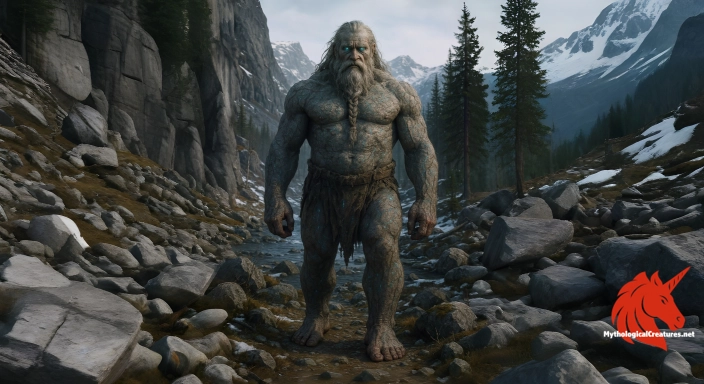
Alvaldi
Alvaldi - His legacy, underscored by the naming of Saturn's moon Alvaldi, reflects his enduring cultural impact.
Origins & First Encounters
Alvaldi, known also as Ölvaldi, emerges from the misty realms of Norse myth as a jötunn whose name translates to 'all-powerful', hinting at a presence that commands both awe and mystery. His origins, though sparse in detailed accounts, are woven into the fabric of early mythological genealogies where he is noted as the father of Ðjazi, a figure who further entwines the fates of gods and giants. This enigmatic giant appears in the tradition as an embodiment of raw, untamed power, resonating with the deep natural forces revered by ancient Norse communities. His earliest attestations, found in fragmentary saga references and poetic allusions, point to a character both formidable in might and laden with symbolic significance. The cultural context of his time placed immense value on strength and the elemental forces, providing a conceptual space where a being like Alvaldi could be seen as both a threat and a guardian of ancient wisdom. In these narratives, he assumes a dual role, representing chaos as well as an inherent connection to nature’s primal energy. Despite limited details about his exploits in extant texts, his reputation as 'all-powerful' has made him an enduring figure within the pantheon of mythological giants. His legacy not only echoes in the ancient oral traditions but also ripples into modern interpretations, where his name continues to evoke mystery and might.
Source Texts & Tale Variants
The primary literary sources that mention Alvaldi are scant and fragmentary, with the surviving references mostly confined to brief genealogical lists and mythological catalogues within the Norse corpus. Some medieval texts and compilations of myths include his name in relation to his son Ðjazi, who appears in more detailed narratives involving the gods. This limited documentation has left room for a variety of story variants and interpretations, as later scholars and enthusiasts seek to fill in the gaps left by the sparse original records. In the orally transmitted traditions of the Norse, Alvaldi’s character may have been part of a broader tapestry of giant lore, where each reciter infused the tale with local colour and personal interpretation. Variations in his depiction often blur the lines between mere genealogical mention and a more elaborate mythic role associated with primordial power. The assorted textual fragments, though few, offer a tantalising glimpse into the high regard with which ancient storytellers might have viewed him. Despite the lean source material, his mention in these sources underscores his importance as a symbol of the formidable and often capricious nature of the jötnar. This sparse record has spurred later mythographers to draw on broader mythological themes to reconstruct his persona as an archetype of overwhelming force.
Form & Powers
In artistic and imaginative reconstructions, Alvaldi is portrayed as a colossal presence whose physical form emphasises both might and an archaic ruggedness. His stature is often imagined as towering, with a build that mirrors the immense and enduring forces of nature. The visual iconography suggests a visage weathered like ancient stone, with features marked by deep-set, stormy eyes that speak to a life lived on the boundary between chaos and order. Artists and storytellers have speculated that his long, unkempt hair and thick beard might be intertwined with symbols of ancient runes or natural motifs like twisting roots and wild brambles. His skin, perceived as rough and enduring, is reminiscent of the harsh, unforgiving landscapes from which jötnar arise. Some depictions grant him an almost elemental aura, with hints of frost or embers dancing on his limbs, suggesting a deep connection with both cold and fiery aspects of the primordial world. Variations in size and form across different artistic portrayals only serve to amplify the mysterious nature of his being, blending both human features and monstrous elements. As a mythical giant, his physical characteristics symbolise a timeless quality, both ancient and unstoppable, anchored in a legacy that transcends the limited descriptions found in the written sources.
Regional Faces
Across the Scandinavian region, the figure of Alvaldi is subject to varied interpretations, with local traditions adapting his myth to reflect differing environmental and cultural sensibilities. In Iceland and Norway, for example, his persona is often imbued with the raw energy of the rugged landscapes, emerging as a personification of the wild and untamed elements of nature. Some regional tales have reimagined him as a progenitor whose lineage ties him not only to giants but also subtly to the divine, blurring the customary boundaries between gods and monsters. In Sweden, folklore sometimes lends him a role that is less overtly malevolent, instead highlighting his association with natural phenomena such as the harsh northern winds or the tumult of stormy seas. These local adaptations frequently emphasise his timeless, elemental power, aligning with the cultural view of giants as integral parts of nature’s primordial narrative. While the core details about his identity remain consistent, the nuances vary, with each region asserting its own interpretation of what an 'all-powerful' entity represents. Such regional differences reflect the broader tendency in Norse myth to adapt core figures to locally meaningful symbols and natural forces. Through these variations, Alvaldi remains a dynamic figure whose mythic presence adapts to the changing landscapes and cultural milieus of Scandinavia.
Cultural Parallels
Alvaldi’s role as a representative of immense primordial strength finds parallels in other mythological traditions, where similar figures personify the raw energies of the world. Much like the Greek Titans, whose colossal forms and ancient origins echo the elemental forces, Alvaldi occupies a space that challenges the established order of the divine. His title, 'all-powerful', also invites comparisons with the archetypal cosmic giants found in varied traditions, from the Hindu asuras to the monstrous entities of Baltic lore. These comparisons are not merely in physical might but also in the symbolic tension between the forces of creation and destruction, a recurrent theme shared across cultures. In the expansive mythological landscape, such figures serve as a bridge between the ordered cosmos of the deities and the chaotic, ever-changing natural world. Alvaldi, much like these counterparts, embodies both the eternal power of nature and a cautionary tale about the dangers of untamed strength. The intersections of these mythic narratives highlight the shared human fascination with objects of overwhelming power and the inherent dualities within such beings. This web of cross-cultural comparisons illuminates how ancient peoples across diverse regions sought to understand the forces that shaped their worlds, aligning Alvaldi with a broader, almost universal, motif of elemental might.
Legacy & Modern Evolution
The evolution of Alvaldi’s myth reflects a shift from the obscure and fragmentary to a figure of enduring allure in modern cultural narratives. Over the centuries, while primary sources remain limited, his image as an all-powerful jötunn has come to symbolize the timeless struggle between order and chaos inherent in many mythic traditions. In medieval literature and later scholarly interpretations, his sparse mention provided a springboard for creative reinterpretation, allowing modern artists and writers to imbue him with additional layers of meaning. This resurgence is exemplified by the astronomical honour of naming Saturn's moon Alvaldi after him, a nod to the myth’s enduring resonance. Contemporary reinterpretations often embed his character within themes of cosmic balance and the primordial forces that continue to influence human thought. Exhibitions and modern adaptations have reopened the dialogue between ancient symbolism and present-day artistic expression. In speculative fiction and modern fantasy, Alvaldi is sometimes reinvented as a figure whose origin story embraces the mysticism of nature and the eternal contest between light and shadow. His lasting legacy, forged from the scant early references and rekindled by modern cultural endeavours, represents the fluidity of myth and its capacity to inspire across the ages.
Interesting Fact
An intriguing aspect of Alvaldi is that, despite the sparse details of his myth, his legacy has been immortalised not only in ancient texts but also through modern astronomical naming conventions, such as Saturn's moon.
For serious myth projects
Feature your work alongside the legends
From academic works to story-rich games, we highlight projects that respect world mythologies. Talk to us about a measured, long-term placement.
Start a conversationQuick Creature Info
Origin:
Features:
Our Mythic Legendary Rating:

Also Sometimes Known As:
Habitat:
Supernatural Powers:
Abilities:
Lore:
References
Discover Another Mythical Legend You May Not Have Heard Of?
Uncover the mysteries of ancient folklore and expand your knowledge of legendary beings from cultures around the world.
Dare to Meet the Moria....
-5dea3663-f629-4c85-817c-8fcd355f196c_small.webp "Depiction of Moria")
Curated by the Mythological Creatures Team
Series editor: Mythological Creatures Directory
Primary desk: Northern & European Folklore Desk
(rev. November 2025)