
Amalthea: Amalthea is a mythological figure in Greek mythology best known as the nurturing nurse of the infant Zeus.
-32da5def-9f3a-45f7-bbb1-bcc72d9fcd48_small.webp "Amalthea - Her cornucopia symbolizes eternal abundance and the nurturing of the future king of the gods.")
Amalthea
Amalthea - Her cornucopia symbolizes eternal abundance and the nurturing of the future king of the gods.
the legend in five swipes.
the legend in five swipes.
What are the origins of Amalthea?
Amalthea emerges from ancient Greek myth as a uniquely nurturing figure, whose care for the infant Zeus has resonated through the ages. Her origin is steeped in the rich tapestry of early Greek narrative, where she is portrayed either as a divine nymph or as the very embodiment of a goat. In these traditions, her maternal role is not merely that of a caretaker, but also a symbol of nature’s generosity. The duality in her depiction—melding human gentleness with animal strength—underscores her importance in the pantheon of symbols representing both protection and abundance. Early literary mentions place her at the heart of mythical rituals, where her milk nurtured the future king of the gods. The interlacing of her character with the myth of the cornucopia further magnified her significance, linking her to the perpetual bounty of the earth. Over time, her myth evolved to incorporate themes of fertility and endless provision, reflecting the societal reverence for natural cycles and divine nurture. Her story encapsulates a sublime blend of the mortal and the divine, echoing across diverse cultural expressions and enduring art forms.
What are the earliest texts about Amalthea?
Ancient texts provide a fascinating array of narratives that illustrate the evolution of Amalthea’s myth. Early references, some as ancient as the archaic period, hint at her role as a nurturing presence in the legendary upbringing of Zeus. Poetic accounts by figures such as Musaeus laid the groundwork by depicting the mystical qualities of her milk and her association with a miraculous horn. In later Hellenistic literature, Callimachus offered a more defined vision, portraying her explicitly as a goat whose milk sustained the infant god. The Roman poet Ovid further intertwined the legend with imagery of the cornucopia, thereby cementing her association with inexhaustible abundance. Scholarly commentaries on Aratus’s work suggest that the dual nature of her identity was acknowledged well before it was formally combined in literary tradition. Additional narrative variants, such as that found in the Fabulae, offer even more depth by introducing elements like the protective concealment of Zeus. Regions with their own local mythic traditions enriched her story by fusing her identity with that of other divine figures. The resulting tapestry of sources, drawn from both poetry and folklore, highlights the fluidity and adaptability of her myth.
Did Amalthea have any weaknesses?
Descriptions of Amalthea have consistently celebrated her as a creature that bridges the gap between the natural and the divine. In some accounts, she is depicted as a graceful nymph with gentle human features that exude a maternal warmth. In alternate portrayals, she takes on the form of a goat, complete with a robust and elegant physique that hints at her supernatural essence. One of her most distinctive physical features is her magnificent horn, later immortalised as the cornucopia, which is imbued with the power to conjure endless sustenance. Artistic depictions reveal that her form could vary significantly, ranging from soft, ethereal contours when represented as a nymph to a more formidable, slightly wild countenance when shown as a goat. The texture of her fur or the delicate quality of her hair has been rendered with great care on ancient coins, medallions, and marble reliefs. Variations in her physical portrayal also underscore the cultural emphasis on her nurturing abilities and her symbolic link to the earth’s fertility. The interplay of elegance and raw natural power in her appearance makes her one of the more visually compelling figures in classical myth. Her physicality is a reflection of the harmonious interweaving of beauty and resilience. Such nuanced depictions affirm the lasting impact of her image on the artistic imagination.
Which regions tell stories of Amalthea?
Depictions of Amalthea vary considerably across different regions, each community adapting her myth to suit local cultural themes and natural landscapes. In mainland Greece, her story predominantly centres on her role as a nurturing caregiver who ensures the survival of the divine child. The pastoral landscapes of certain regions encouraged portrayals of her as a goat, an embodiment of the rustic and unspoiled facets of nature. In Crete, legends frequently intertwine her identity with that of Melisseus, thereby creating a complex narrative that blends royal lineage with pastoral charm. Communities situated around agrarian traditions have often revered her as a symbol of fertility and the ever-renewing bounty of the land. Roman adaptations refined her image further, aligning her with the emblematic cornucopia to stress themes of abundance and prosperity. In some eastern Mediterranean traditions, her characteristics merge with those of other nurturing creatures, reflecting a broader interpretation of divine care. The regional diversity in her depiction mirrors the varying priorities and values of local cultures, from the emphasis on natural nourishment to the celebration of plentiful harvests. This geographical mosaic of interpretations attests to the enduring flexibility and universal appeal of her myth.
Amalthea: Similar Beings in World Folklore
Amalthea’s myth not only holds a prominent place within Greek tradition but also resonates with nurturing figures found across diverse global mythologies. Her role as a divine nourisher invites comparisons with other legendary beings who provide for gods and heroes alike. In many cultures, a miraculous animal or deity featuring a magical horn or an ever-giving presence symbolises the eternal cycle of fertility and sustenance. A notable parallel can be drawn with the Hindu Kamadhenu, the divine bovine celebrated for its boundless provision. Similarly, other mythic traditions envision animals that hold dual roles as both protectors and providers, embodying essential elements of nature’s bounty. Amalthea’s transformative portrayal, oscillating between a nurturing nymph and a robust goat, mirrors the dynamism observed in these cross-cultural narratives. Such comparisons underscore the universal human fascination with the themes of support, protection, and the miraculous origins of sustenance. The synthesis of her characteristics with analogous figures from disparate mythic landscapes enriches our understanding of the shared human experience in venerating the natural world. In this manner, her legend serves as a connective thread linking varied cultures through the symbolism of nourishment and care.
Where does Amalthea appear in films and games?
The legacy of Amalthea is a testament to her enduring impact on both ancient and modern artistic and cultural expressions. Her image first flourished in classical art through marble reliefs and coins that celebrated her dual identity as both a nurturing nymph and an emblematic goat. Over the centuries, the motif of her horn transformed into the universally recognised cornucopia, symbolising the inexhaustible bounty of nature. During the Renaissance and Baroque periods, visionary artists such as Bernini and Pierre Julien reimagined her form, imbuing it with layers of elegance and divine provision. These reinterpretations extended her influence beyond traditional myth, inspiring sculptors and painters to capture the essence of abundance and providence. In contemporary discourse, Amalthea continues to be invoked as a metaphor for nature’s continual renewal and the sustenance that supports life. Her myth has also found resonance in modern literature, where the cornucopia remains a powerful symbol of hope and everlasting supply. The evolution of her narrative reflects shifting cultural attitudes toward nature and divinity, mirroring the changing dynamics of myth-making. Today, her legacy endures not only as an element of classical lore but also as a vibrant symbol in celebrations of artistic heritage and natural abundance. Her timeless presence continues to inspire both academic inquiry and creative exploration.
Interesting Fact
An interesting aspect of Amalthea's myth is her dual representation as both a nurturing divine figure and a magical goat, which reflects the fluidity and richness of ancient Greek mythological traditions.
Mythological Treasures
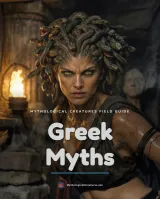
Greek Myths: A field guide to the monsters of ancient Greece
Every monster here earned its place in legend, and each gets a full page of artwork and the story behind it.
Japanese Yokai: A field guide to the spirits and demons of Japanese folklore
Fifteen spirits, with the signs to watch for and what the old tales say to do if you meet one.
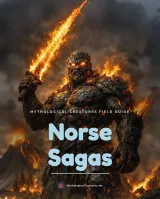
Norse Sagas: A field guide to the beasts of the Viking world
Drawn from the saga accounts themselves, with the powers, weaknesses and doom of each being set out.
the legend in five swipes.
Sponsor this space
Tasteful, fixed-fee placements for myth projects
No bidding wars or flashing banners. We offer simple placements for a small set of creators and brands aligned with our readers.
Request further detailsQuick Creature Info
Origin:
Features:
Associations:
Our Mythic Legendary Rating:

Also Sometimes Known As:
Habitat:
Supernatural Powers:
Physical Attributes:
Abilities:
Behavior:
Lore:
References
Discover Another Mythical Legend You May Not Have Heard Of?
Uncover the mysteries of ancient folklore and expand your knowledge of legendary beings from cultures around the world.
Dare to Meet the Mavka....

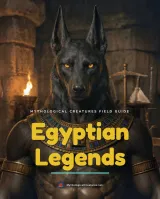
The Mythological Creatures Book Series
Yokai, Greek, Norse, Egyptian & Chinese. Five illustrated field guides to the creatures the old stories either warned or told you about.


Curated by the Mythological Creatures Team
Series editor: Mythological Creatures Directory
Primary desk: Hellenic & Ancient Mediterranean Desk
(rev. November 2025)