
Aegipan: Aegipan is a late-origin Greek mythological deity known for his goat-like, hybrid appearance.
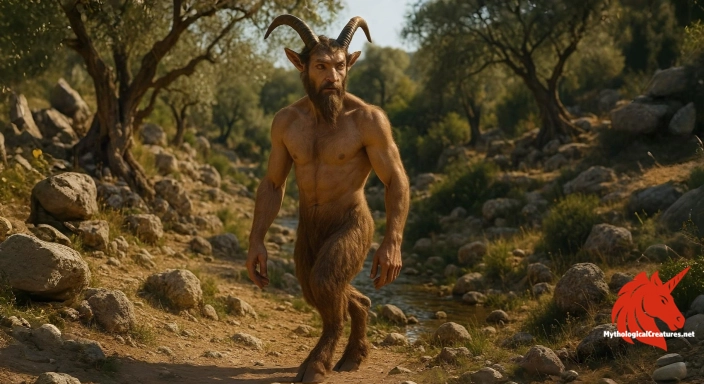
Aegipan
Aegipan - Embodies the untamed spirit of nature and rustic fertility.
the legend in five swipes.
the legend in five swipes.
How did Aegipan enter folklore?
Aegipan is a fascinating mythological figure whose identity interweaves the spirit of the wild with distinctive goat-like features, echoing the nature of Pan yet inviting separate interpretations. His origins emerge from later periods of Greek mythological development, where the blending of divine characteristics was both a creative endeavour and a reflection of evolving cultural narratives. In many traditions, he occupies a liminal space that blurs the boundaries between a separate deity and an alternative facet of Pan. The very name Aegipan, meaning 'Goat-Pan', underlines his inherent connection to pastoral imagery and earthy fertility. Early attestations of his tale are scant, yet they reveal a being associated with the rustic and the untamed landscapes of ancient Hellenic life. His presence in myth highlights the cultural tendency to amalgamate divine traits with the natural world, a dynamic process prevalent during Hellenistic periods. Artistic and literary sources, though limited, hint at an embodiment of the energetic, caprine spirit that both challenges and complements established mythic figures. The narrative of Aegipan thus encapsulates the fluidity of myth-making, with his character evolving in response to changing social and religious moods. Overall, his enigmatic nature continues to intrigue those exploring the rich tapestry of ancient Greek mythology.
Aegipan: Manuscripts, Texts and Variants
The literary and artistic record of Aegipan is marked by a slow accumulation of references, many of which appear only in later mythological texts and obscure iconographic programmes. Sparse commentaries and ephemeral mentions in Hellenistic sources suggest that his story was part of an evolving tradition rather than a fixed canonical narrative. Some texts, though few, position him as a distinct figure, while others treat him as an aspect or synonym of Pan, leading to ongoing debates among interpreters. The limited primary sources include scattered references in pastoral literature and secondary mythographical compilations that noted his caprine attributes. Artistic depictions, such as those found on ancient vases and reliefs, offer visual hints at his character, though they leave much to the viewer’s interpretation. These visual sources often present him amid rustic revelry or in the company of other woodland deities, reinforcing his association with fertility and nature. Variations in the portrayal of Aegipan across different manuscripts and art forms underscore a tradition in flux, with regional adaptations and personal artistic choices influencing his representation. In time, these divergent strands gave rise to multiple story variants, each emphasising different aspects of his mythic persona. As a result, the available accounts form a patchwork that continues to invite scholarly debate and reinterpretation.
What was Aegipan believed to be capable of?
Aegipan is often envisaged as a captivating blend of human and caprine elements, with a form that bridges the gap between earthy vitality and divine mystery. His upper body is typically rendered with human-like features that radiate a lively and mischievous character, while his lower form is marked by the cloven hooves and shaggy fur symbolic of a goat. A pair of elegantly curved horns often crowns his head, serving as a potent emblem of his wild and untamed nature. Detailed depictions sometimes reveal a robust musculature that suggests both strength and agility, capturing the essence of a being at home in rugged landscapes. His visage may combine a clever, almost playful expression with an ancient, weathered quality that speaks of his deep mythic roots. Artists frequently highlight the textured detail of his fur and the intricate swirl of his horns, lending him an appearance that is both formidable and enchanting. Variations in his portrayal sometimes emphasise a compact form that underscores his connection to the pastoral and the natural. Throughout his representations, every physical detail is imbued with the symbolism of fertility, transformation, and the mysterious forces of nature. Thus, his appearance not only defines his identity but also serves as an enduring visual metaphor for the wild side of the ancient pantheon.
What regional forms of Aegipan exist?
Across different regions of the ancient Greek world, the character of Aegipan was subject to local reinterpretations that both echoed and diverged from the central myths of Pan. In areas such as Arcadia, where the wilderness was particularly revered, his image was often softened to highlight gentleness and nurturing aspects that complemented the pastoral landscape. Local artistic traditions sometimes infused his form with subtle regional nuances, reflecting the specific cultural and ecological conditions of the area. In some communities, he was celebrated not only as a wild god of the forests but also as a protective spirit who presided over the fertility of the land. These regional adaptations often involved a careful amalgamation of older mythic elements with newer local beliefs, resulting in a mosaic of attributes. Variations in his iconography, such as differences in horn shape and posture, indicate that diverse communities viewed his caprine aspects as symbols with distinct local significance. Cultural festivals and ritual celebrations further shaped his portrayal, adapting his myth to address regional agrarian cycles and communal values. The fluidity of his depiction underscores the dynamic nature of myth, where a central figure can acquire multiple meanings in response to the needs of different localities. In this way, Aegipan’s character exemplifies the broader tendency of mythological figures to evolve uniquely across regional boundaries.
Which myths echo the story of Aegipan?
Aegipan stands as an intriguing counterpart to other mythic beings that blend human and animal attributes, inviting comparisons that enrich our understanding of ancient symbolic culture. While Pan is the more widely known figure with a similar caprine profile, Aegipan often emerges as a variant whose specific characteristics reflect a focused embodiment of the goat’s attributes. In the broader context of Mediterranean mythology, such hybrid figures echo the universal motif of deities that straddle the boundary between civilisation and nature, much like the rustic satyrs and the later fauns of Roman tradition. Moreover, his iconography invites comparisons with Cernunnos, the horned god of Celtic lore, suggesting a shared symbolic language where horns denote natural power and fertility. Both figures encapsulate the idea of wild, untamed energy, merging the human impulse for civilisation with the unpredictable forces of the wilderness. The recurring motif of horns and the pastoral setting in which these figures are placed highlight a cross-cultural appreciation for the mysteries of nature. Through such comparisons, Aegipan reinforces common mythological themes of hybridity, transformation, and the cyclical relationship between humanity and the environment. His narrative and physical traits, when placed alongside other legendary figures, underscore the timeless appeal of the archetype of the wild, liminal god. This comparative analysis deepens our appreciation for how ancient cultures expressed complex ideas through shared symbols and narrative patterns.
Why does Aegipan still matter?
Throughout the ages, the myth of Aegipan has undergone significant transformation, reflecting broader shifts in cultural attitudes and artistic sensibilities. Initially a relatively obscure figure with a delicate presence in Hellenistic texts, he gradually became interwoven with the more prominent traditions of Pan and other rustic deities. Over time, the blurring of boundaries between these figures allowed Aegipan to assume a role as both a symbol of natural fertility and of the raw, untamed spirit of nature. During the medieval period, echoes of his imagery appeared in folk traditions and local festivals, where aspects of his goat-like form were repurposed to symbolise both merriment and the primal forces of the wilderness. In modern times, a resurgence of interest in ancient mythology has brought Aegipan back into the spotlight, often portrayed in literature, art, and even film as an emblem of the enduring mystery of nature. Contemporary reinterpretations frequently explore his ambivalent identity, using his hybrid form to comment on the tension between civilisation and the wild. The evolution of his character from a marginal mythic figure to a subject of creative reinterpretation underscores the dynamic nature of myth. As modern audiences continue to seek connections with the natural world, Aegipan remains a compelling figure who embodies both the beauty and the complexity of our ancestral past. His legacy endures as a testimony to the enduring power of myth to evolve and resonate across the centuries.
Interesting Fact
Aegipan's ambiguous identity, being either distinct from or identical to Pan, reflects the fluid nature of mythological traditions and the evolving interpretation of deities over time.
Mythological Treasures
Greek Myths: A field guide to the monsters of ancient Greece
Every monster here earned its place in legend, and each gets a full page of artwork and the story behind it.
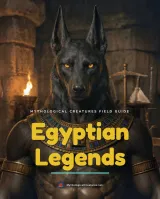
Egyptian Legends: A field guide to the gods and monsters of ancient Egypt
Guardians of the living and devourers of the dead, with the role each played in judgement.
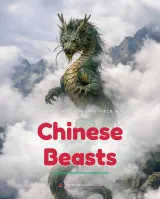
Chinese Beasts: A field guide to the dragons and demon kings of Chinese myth
From river dragons to demon kings, with the legends that shaped five thousand years of storytelling.
the legend in five swipes.
Support the directory
Promote your myth project and fund more research
Sponsor placements help keep this directory growing and free to use while giving your work a focused, relevant audience.
Learn how sponsorship worksQuick Creature Info
Origin:
Associations:
Our Mythic Legendary Rating:

Also Sometimes Known As:
Habitat:
Supernatural Powers:
Physical Attributes:
Abilities:
Behavior:
Lore:
Related Creatures, Tales or Lore
References
Discover Another Mythical Legend You May Not Have Heard Of?
Uncover the mysteries of ancient folklore and expand your knowledge of legendary beings from cultures around the world.
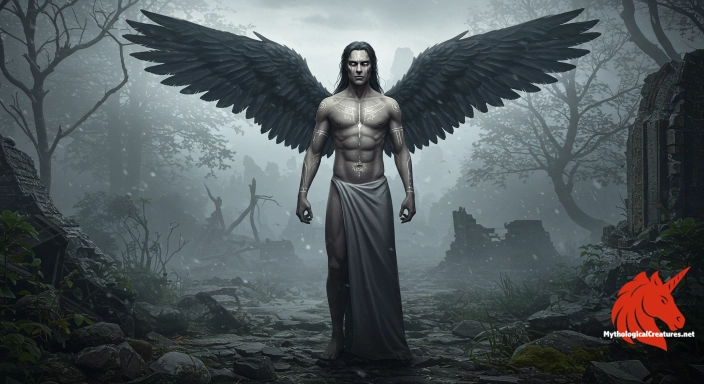
Dare to Meet the Bezaliel....
The Mythological Creatures Book Series
Yokai, Greek, Norse, Egyptian & Chinese. Five illustrated field guides to the creatures the old stories either warned or told you about.
Curated by the Mythological Creatures Team
Series editor: Mythological Creatures Directory
Primary desk: Hellenic & Ancient Mediterranean Desk
(rev. November 2025)