
Mavka: Mavka is a female forest spirit from Ukrainian folklore known for her long hair and enchanting beauty.
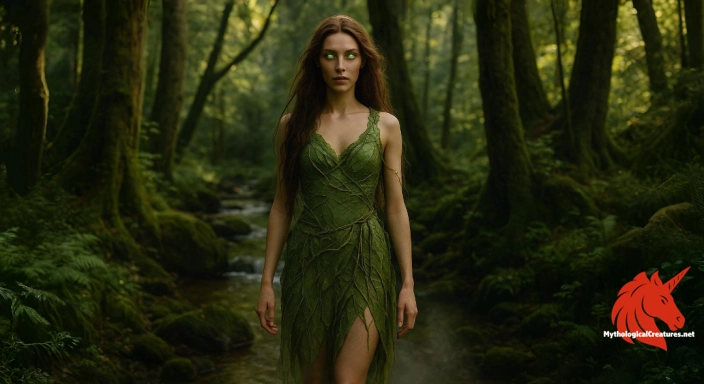
Mavka
Mavka - Represents the dangerous allure of untamed nature and serves as a cautionary figure against succumbing to earthly temptations.
the legend in five swipes.
the legend in five swipes.
Who first told stories about Mavka?
Mavka is an enigmatic female spirit that inhabits the deep forests of Ukraine and stands as a vivid personification of nature’s wild, unpredictable force. Born from the interplay of ancient pagan traditions and the natural beauty of the Ukrainian landscape, she has beguiled listeners for centuries with her alluring presence. Her earliest mentions can be found in oral traditions and folk ballads, where she emerges as a figure weaving mystery and allure into the fabric of forest life. Many tales recall her as both a protector of the woodland realms and a dangerous temptress who ensnares those who wander too far from safety. The narrative of Mavka reflects a cultural context steeped in respect and fear of nature’s power, merging beauty with a latent threat. Over time, her myth has evolved, reflecting changing attitudes towards the environment and the role of feminine mystique. Her story, interlaced with themes of seduction, loss, and the inevitable pull of nature, remains a resonant emblem of Ukrainian cultural heritage. Today, Mavka continues to capture the imagination, symbolising the eternal dance between human civilisation and the untamed wilderness.
Where can you read about Mavka?
Mavka’s legend finds its roots in rich oral traditions, where numerous versions of her story have been transmitted through generations. The spirit appears in ancient folk songs, ballads, and narrative poems that encapsulate the interplay between humanity and the natural world. Some oral accounts describe her as a forlorn spirit, mourning a lost past even as she seduces with her otherworldly charm, while other recitations offer a darker, more vengeful portrait. These literary fragments not only depict her ability to lure men into the depths of the forest but also highlight her role as a guardian of ancestral lands. Variations of her tale have been collected by folklorists across different regions of Ukraine, each adding regional nuances that enrich her multifaceted character. In some narratives, her presence is linked to specific rituals or seasonal changes, suggesting a deeper connection with agricultural cycles and local customs. As collectors and storytellers shaped her myth, the fragments of her story gradually assumed a more defined form, reflecting cultural anxieties and the natural environment. The enduring appeal of Mavka in primary sources has made her a subject of ongoing scholarly interest and artistic reinterpretation.
The Described Form of Mavka
Mavka is often envisioned as an exquisitely beautiful maiden whose every attribute mirrors the mystique of the forest. Her long, flowing hair, depicted in shades from dark ebony to fiery auburn, tumbles freely down her back and sometimes appears intertwined with delicate vines and leaves. Her eyes are said to glisten with an uncanny, luminescent quality, reminiscent of dew at dawn and hinting at secrets held deep within the woodland. Her complexion is portrayed as pale and ethereal, almost as if she were lit from within by the soft glow of moonlight filtering through the canopy. The spirit’s attire can range from flowing natural robes adorned with motifs of flora to a simpler, unadorned form that underscores her unmediated connection to the earth. Observers in the various tales note subtle shifts in her expression, from serene calm to a sparkle of mischief or melancholy, symbolising her dual nature. In some descriptions, her slender form exudes grace and an almost tangible otherworldliness that sets her apart from mortal women. The subtle interplay of beauty and danger in her physical appearance encapsulates the timeless tension between allure and peril that defines her legend.
Where was Mavka best known?
The portrayal of Mavka exhibits intriguing variations across different regions of Ukraine, with local traditions adding their own flavors to her myth. In the Carpathian highlands, she is sometimes seen as a spirit closely tied to rugged mountain flora, embodying the harsher, untamed aspects of the wilderness. In contrast, settlers from the river valleys and plains often depict her with a softer, more wistful presence, echoing the gentle flow of nearby streams and the tranquillity of open fields. Different local names such as Nyavka offer subtle distinctions in character, hinting at regional interpretations of her role as both seductress and guardian. The retellings adapt her image to mirror local environmental features, such as dense forest canopies in one region versus more open, pastoral landscapes in another. Some communities even intertwine her myth with local rites and seasonal celebrations, giving her a role in fertility and the changing of the seasons. These regional adaptations emphasise the dynamic relationship between the spirit and the land it inhabits. Ultimately, the diversity in her depiction underscores the universal human impulse to connect with nature through myth, while also reflecting unique local sentiments and traditions.
Mavka: Echoes in Other Mythologies
Across global mythologies, parallels can be drawn between Mavka and other nature-bound female spirits, each embodying aspects of both allure and peril. Figures such as the Russian rusalka share with Mavka the motif of seduction intertwined with fatal consequences, yet Mavka’s connection to the forest distinctly sets her apart from water-centric entities. In a broader context, elements of her character resonate with the sirens of Greek lore and the mystical fae of Celtic tradition, where beauty and danger walk hand in hand. Unlike some of her counterparts who represent solely the deceptive side of natural beauty, Mavka is celebrated as a guardian of the wilderness, symbolising a complex, dualistic relationship with nature. Comparative studies reveal that while similar mythological figures exist in many cultures, Mavka’s narrative is uniquely enriched by the agricultural, historical, and ecological backdrop of Ukraine. The interplay of her enchanting appearance and underlying peril mirrors universal themes prevalent in myth, where the natural world is both muse and adversary. Her multifaceted symbolism invites a dialogue about the tensions between modern civilisation and the enduring, untamed forces of nature. Ultimately, this cultural conversation highlights Mavka’s role as a bridge between disparate mythological traditions, reinforcing her place as a uniquely complex figure in folklore.
How is Mavka remembered today?
The evolution of Mavka’s myth reflects the changing attitudes towards nature and femininity from ancient times to the present. Early renditions portrayed her primarily as a dangerous embodiment of the wild, a spirit whose allure was as much a lure to peril as it was a celebration of natural beauty. Over the centuries, her image has evolved, influenced by literary works, dramatic reinterpretations, and modern artistic expressions. Notably, Lesya Ukrainka’s play helped to roots her character in the canon of national literature, presenting Mavka as both a symbol of natural transcendence and an agent of social critique. In contemporary culture, her legend has been revitalised through film, visual art, and even interactive media, resonating with modern audiences intrigued by themes of ecological doom and feminist reimagination. Today, Mavka is often embraced as a potent emblem of environmental resilience and cultural legacy, inspiring a re-evaluation of humanity’s connection with the natural world. Modern reinterpretations frequently highlight her as a figure of empowerment, embodying the strength and mystery of nature in an era of rapid technological change. As the myth continues to be reimagined, Mavka remains a compelling reminder of the enduring power held within the enduring wilds and the stories that bind us to them.
Interesting Fact
Mavka seamlessly blends the allure of a seductive beauty with the inherent danger of nature, making her one of the most enigmatic figures in Ukrainian mythology.
Mythological Treasures
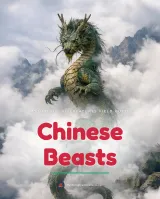
Chinese Beasts: A field guide to the dragons and demon kings of Chinese myth
From river dragons to demon kings, with the legends that shaped five thousand years of storytelling.
Japanese Yōkai: A field guide to the spirits and demons of Japanese folklore
Fifteen spirits, with the signs to watch for and what the old tales say to do if you meet one.
Greek Myths: A field guide to the monsters of ancient Greece
Every monster here earned its place in legend, and each gets a full page of artwork and the story behind it.
the legend in five swipes.
For publishers and studios
Your next readers are already here
Many of our visitors are looking for books, campaigns, and resources that deepen their journey into myth. Position your title or setting here.
Discuss a placementQuick Creature Info
Features:
Associations:
Our Mythic Legendary Rating:

Also Sometimes Known As:
Habitat:
Supernatural Powers:
Physical Attributes:
Abilities:
Behavior:
Lore:
Related Creatures, Tales or Lore
References
Discover Another Mythical Legend You May Not Have Heard Of?
Uncover the mysteries of ancient folklore and expand your knowledge of legendary beings from cultures around the world.
Dare to Meet the Gillygaloo....
The Mythological Creatures Book Series
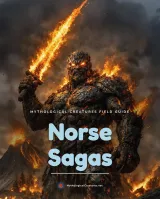
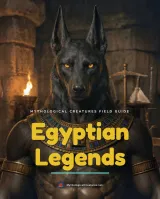
Yōkai, Greek, Norse, Egyptian & Chinese. Five illustrated field guides to the creatures the old stories either warned or told you about.
Curated by the Mythological Creatures Team
Series editor: Mythological Creatures Directory
Primary desk: Northern & European Folklore Desk
(rev. November 2025)