
Amaymon: Amaymon is a prince of Hell renowned for his deadly poisonous breath and deceptive nature.
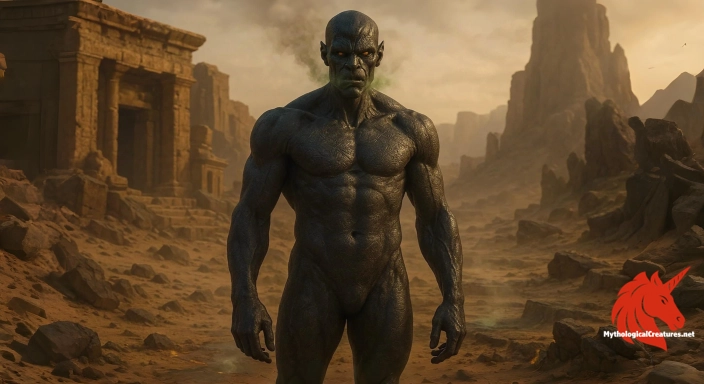
Amaymon
Amaymon - A prominent figure in demonological texts representing deceptive power and infernal authority.
the legend in five swipes.
the legend in five swipes.
How did the legend of Amaymon begin?
Amaymon emerges from the rich tapestry of demonological lore as a formidable prince of Hell, often depicted as a commanding presence among infernal beings. His origins are enshrouded in both medieval grimoires and later occult texts, where he is attributed roles that vary in both rank and jurisdiction. The earliest attestations of Amaymon appear in seminal texts such as the Pseudomonarchia Daemonum and The Lesser Key of Solomon. His mythic identity is steeped in the cultural intersections of Western demonology and ancient traditions that hint at Egyptian influences. Over time, his depiction has been intertwined with ritualistic practices and protective measures during exorcisms, highlighting a dual nature of danger and control. Though his narrative is primarily found in occult manuscripts rather than mainstream mythology, his influence has persisted among practitioners of ceremonial magic. His association with rulership of specific directional realms, such as being the king of the east or the south, underscores the cosmological symbolism embraced by early demonologists. Legends pertaining to Amaymon underscore both his power over other demons and the caution required by those who invoke him.
Who wrote down the legend of Amaymon?
The primary sources that mention Amaymon include the revered grimoires such as the Ars Goetia, The Lesser Key of Solomon, and the Pseudomonarchia Daemonum, each offering distinct narrative details. Variants of his story are also found in texts like the Liber Officiorum Spirituum and the Clavis Inferni, which contribute additional layers to his mythos. Several scriptural nuances, such as the caution regarding the removal of hats during summoned rituals, have been passed down in English translations. This particular detail appears to have been inadvertently introduced through the work of early translators and scribes, resulting in a tradition not found in the original Latin manuscripts. Narratives within The Book of the Sacred Magic of Abramelin the Mage further expand his role by identifying him as an Egyptian devil and reinforcing his control during specific times of the day. The multiplicity of sources has resulted in a textured, albeit sometimes contradictory, portrayal that has intrigued occult scholars for centuries. Each manuscript contributes a different facet to his character, from rulership over designated realms to specific procedural warnings of invocation mishaps. The composite image drawn by these texts demonstrates a rich tradition of variant storytelling in medieval and early modern esoteric traditions.
What did Amaymon look like?
Descriptions of Amaymon’s physical form are sparse, yet the manuscripts imply a presence that is both daunting and enigmatic. While specific anatomical details are rarely elaborated upon, the demon is often envisioned with an imposing stature that surpasses lesser entities in Hell. Some texts allude to a visage that exudes a dangerous, almost palpable aura, emphasising aspects such as burning eyes and a menacing countenance that captivates those who witness him. The attribute of a deadly poisonous breath adds another layer to his infernal design, suggesting that his physical presence is capable of inflicting harm beyond mere vision. In artistic renditions inspired by the grimoires, Amaymon is sometimes portrayed with traditional demonic features such as horns and an elongated, almost serpentine silhouette. This artistic imagination, although not directly sourced from ancient texts, reflects a longstanding tradition of associating demonic entities with visually striking, often nightmarish forms. Variations in size and form across different illustrations indicate an adaptive mythology that integrates regional artistic influences. These shifting depictions contribute to an overall image of a being that is not confined to a singular physical archetype, but rather embodies the multifaceted danger of the infernal realm.
How far did the story of Amaymon spread?
Regional interpretations of Amaymon reveal a multifaceted persona that adapts to various cultural frameworks. In Western demonology, he is largely viewed as a prince with dominion over particular cardinal directions, with texts alternately citing him as the king of the east or the south. This directional dichotomy is reflective of broader medieval cosmological beliefs where each quadrant of the compass held symbolic significance. In some European traditions, the demon’s attributes are enhanced by local mythological beliefs, aligning him with regional conceptions of evil and misfortune. Conversely, in texts influenced by ancient Egyptian traditions, Amaymon retains markers of an Egyptian devil, suggesting a cross-cultural synthesis in his representation. This divergence in regional depictions underscores the adaptability of his character to different ritualistic and symbolic needs. The regional variations also highlight the way in which translations and adaptations by scholars like Scot and others have introduced additional layers of myth. Ultimately, the cultural adaptations and adjustments in his description reflect the evolution of demonological lore as it travelled across borders and centuries.
How does the Amaymon legend compare worldwide?
Amaymon’s mythological role invites comparative analysis with other demonological figures who command specific domains in the infernal hierarchy. His unique position as a ruler over directional realms can be paralleled with similar entities in other traditions who symbolise the cardinal points, thereby linking him to a broader cosmological order. Unlike many demons whose narratives are primarily allegorical, Amaymon’s consistent presence in ritual texts lends him a form of procedural authority rarely seen in comparative figures. Comparative mythology also reveals common threads in depictions of dangerous breath, a trait shared with few other infernal beings, adding to the distinctiveness of his character. His subjugation of other demons, especially his reputed control over Asmodai, echoes themes of hierarchical dominance found in other mythological systems. The protective measures required during his invocation resonate with similar rituals bound to other potent spirits in both Greco-Roman and later European demonology. Moreover, his ambiguous rulership—shifting between the east and south—mirrors how mythologies often reflect the fluidity of power in the underworld. These parallels help to situate Amaymon within a larger framework where multiple cultures articulate the struggle between mortal recklessness and the caution warranted by the supernatural realm.
Amaymon: The Modern Legacy
Over the centuries, Amaymon has undergone a significant evolution in both his mythological importance and his cultural representation. Early grimoires positioned him as a paramount figure shrouded in strict ritualistic warnings, a portrayal that has subsequently been adapted in varying degrees by later occult traditions. The misinterpretation of ritual practices—such as the removal of a cap or headdress during invocation—became an enduring eccentricity that colours modern retellings of his lore. In contemporary occult circles, Amaymon is sometimes drawn upon as a symbol of the inherent dangers involved in meddling with forces beyond human control. His legacy has also permeated modern literature and art, where he is occasionally reimagined as a complex antihero rather than a simple embodiment of malevolence. The evolution of his depiction from rigid, ritual-bound demon to a more fluid, culturally resonant icon reflects broader shifts in the popular interpretation of demonology. Modern interpretations often emphasise the moral and symbolic dimensions of his character, inviting both fear and fascination. Such reinterpretations ensure his enduring presence within the evolving dialogue between ancient myth and modern occult practices.
Interesting Fact
Despite being less celebrated than other demons, Amaymon's unique control over Asmodai and his dual ruling status make him an enigmatic and pivotal figure in demonological lore.
Mythological Treasures
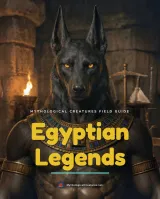
Egyptian Legends: A field guide to the gods and monsters of ancient Egypt
Guardians of the living and devourers of the dead, with the role each played in judgement.
Greek Myths: A field guide to the monsters of ancient Greece
Every monster here earned its place in legend, and each gets a full page of artwork and the story behind it.
Norse Sagas: A field guide to the beasts of the Viking world
Drawn from the saga accounts themselves, with the powers, weaknesses and doom of each being set out.
the legend in five swipes.
For publishers and studios
Your next readers are already here
Many of our visitors are looking for books, campaigns, and resources that deepen their journey into myth. Position your title or setting here.
Discuss a placementQuick Creature Info
Our Mythic Legendary Rating:

Also Sometimes Known As:
Habitat:
Supernatural Powers:
Physical Attributes:
Abilities:
Behavior:
Lore:
References
Discover Another Mythical Legend You May Not Have Heard Of?
Uncover the mysteries of ancient folklore and expand your knowledge of legendary beings from cultures around the world.
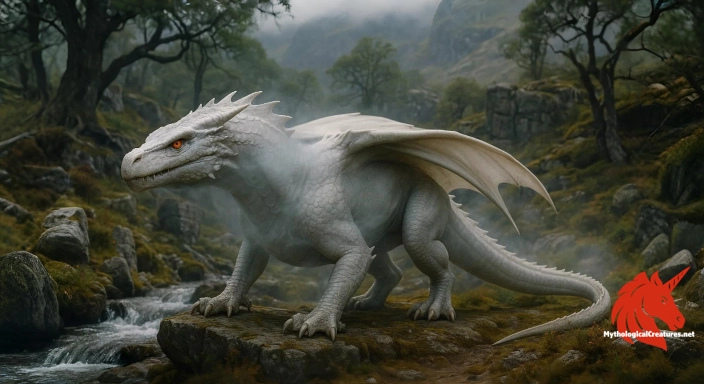
Dare to Meet the White dragon....
The Mythological Creatures Book Series
Yokai, Greek, Norse, Egyptian & Chinese. Five illustrated field guides to the creatures the old stories either warned or told you about.

Curated by the Mythological Creatures Team
Series editor: Mythological Creatures Directory
Primary desk: Hellenic & Ancient Mediterranean Desk
(rev. November 2025)