
Lucifer: Lucifer, known as the Light-Bringer, originally epitomised celestial radiance before his fall from grace.
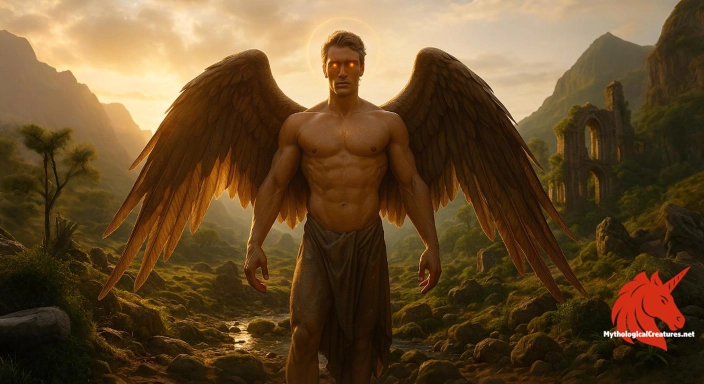
Lucifer
Lucifer - Lucifer’s transformation from a bearer of light to the personification of evil serves as a foundational myth in understanding pride, rebellion, and the dichotomy of divine order versus chaos.
the legend in five swipes.
the legend in five swipes.
Where does Lucifer come from?
Lucifer is a figure whose identity has shifted dramatically over the centuries, emerging from ancient astronomical and mythological roots before becoming entwined with Christian theology. Originally, the term referred simply to the morning star, a brilliant symbol of the dawn and a harbinger of renewed light. In early Latin texts, the word lucifer was not a proper name but an adjective describing the light-bringing aspect of Venus as it appeared in the sky. The earliest attestations in the Vulgate and other ancient writings highlight his association with luminous beginnings rather than malevolence. His transformation into a figure of rebellion and downfall is part of a long evolution influenced by literary and theological reinterpretations. Across cultures, his narrative has been reimagined in ways that underscore both his celestial beauty and his tragic defiance. The melding of Greco-Roman conceptions of divine light with Judeo-Christian morality established a complex duality in his character. This interplay of light and shadow speaks to broader themes of ambition, pride, and the inevitable consequences of transcending natural limits.
What do the old texts say about Lucifer?
Ancient texts provide the earliest insights into the figure known as Lucifer, with references found in both the Hebrew Bible and its later Latin and Greek translations. In the King James Version of the Bible, a passage in Isaiah describes a 'morning star' that was initially translated as Lucifer in the Vulgate. This translation reflects a stage where the term denoted brightness and radiance rather than an inherently evil nature. Classical literature, including the works of Roman poets, contributes further layers to the narrative, with names like Noctifer offering a counterpoint to his morning aspect. Over time, apocryphal writings and medieval manuscripts expanded on these early references, introducing themes of divine rebellion and pride. These variants illustrate that his story was never static but evolved to reflect differing theological and cultural stances. Multiple textual traditions, from the Septuagint to later Christian exegesis, have interwoven celestial imagery with moral cautionary tales. The rich tapestry of sources thereby mirrors the transformation of Lucifer from a symbol of light to an emblem of complex moral ambiguity.
The Described Form of Lucifer
Iconographic depictions of Lucifer often emphasise a striking contrast between ethereal radiance and an underlying sense of melancholy. He is typically illustrated as a majestic being with a luminous countenance, his face aglow with an inner light that recalls the first rays of dawn. Artistic renditions frequently show him adorned in flowing, diaphanous robes that appear to capture the shifting hues of an early morning sky. His eyes are described as piercing and reflective, suggesting a deep well of both wisdom and sorrow. Many artworks capture his wings, portrayed as expansive and delicate, evoking the transient beauty of light before it is overtaken by day. There is often a tension in his physical portrayal, where the interplay of light and shadow underscores his dual nature. Some images even hint at an almost sculptural perfection to his form, melding divine beauty with an air of inevitable loss. This detailed iconography not only reflects his astronomical origins but also serves to symbolise the conflicting qualities of hope and despair inherent in his myth.
Where in the world is Lucifer known?
Regional interpretations of Lucifer reveal a rich diversity in understanding his true nature across different cultures and eras. In the traditions of ancient Greco-Roman society, he was celebrated as a celestial deity linked with the dawn and rebirth, often connected to the goddess Aurora. In early Christian contexts, however, his identity was gradually reconfigured to embody the traits of pride and eventual fall from divine grace. Medieval European interpretations further accentuated this dualism, often depicting him in art as both a resplendent angel and a cautionary symbol of hubris. In some Mediterranean cultures, local folklore retained a more benign association with his luminous qualities, focusing on his role as the morning star without the later moral implications. Each region adapted his image to reflect its own cultural and religious nuances, blending ancient astronomical symbolism with emerging theological concerns. Variations in literature and art within these communities underscore the fluidity of his myth, allowing him to serve multiple symbolic functions simultaneously. These regional differences illustrate how a single mythic figure can be reshaped and reinterpreted to speak to the unique values and fears of diverse societies.
Lucifer: Echoes in Other Mythologies
Lucifer’s myth finds intriguing parallels in various other cultural narratives that explore the juxtaposition of light and darkness. Much like the Greek deities Phosphorus and Eosphorus, he embodies the dual role of heralding the dawn while intimating hidden depths beneath his brilliance. This parallel extends to other mythological figures who traverse the boundaries between divine light and fallen powers, suggesting shared thematic concerns in ancient storytelling. The character of Prometheus, with his defiance against gods in the quest to bestow light and knowledge upon humanity, often emerges in comparative analyses. Such narratives highlight overarching cultural preoccupations with the dangers and rewards of transcending natural limits. In modern literature and art, Lucifer is sometimes portrayed as a tragic anti-hero, much like other rebellious figures who challenge established orders. His story, therefore, resonates with broader themes seen across diverse mythologies, where shining virtues can harbour the seeds of downfall. This comparative framework not only deepens our understanding of his character but also illustrates how interconnected human narratives can be when exploring the complexities of ambition, defiance, and consequence.
Why is Lucifer still popular?
The evolution of Lucifer’s myth over the centuries mirrors significant shifts in cultural, religious, and artistic sensibilities. From his initial depiction as a radiant symbol of the morning star, his image underwent a radical transformation to become emblematic of defiance and fallen grace. Medieval and Renaissance art reimagined him as a beautifully tragic figure, a fallen angel whose splendor was forever marred by his rebellion against divine order. In contemporary culture, his legacy has endured through literature, film, and music, where he is often portrayed as an icon of resistance and nonconformity. Modern reinterpretations tend to focus on his complex qualities—the interplay of enlightenment and despair—which resonate in an age fascinated by moral ambiguity. His enduring appeal is evident in the myriad adaptations that invite audiences to reflect on themes of ambition, free will, and the consequences of pride. This ongoing historical evolution demonstrates how myth can be continually reshaped to address the shifting paradigms of society. As a result, Lucifer remains a potent and multifaceted symbol, bridging the gap between ancient celestial traditions and modern existential inquiries.
Interesting Fact
Lucifer’s evolution from a celebrated bearer of light to an iconic symbol of evil exemplifies the transformative power of myth across cultures and eras.
Mythological Treasures
Greek Myths: A field guide to the monsters of ancient Greece
Every monster here earned its place in legend, and each gets a full page of artwork and the story behind it.
Chinese Beasts: A field guide to the dragons and demon kings of Chinese myth
From river dragons to demon kings, with the legends that shaped five thousand years of storytelling.
Japanese Yokai: A field guide to the spirits and demons of Japanese folklore
Fifteen spirits, with the signs to watch for and what the old tales say to do if you meet one.
the legend in five swipes.
Curated sponsor space
One subtle banner. Thousands of myth lovers.
We offer a small number of curated sponsor spots for relevant books, courses, games, and art. No clutter, just well-matched partners.
Partner with usQuick Creature Info
Associations:
Our Mythic Legendary Rating:

Also Sometimes Known As:
Habitat:
Supernatural Powers:
Physical Attributes:
Abilities:
Behavior:
Weaknesses:
Lore:
Related Creatures, Tales or Lore
References
Discover Another Mythical Legend You May Not Have Heard Of?
Uncover the mysteries of ancient folklore and expand your knowledge of legendary beings from cultures around the world.
Dare to Meet the Lampades....
The Mythological Creatures Book Series
Yokai, Greek, Norse, Egyptian & Chinese. Five illustrated field guides to the creatures the old stories either warned or told you about.





Curated by the Mythological Creatures Team
Series editor: Mythological Creatures Directory
Primary desk: Hellenic & Ancient Mediterranean Desk
(rev. November 2025)