
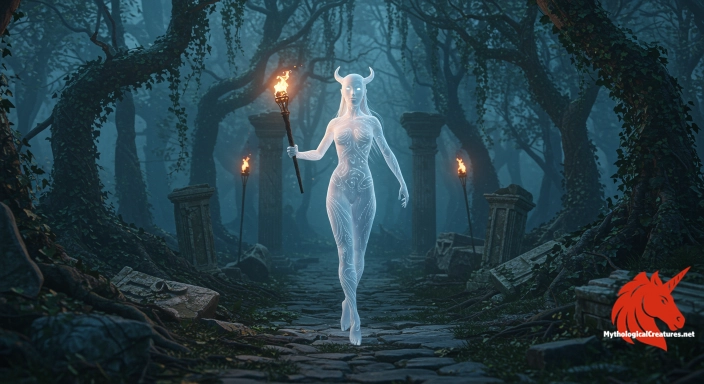
Lampades: Lampades, also known as Lampads, are torch-bearing nymphs in Greek mythology.
Lampades
Lampades - They symbolise the bridging of light and darkness, serving as guides through mystical realms and as emissaries of chthonic power.
the legend in five swipes.
the legend in five swipes.
Where does the story of the Lampades begin?
Lampades emerge from the mists of Greek myth as dazzling torch-bearing nymphs who escort the enigmatic goddess Hecate. Their presence is interwoven with ancient themes of light and shadow, symbolising both the illumination and the mystery of the night. They first appear in mythic narratives where the interplay between darkness and divine radiance is central to the understanding of the cosmos. Ancient tradition preserved their image as ethereal guides through liminal spaces, emphasising the delicate balance between night and day. In the earliest attestations, their torches are not only literal sources of light but also metaphors for knowledge and transformation. Their role, closely tied to the rituals at crossroads and in secluded groves, underscores the cultural significance of transition and change. Over time, the Lampades have been celebrated in art and literature for their otherworldly beauty and power. Their enduring legacy is a testament to how ancient cultures revered the dual aspects of light as both a protector and a harbinger of the unknown. Their myth continues to capture the imagination, inviting reflection on the eternal dance between clarity and obscurity.
Lampades: Manuscripts, Texts and Variants
The ancient literary record contains scattered references to the Lampades, especially within texts that explore the mysteries of Hecate’s cult. Some fragments from Orphic traditions and later scholia hint at their ceremonial role during nocturnal rites. In certain versions of the myth, they are depicted as indispensable participants in the esoteric practices that bridged the human and the divine realms. Varied accounts in classical sources sometimes portray them more as symbolic agents than as fully fleshed-out individual characters. While some texts offer a glimpse into their role as guides for wayward souls, others imbue them with deeper magical qualities linked to prophecy and fate. The multiplicity of sources reveals an evolution in their mythic character as storytellers adapted their narrative to suit different religious and cultural influences. Later compendiums and Renaissance reinterpretations enriched the myth with additional details, sometimes merging their identity with other luminous spirits. These diverse narrative strands reflect the complexity and layered symbolism the Lampades held within the broader tapestry of Greek mythology.
Lampades: Size, Shape and Strange Features
The physical portrayal of the Lampades is both striking and ethereal, marked by an otherworldly radiance that sets them apart from mortal beings. They are commonly visualised with a delicate, almost translucent beauty, where luminous skin glows softly in the darkness. Their eyes, intense and reflective, seem to mirror the mysteries of the night sky, capturing the dual nature of guidance and portent. Often, they are depicted with flowing hair that shimmers like starlight and garments that appear to be fashioned from the very fabric of the nocturnal ether. Each of the Lampades carries a torch that burns with a mysterious, unwavering flame, a symbol that fuses the concepts of enlightenment and enigma. Their statuesque forms suggest both vitality and the ephemeral quality of dreams, blurring the boundaries between the corporeal and the divine. Intricate artistic renditions sometimes include subtle hints of shadowy features, reminding the viewer of their connection to the darker realms of existence. Despite variations in detail and style across different periods, a common thread in their representations is the interplay of light and darkness, manifesting in an appearance that is as captivating as it is enigmatic.
What do different regions call the Lampades?
Even within the confines of Greek mythology, regional variations of the Lampades reflect localized ritual practices and artistic tastes. In some Aegean islands, they are celebrated as guardians of sacred pathways, with local lore attributing additional protective qualities to their glowing torches. Variants in Anatolian and Ionia-influenced areas often present them in a more chthonic light, intertwining their identity with local deities of the underworld. Certain traditions emphasise their role as both messenger and mediator during periods of transition, which resonated with communities living along ancient trade routes and crossroads. Regional depictions sometimes afford them distinct attire or accessories inspired by the local flora and natural scenery. In these adaptations, their torches become symbolic relics embedded in regional customs and seasonal festivals. Local storytellers would incorporate their myth into cautionary tales or legends aimed at explaining natural phenomena. Despite these local embellishments, the core symbolism of the Lampades as luminous guides persists across diverse Greek regions, reinforcing a shared cultural heritage.
Which myths echo the story of the Lampades?
The Lampades invite comparison with a variety of mythological entities that share their luminous attributes and roles as nocturnal guides. In other Mediterranean mythologies, similar beings appear as flame-bearers or as guardians of the threshold between the mortal and the divine. For example, parallels can be drawn with the torch-bearing apparitions found in Near Eastern traditions, where fire often symbolizes divine presence and hidden knowledge. Their dual nature of illumination and mystery finds echoes in the spectral figures of Celtic and Nordic myth, where light and shadow intertwine to reveal deeper truths. Like many mythic creatures who walk the line between benevolence and intimidation, the Lampades evoke a sense of awe and reverence across cultures. These similarities underline universal themes in human storytelling, where fire represents both creation and destruction, guidance and warning. Comparatively, their role is enhanced by the cultural staples of ancient Greek ritual that celebrated the balance between what is seen and unseen. Ultimately, the Lampades, through their shared qualities with other mythic torchbearers, demonstrate the pervasiveness of light as a metaphor for wisdom and the enigmatic realms beyond human understanding.
Lampades in Modern Culture
Over the centuries, the portrayal of the Lampades has evolved significantly, reflecting changing artistic and cultural trends. Their ancient image as attendants of Hecate has been reinterpreted in various modern contexts, from literature and art to film and popular culture. Contemporary adaptations often imbue them with a more pronounced sense of mystery, sometimes casting them as symbols of transformation and inner enlightenment. As modern fantasy and occult narratives draw upon classical motifs, the Lampades continue to inspire new generations with their timeless elegance and enigmatic allure. Contemporary artists and writers frequently explore their duality as both guides and omens, echoing themes of renewal and the cyclical nature of life. Their myth has been repurposed to fit the narrative of modern occult traditions, where symbolism often centres on the interplay between the visible and the hidden. Modern reinterpretations maintain the core element of their torch-bearing identity, even as new traits and stories are integrated. Today, the Lampades serve as an enduring link to the ancient world, embodying a rich legacy that spans from classical antiquity to the modern imagination.
Interesting Fact
An intriguing aspect of the Lampades is that their torches serve as both literal and symbolic beacons, reflecting the ancient Greek reverence for the transformative power of light in dark times.
Mythological Treasures
Greek Myths: A field guide to the monsters of ancient Greece
Every monster here earned its place in legend, and each gets a full page of artwork and the story behind it.
Egyptian Legends: A field guide to the gods and monsters of ancient Egypt
Guardians of the living and devourers of the dead, with the role each played in judgement.
Chinese Beasts: A field guide to the dragons and demon kings of Chinese myth
From river dragons to demon kings, with the legends that shaped five thousand years of storytelling.
the legend in five swipes.
Sponsor this space
Tasteful, fixed-fee placements for myth projects
No bidding wars or flashing banners. We offer simple placements for a small set of creators and brands aligned with our readers.
Request further detailsQuick Creature Info
Origin:
Associations:
Our Mythic Legendary Rating:

Also Sometimes Known As:
Habitat:
Supernatural Powers:
Physical Attributes:
Abilities:
Behavior:
Lore:
Related Creatures, Tales or Lore
- NNaiads
- DDryads
- OOreads
References
Discover Another Mythical Legend You May Not Have Heard Of?
Uncover the mysteries of ancient folklore and expand your knowledge of legendary beings from cultures around the world.
Dare to Meet the Succubus....
The Mythological Creatures Book Series
Yokai, Greek, Norse, Egyptian & Chinese. Five illustrated field guides to the creatures the old stories either warned or told you about.

Curated by the Mythological Creatures Team
Series editor: Mythological Creatures Directory
Primary desk: Hellenic & Ancient Mediterranean Desk
(rev. November 2025)