
Amefurikozō: Amefurikozō is a diminutive Japanese yōkai associated with rain.
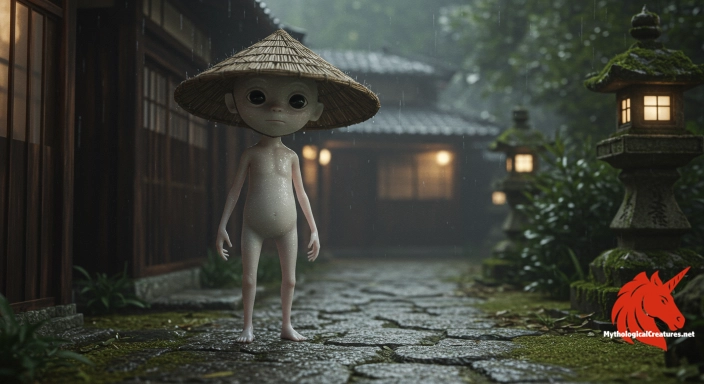
Amefurikozō
Amefurikozō - Embodies the whimsical and unpredictable nature of rainy weather in Japanese cultural narratives
Origins & First Encounters
Amefurikozō emerges as a fascinating figure within the realm of Japanese folklore, a small yet enigmatic yōkai tightly interwoven with the mysteries of rainy weather. Originating in the Edo period, this spirit appears in artistic works that document the interplay between the human and the supernatural, with its earliest known illustration found in Sekien Toriyama’s famed Konjaku Gazu Zoku Hyakki. This early depiction set the stage for the creature’s enduring appeal, encapsulating both the whimsy and the capriciousness of nature. Over time, the character of Amefurikozō has come to symbolise the sudden onset of rain and the unpredictable moods of storms. Its very name, which can be translated as “rain-falling boy,” hints at these associations with moisture and transient phenomena. Embedded in a cultural context that revered the erratic temperament of weather, the creature straddles the line between mischief and mysticism. The lore surrounding Amefurikozō also reflects a broader Edo period fascination with the natural world, where the unseen forces of nature were often personalised as supernatural beings. Its legacy is a testament to how small, seemingly minor spirits can encapsulate the profound, ever-changing essence of nature.
Source Texts & Tale Variants
The primary sources for Amefurikozō are rooted in classical Japanese art and literature, with Sekien Toriyama’s compendious collection serving as a cornerstone. His Konjaku Gazu Zoku Hyakki, alongside various kibyōshi publications of the era, offers one of the earliest systematic records of this whimsical yōkai. These texts and illustrations, though brief in description, have informed much of the subsequent narrative and visual tradition associated with Amefurikozō. Over the centuries, subsequent compilations and folklore anthologies have reinterpreted the creature, sometimes emphasising its role as both a benign herald of rain and a playful trickster. Variants in storytelling have allowed for a multiplicity of interpretations—from a spirit blessing the parched fields to one that signals the unsteady temperament of nature. Despite the relative scarcity of detailed early narratives, the recurring presence in popular art firmly established its place in the Japanese supernatural canon. Later commentaries and modern retellings have occasionally expanded the lore, weaving in local legends and atmospheric anecdotes. Each new narrative strand has enriched the tapestry of Amefurikozō’s myth, underscoring its fluidity and cultural resonance.
Form & Powers
The physical depictions of Amefurikozō are as delicate as they are compelling, evoking the ephemeral nature of morning mist and falling rain. Traditionally, he is portrayed as a diminutive, childlike figure, subtly blending human attributes with an otherworldly essence. His face, often rendered with features that suggest both innocence and mystery, carries the glimmer of dew on a rain-drenched day, with large eyes that seem to reflect the cloudy skies. Artistic renditions frequently present him in simple garments that echo the traditional clothing of the Edo period, complete with muted colours that mirror the overcast atmosphere. Some depictions hint at a semi-transparent quality to his form, embodying the transient and elusive nature of rain itself. Variations among artworks exist—a few showing dishevelled hair or a small cap that has weathered many storms, symbolising the wear of the natural world. These visual traits are not fixed; different illustrators have allowed room for creative embellishments that capture the imaginative spirit of the yōkai tradition. Through these subtle physical details, Amefurikozō becomes a symbolic embodiment of nature’s unpredictable yet poetic character.
Regional Faces
Regional interpretations of Amefurikozō reveal a spectrum of characteristics that reflect the diverse cultural landscapes of Japan. In some communities, the creature is revered as a benevolent spirit whose appearance brings the much-needed rains for crop cultivation, while in others, its presence is met with a mix of awe and wariness due to its capricious nature. Local folklore in various parts of the country has tailored the creature’s attributes, sometimes endowing it with specific accessories like a small straw hat or a distinct piece of clothing that mirrors regional dress traditions. In regions where rainfall is both a blessing and a burden, Amefurikozō is depicted with dual aspects: as an omen of renewal and occasionally as a harbinger of disruptive downpours. Such regional narratives have allowed local artists and storytellers to add nuances to the creature’s personality, integrating indigenous superstitions with the broader yōkai tradition. Some villagers even recounted minor pranks attributed to the mysterious yōkai, blending humour with cautionary tales about the fickleness of weather. These localized adaptations underscore how folklore can evolve to resonate with the specific environmental and cultural contexts of a community. In doing so, Amefurikozō becomes a versatile symbol that bridges the gap between the universal allure of nature’s unpredictability and the local human experience.
Cultural Parallels
Amefurikozō can be compellingly compared to other mythological beings that embody the interplay between natural forces and the supernatural. Much like European rain fairies and other nature sprites, this yōkai personifies the mysterious and uncontrollable aspects of weather, though his form remains distinctly rooted in Japanese aesthetic traditions. The notion of a small, weather-controlling spirit resonates with various global traditions where supernatural beings are often invoked to explain meteorological phenomena. In Chinese folklore, for instance, dragons are celebrated as majesty figures that command the rain, yet in contrast, Amefurikozō offers a more intimate and mischievous presence. His childlike appearance and playful demeanour diverge from the grandiosity typical of such creatures, which in turn highlights the diversity in mythological representation across cultures. Comparative analysis underscores that while many societies ascribe divine attributes to weather phenomena, Japanese lore tends to intertwine the sacred with the everyday by presenting minor yet memorable spirits like Amefurikozō. This cross-cultural reflection elevates the yōkai to a broader context, where it highlights both the uniqueness and the common threads within global mythological traditions. The universal impulse to personify natural events finds a small, charming embodiment in Amefurikozō, making his story both uniquely Japanese and universally resonant.
Legacy & Modern Evolution
Over the centuries, the figure of Amefurikozō has undergone a fascinating evolution from a minor folkloric spirit to an enduring cultural icon in modern media and literature. Initially emerging in the Edo period’s vibrant world of yōkai art, he was primarily known through fleeting visual cues and brief written passages in early compilations. In more recent decades, the resurgence of interest in traditional folklore has spurred a reimagining of Amefurikozō in anime, manga, and other forms of popular culture, where his enigmatic qualities are celebrated with renewed vigor. Contemporary portrayals often blend the original mischievous charm with modern sensibilities, sometimes casting him in a role that is both humorous and reflective of environmental themes. This shift in depiction mirrors broader trends in which yōkai are reinterpreted as complex symbols of nature, nostalgia, and even social commentary. Cultural festivals, art exhibitions, and even merchandising have embraced his image, underscoring the yōkai’s dynamic ability to adapt to changing times. His legacy, therefore, is not static but a continuously evolving narrative that bridges ancient superstition and modern creativity. Through these adaptations, Amefurikozō endures as a subtle reminder of the interplay between nature’s unpredictable forces and the human imagination.
Interesting Fact
Despite its playful appearance, Amefurikozō has intrigued scholars for centuries, symbolising both the ephemeral nature of rain and the deep cultural ties between nature and the supernatural in Japanese folklore.
For publishers and studios
Your next readers are already here
Many of our visitors are looking for books, campaigns, and resources that deepen their journey into myth. Position your title or setting here.
Discuss a placementQuick Creature Info
Features:
Associations:
Our Mythic Legendary Rating:

Habitat:
Supernatural Powers:
Physical Attributes:
Abilities:
Behavior:
Lore:
References
Discover Another Mythical Legend You May Not Have Heard Of?
Uncover the mysteries of ancient folklore and expand your knowledge of legendary beings from cultures around the world.
Dare to Meet the Teakettler....
Curated by the Mythological Creatures Team
Series editor: Mythological Creatures Directory
Primary desk: Asian & Pacific Myth Cycles Desk
(rev. November 2025)