
Anhangá: Anhangá is an evil spirit from Brazilian indigenous mythology known for tormenting both the living and the dead.
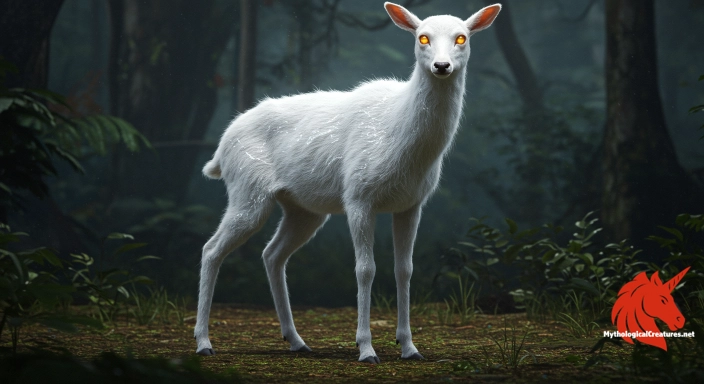
Anhangá
Anhangá - Represents a punitive supernatural force protecting nature and enforcing respect towards wildlife
Origins & First Encounters
Anhangá is a mystifying spirit rooted in the rich tapestry of indigenous Brazilian mythology, known for its ambivalent role as both a guardian and a punisher of nature. Born out of ancient cosmovisions, this spectral figure has been celebrated and feared for centuries, reflecting the deep bond between native communities and the natural world. The earliest attestations of Anhangá appear in traditional oral histories, later woven into Indianist literature, which has helped preserve its enigmatic persona. This entity is frequently portrayed as an evil spirit whose influence spans both the realm of the living and that of the dead. Indigenous groups, particularly those speaking Tupi and Sateré-Mawé, have integrated the figure into their spiritual framework, where it embodies a powerful reminder of nature’s unpredictability. The spirit is said to manifest through tempestuous natural sounds and unsettling apparitions, stirring an innate caution among those who witness its presence. Reverence for Anhangá is intertwined with a broader cultural respect for pristine wilderness, highlighting moral and ecological boundaries. Its diverse depictions underscore a timeless dialogue about the consequences of human actions against the backdrop of a wild and mysterious universe. Each retelling of its tale reinforces the enduring connection between cultural identity and the natural environment. Over time, Anhangá has emerged as a symbol of both retribution and balance in a world where the physical and spiritual realms are intricately linked.
Source Texts & Tale Variants
Early narratives about Anhangá are embedded in the oral traditions of several native Brazilian communities, where legends were passed down with vivid detail and passion. These tales were later transcribed in Indianist literature, ensuring that the spirit’s complex nature reached a broader audience beyond its indigenous origins. Various texts and folklore collections recount episodes of Anhangá tormenting hunters and unsettling both the living and the dead. Different versions of the narrative portray the entity engaging with natural phenomena, such as the clamor of storms and the eerie silence of the forest. Some records link its presence specifically to funerary rituals, where it is said to disrupt the journey to a celestial realm free from evil. In one variant, the spirit is depicted as an avenger against those who disrupt the delicate equilibrium of natural life, particularly through unsustainable hunting practices. Other accounts describe its capacity for shape-shifting, shifting easily between animal forms and even metamorphosing into mysterious natural sounds. The rich tapestry of story variants highlights not only the diversity of indigenous beliefs but also the significance of the spirit in maintaining cosmic justice. Each source contributes a unique piece to the intricate puzzle of Anhangá’s character. The multiplicity of these narratives reflects an enduring dialogue between tradition and the evolving needs of cultural expression.
Form & Powers
Descriptions of Anhangá are as diverse as the cultural landscapes from which they originate, with each tale enhancing its enigmatic presence. The spirit is often envisioned as a formless entity that can assume multiple forms, thus evading any single physical categorisation. A common depiction is that of a luminous white deer, whose pristine coat contrasts sharply with its fiery, penetrating eyes that seem to burn with otherworldly intensity. In other narratives, Anhangá adopts features of various creatures such as birds or even a rugged armadillo, emphasising its ability to traverse both the skies and the earth. Some modern renditions expand its form further, portraying it as a pirarucu fish, seamlessly blending ancient myth with contemporary reinterpretations. Its ability to shift between these physical manifestations contributes to the underlying mystery that defines the creature. The ethereal quality is further intensified by descriptions of an almost palpable aura which balances both beauty and menace. Variations in size and form have been noted, suggesting that the entity might expand in power in response to disruptions in nature. The fluidity of these physical descriptions not only accentuates its spectral nature but also reinforces the idea of nature’s inherent transformation. This ever-changing visage remains a testament to the adaptable nature of myth and the enduring allure of the unknown.
Regional Faces
The regional retellings of Anhangá demonstrate a rich interplay between local traditions and broader indigenous cosmologies. In Tupi communities, the spirit is frequently revered as both a punisher of human transgressions and a protector of the natural order, manifesting as an ominous omen in the wilderness. Among the Sateré-Mawé, a variant known as Ahiag Kag is embraced with similar dualities, yet nuanced by the cultural particularities and local taboos of each group. Other native groups weave their own interpretations into the lore, often assigning specific natural landscapes or phenomena to the spirit’s influence. French colonial retellings, which adopted and adapted indigenous ideas, introduced the creature under variations such as Agnan or aignen, linking it subtly with European mythological archetypes. In some regions, Anhangá is celebrated during rituals that honour the sanctity of the hunt, where its presence forms an integral part of the moral narrative surrounding wildlife stewardship. Local adaptations have thus enriched the myth with regional iconography, blending the spirit with a pantheon of natural symbols. These regional nuances not only highlight the diversity of Brazilian spiritual thought, but also amplify the universality of nature’s dominion over life and death. The multiplicity of regional portrayals ensures that while the core essence remains intact, Anhangá continues to evolve in ways that resonate with the specific experiences of each community. This dynamic interplay has allowed the myth to remain both timeless and contextually relevant.
Cultural Parallels
Anhangá shares intriguing parallels with other mythological beings that straddle the realms of protection and punishment across diverse cultures. Similar to the white stag of Celtic lore, which appears as an omen or a guide within enchanted forests, Anhangá’s frequent guise as a spectral deer imbues it with an air of ethereal invitation and sinister warning. Like the guardian spirits found in various Native American traditions, its role as a protector of nature and a retributionist against those who upset natural balances establishes a universal archetype. In several cultures, the idea of a shape-shifting entity that haunts both the living and the deceased is a recurring motif, drawing comparisons with the spectral figures of the European Wild Hunt. Its ambiguous nature, oscillating between benevolence and malevolence, resonates with global mythic constructs where deities are both feared and revered. These cross-cultural comparisons reveal a shared human concern regarding the balance between consumption and conservation of natural resources. The spirit’s dual aspects also mirror those found in other mythologies where guardianship is inseparable from a punitive streak, such as in some interpretations of the Slavic domovoi. This alignment with international folklore underscores a broader narrative about the sacredness of nature, regardless of language or cultural boundaries. Each culture’s version of a nature-bound guardian highlights the universal interplay between human conduct and the ethereal forces of the wilderness. The comparative significance of Anhangá ultimately enriches our understanding of how myth transcends geography to speak to fundamental aspects of the human experience.
Legacy & Modern Evolution
Over the centuries, the figure of Anhangá has undergone a fascinating evolution, reflecting both cultural shifts and modern reinterpretations. Originally a fearsome deity in indigenous narratives, its portrayal has gradually absorbed elements that speak to contemporary concerns, such as environmental degradation and unsustainable hunting practices. Modern accounts often blend traditional imagery with adaptive motifs, highlighting its capacity for shape-shifting into forms as diverse as armadillos or pirarucu fish. This evolutionary process mirrors broader trends in myth-making, where ancient beliefs are recontextualised to address current social and ecological challenges. Today, Anhangá is frequently invoked in discussions about the sanctity of nature, serving as a symbol of the moral imperatives tied to conservation. Its legacy is evident not only in academic explorations of indigenous spirituality but also in popular media, where it appears in literature, art, and film as a complex figure embodying both menace and protection. Contemporary indigenous communities continue to interpret the spirit as a critical reminder of the inherent balance between life and death, as well as a caution against the hubris of disrupting nature. This modern reimagining has given the myth renewed vigour, allowing it to transcend its traditional origins and resonate with global audiences. The enduring story of Anhangá exemplifies how ancient folklore can evolve while still preserving its essential core, bridging the past with a vision for the future. As a living symbol, it continues to inspire reflection on the interwoven destinies of humanity and the natural world.
Interesting Fact
Anhangá is uniquely feared not only as a tormentor of the dead but also as a supernatural force that enforces respect for nature, particularly among hunters.
Partner with Mythological Creatures
Bring your myth-based world into ours
From game settings to narrative worlds, we work with partners who treat myths with care. Share your project for a potential sponsor slot.
Partner with usQuick Creature Info
Origin:
Features:
Associations:
Our Mythic Legendary Rating:

Also Sometimes Known As:
Habitat:
Supernatural Powers:
Physical Attributes:
Abilities:
Behavior:
Lore:
References
Discover Another Mythical Legend You May Not Have Heard Of?
Uncover the mysteries of ancient folklore and expand your knowledge of legendary beings from cultures around the world.
Dare to Meet the Njörun....
Curated by the Mythological Creatures Team
Series editor: Mythological Creatures Directory
Primary desk: Americas & Indigenous Traditions Desk
(rev. November 2025)