
Anhur: Anhur is an ancient Egyptian war god known for his martial prowess and dual depictions as a bearded man and a lion-headed deity.

Anhur
Anhur - Anhur is revered as a fierce war god whose title as slayer of enemies and martial prowess underscore his role in upholding cosmic order in Egyptian mythology.
the legend in five swipes.
the legend in five swipes.
When did people first speak of Anhur?
Anhur emerges as a striking figure in the early folds of Egyptian mythology, celebrated primarily as a potent god of war. His name, meaning '(one who) leads back the distant one', encapsulates his role in restoring order and reclaiming what was lost. He was venerated in the ancient centres of Abydos and Thinis where martial prowess and divine intervention were deeply interwoven. His myth is steeped in the rituals and monuments of early Egypt, reflecting an era when warfare and spiritual guardianship were inseparable. The narrative of his journey to bring his wife, Mehit, from Nubia adds a rich layer of personal devotion and heroic endeavour. His divine persona bridged the realms of the human and the supernatural, offering both a protector in battle and a unifier in familial myth. The cultural ambience of early Egyptian society is mirrored in his depiction as both a fierce combatant and a benevolent leader. His story has been transmitted through generations, retaining an aura of mystery and strength despite the passage of millennia. Even today, the legacy of his martial vigour continues to evoke admiration and scholarly intrigue. His enduring importance underscores a dynamic interplay between myth, regional worship, and the overarching narratives of Egyptian spirituality.
Who wrote down the legend of Anhur?
Ancient inscriptions and temple reliefs, particularly from Abydos and Thinis, provide valuable insights into the mythic exploits of Anhur. Multiple textual fragments from temple walls and ritual documents emphasise his role as an unyielding warrior and divine guardian. Reliefs, amulets, and papyri illustrate his title as the slayer of enemies, reinforcing his central position in the Egyptian pantheon. A number of narrative fragments recount his dramatic retrieval of Mehit from Nubia, weaving together themes of love, conquest, and restoration. Diverse versions of his myth have emerged through regional cult practices, each adapting the central narrative to local cultural contexts. Artistic depictions on sarcophagi and stone carvings reveal a continuity of his martial iconography throughout successive dynasties. Some sources suggest a blend of oral tradition with formal hieroglyphic records, contributing to a multifaceted portrayal. The multiplicity of primary sources attests to his widespread veneration and the flexibility of his myth in the hands of different communities. Even in fragmentary texts, the vivid imagery of battle and divine strength is unmistakable. These enduring records have ensured that the story of Anhur continues to captivate both ancient and modern audiences.
Anhur: Form, Powers and Weaknesses
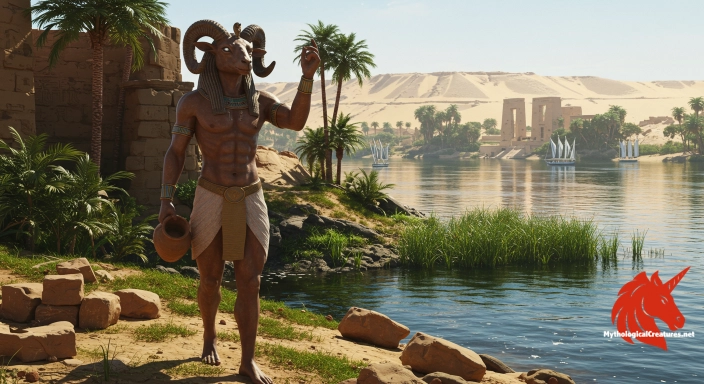
Visual depictions of Anhur vividly capture his authoritative presence and martial might. He is most commonly represented as a well-built, bearded man whose strong features convey both wisdom and an uncompromising spirit. His attire typically comprises a flowing robe that, in various depictions, resembles a kilt, symbolising both dignity and practicality in warfare. A unique headdress adorned with four prominent feathers crowns his head, imbuing his image with a regal and almost celestial quality. In many artistic renditions, Anhur is shown wielding a spear or lance, a tangible emblem of his prowess in battle. The careful detailing of his facial expressions and muscular form underlines his dual role as a compassionate leader and a fierce combatant. Some representations even transition his human form into that of a lion-headed figure, blending human intelligence with animal strength. The consistency with which these attributes are presented across various artefacts underscores a deliberate iconographic tradition. Variations in his depiction—whether in the precision of his headdress or the rugged contours of his visage—reflect the evolving artistic styles of different periods. Each portrayal, regardless of subtle regional differences, reinforces his status as an enduring symbol of strength and protection.
How does Anhur differ by region?
Across different regions of ancient Egypt, Anhur’s portrayal acquires distinctive nuances that reflect local customs and values. In Abydos, where his worship was particularly emphatic, his depictions emphasise martial vigour and the relentless spirit of combat. The cult centre at Thinis, on the other hand, often integrated themes of leadership and regeneration, imbuing his character with additional layers of meaning. Local artisans employed unique stylistic elements, using varied colour palettes and ornamental details that distinguished Anhur from deities of other regions. In some communities, his myth was enriched by local legends that intertwined his narrative with regional deities and sacred geography. Such adaptations allowed the warrior god to resonate with a broad spectrum of spiritual and civic life. Festive rituals and community celebrations sometimes highlighted his role not only as a figure of war but also as a benefactor in times of challenge. Regional depictions have occasionally introduced hybrid iconography, blending Egyptian motifs with indigenous symbols. This geographical diversity results in a dynamic mosaic of images and stories, each contributing to the evolving myth of Anhur. The regional variation in his worship demonstrates a thriving dialogue between local identities and the pan-Egyptian religious framework.
How does the Anhur legend compare worldwide?
Anhur’s character finds intriguing parallels with martial deities from a variety of cultural traditions. His emphatic role as a combatant echoes the mythic narratives of Greek and Roman gods such as Ares and Mars, who also embody the essence of warfare and heroic struggle. The amalgamation of human features with animalistic traits, particularly in his lion-headed depictions, bears a resemblance to composite deities found in other ancient Near Eastern cultures. His symbolic attributes—the spear, the feathered headdress, and the robust form—form a common visual language that bridges disparate mythological traditions. Such cross-cultural motifs subtly underscore the universal nature of divine representations in the context of battle and authority. The underlying theme of reclaiming or leading back the distant finds expression in stories from various mythologies, illustrating a shared human preoccupation with restoration and harmony. In many ways, comparisons between Anhur and similar deities reveal the permeability of mythic boundaries across regions and eras. His multi-dimensional portrayal, combining physical prowess with spiritual depth, invites reflections on universal concepts of protection and vigour. The parallels drawn between Anhur and other war-like figures emphasise both commonalities and unique cultural inflections, enriching our understanding of myth as a global phenomenon. Overall, his narrative contributes to a broader discourse on the archetype of the warrior god within the tapestry of ancient belief systems.
Anhur: The Modern Legacy
The evolution of Anhur’s myth mirrors the broader transitions within Egyptian cultural and religious history. Initially celebrated as a stout defender and warrior, his imagery has gradually accrued additional layers of symbolism over the centuries. Early depictions as a bearded, spear-wielding combatant have given way to more elaborate portrayals, including the iconic lion-headed form that speaks to raw, animalistic power. As Egypt’s religious landscape evolved, his character absorbed elements from neighbouring deities, reflecting shifts in societal values and artistic conventions. In modern times, Anhur is often invoked as a symbol of resilience and defiance—a figure who embodies the timeless struggle between order and chaos. His enduring figure has inspired contemporary artistic expressions, ranging from visual art and literature to digital media and film. The reinterpretation of his myth in modern culture speaks to a renewed fascination with ancient narratives and their enduring capacity to resonate with modern audiences. Enthusiasts of mythology and ancient history celebrate his legacy as an exemplar of strength and renewal, a testament to the perpetual relevance of classical mythic themes. As modern scholarship continues to revisit his legacy, Anhur remains a potent emblem of martial valor and cultural identity. His story, ever fluid and dynamic, continues to bridge the ancient and the modern, enriching the dialogue between past traditions and contemporary creativity.
Interesting Fact
His dual representation as both a traditional bearded deity and a lion-headed figure illustrates the rich symbolic flexibility of Egyptian divine iconography.
Mythological Treasures
Egyptian Legends: A field guide to the gods and monsters of ancient Egypt
Guardians of the living and devourers of the dead, with the role each played in judgement.
Greek Myths: A field guide to the monsters of ancient Greece
Every monster here earned its place in legend, and each gets a full page of artwork and the story behind it.
Norse Sagas: A field guide to the beasts of the Viking world
Drawn from the saga accounts themselves, with the powers, weaknesses and doom of each being set out.
the legend in five swipes.
For publishers and studios
Your next readers are already here
Many of our visitors are looking for books, campaigns, and resources that deepen their journey into myth. Position your title or setting here.
Discuss a placementQuick Creature Info
Origin:
Features:
Associations:
Our Mythic Legendary Rating:

Also Sometimes Known As:
Habitat:
Supernatural Powers:
Physical Attributes:
Abilities:
Behavior:
Lore:
References
Discover Another Mythical Legend You May Not Have Heard Of?
Uncover the mysteries of ancient folklore and expand your knowledge of legendary beings from cultures around the world.
Dare to Meet the Khnum....
The Mythological Creatures Book Series
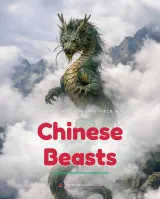
Yokai, Greek, Norse, Egyptian & Chinese. Five illustrated field guides to the creatures the old stories either warned or told you about.

Curated by the Mythological Creatures Team
Series editor: Mythological Creatures Directory
Primary desk: Hellenic & Ancient Mediterranean Desk
(rev. November 2025)