
Montu: Montu is the ancient Egyptian falcon-god of war, revered for his martial prowess and divine authority.
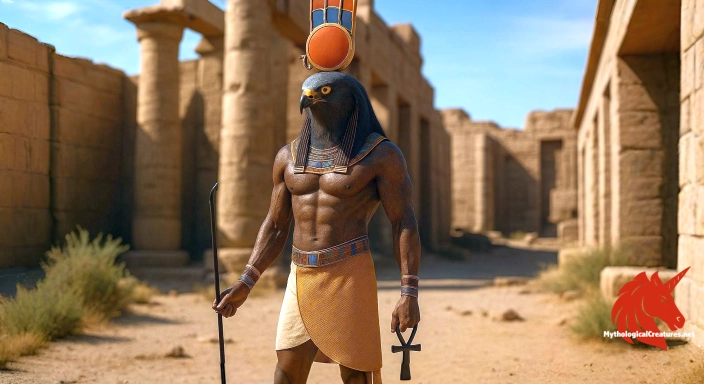
Montu
Montu - Montu embodies martial excellence and the divine authority that empowered the pharaoh, symbolising victory and the relentless spirit of battle in ancient Egypt.
Origins & First Encounters
Montu emerges as a formidable figure in the pantheon of ancient Egyptian deities, revered as a falcon-god of war whose presence symbolised martial prowess and royal vitality. He is rooted in the ancient traditions of Upper Egypt, where his worship was intertwined with the fabric of military might and divine kingship. His earliest attestations emerge from the historic region of Thebes, distinguishing him as a patron of warriors and pharaohs. The deity is celebrated not only for his aggressive attributes on the battlefield but also as a divine protector in times of crisis. His image was intrinsically linked with the pharaoh’s mandate, empowering rulers with the spirit of conquest and resilience. Sacred rituals and temple inscriptions in Thebes frequently highlight his role in conferring strength and victory during conflict. Ancient Egyptians saw his keen, falcon-like gaze and soaring form as metaphors for excellence and the swift execution of justice. His myth travelled through generations, becoming a focal point for rituals that underscored the sacred bond between the divine and earthly rule. Montu’s enduring significance testifies to the complex interplay between warfare, spirituality, and governance in early Egyptian culture.
Source Texts & Tale Variants
Ancient records and temple inscriptions provide a mosaic of stories that illuminate Montu’s divine role. Numerous hieroglyphic inscriptions from Theban temples depict his martial adventures and the rituals performed in his honour. Texts carved on temple reliefs and tomb walls form a rich tapestry of myth, where the god’s strength is often invoked alongside other deities of the Egyptian pantheon. Variations in these narratives reveal that Montu was sometimes celebrated as a standalone war deity and at other times integrated into composite myths with gods such as Horus and Ra. The stories chronicled in ritual texts and funerary documents lend insight into the evolution of his cult over different dynasties. Diverse accounts from magical papyri and temple walls echo his presence in both state and folk religion. Surviving writings highlight his importance in proper funerary rites and in bestowing the courage required for battle. Several versions of his myth underscore a dual aspect of destruction and protection, reflecting the complex dualities present in Egyptian theology. The fragmented nature of these ancient sources invites contemporary scholars to piece together a dynamic narrative of Montu’s worship.
Form & Powers
Iconographical depictions of Montu reveal a striking fusion of human and avian elements, which capture the essence of his warlike nature. He is most commonly portrayed with a distinct falcon head that exudes both regality and a relentless intensity. His eyes are often rendered as piercing and alert, embodying the vigilant spirit required for battle. Montu is frequently shown wearing a double-plumed crown, a symbol of his dominion over the military and the divine realms. His body is sculpted with an athletic build that conveys both strength and agility, suitable for a god of combat. Elaborate detailing on his vestments and armour incorporates hieroglyphic motifs that underscore his sacred origins. Artistic representations sometimes include outspread wings, which accentuate his swift and unparalleled prowess in warfare. Sculptures and reliefs illustrate his posture as both assertive and protective, reinforcing his role as a guardian of the pharaoh. The physical portrayal of Montu is a testament to the Egyptians’ mastery in blending realistic detail with symbolic grandeur.
Regional Faces
Local variations in the depiction and worship of Montu underscore the diversity of ancient Egyptian religious practices. In Upper Egypt and specifically within Thebes, cult practices placed particular emphasis on his identity as a war deity linked to the pharaoh’s invincibility. Regional interpretations often magnified his aggressive attributes, aligning his image with the rugged terrain and harsh climate of desert life. Distinctive artistic styles in different locales introduced subtle changes in his crown and regalia, reflecting local artistic traditions. Communities in Thebes celebrated his heroic deeds by infusing local myths with narratives of salvation and conquest. In some regions, Montu’s falcon features were rendered with more pronounced angularity, symbolising the fierce spirits of the local warriors. Local temple projects and festival rituals frequently included reenactments of his myth, integrating community values with divine inspiration. These regional variations reveal how local contexts shaped his persona to resonate with the specific needs and identities of different Egyptian communities. His worship thus illustrates a rich tapestry of regional adaptations that enriched the overarching Egyptian mythos.
Cultural Parallels
Comparative studies lend a fascinating perspective on Montu by aligning his attributes with other war deities from diverse mythologies. His martial spirit and falcon-headed motif often invite comparisons with figures such as the Greek Ares and Roman Mars, though his representation is distinctly imbued with Egyptian symbolism. Unlike his Greco-Roman counterparts, Montu embodies not merely the violence of war but also the divine right and protection of kingship. His iconography shares intriguing overlaps with Horus, another falcon-headed god, yet Montu’s narrative is more explicitly associated with the aspect of physical combat and military triumph. The duality of his portrayal, blending both the beauty of avian grace and the ferocity of battle, offers unique insights into the Egyptian conceptualisation of divine power. Such cross-cultural comparisons highlight how ancient societies used powerful animal imagery to encapsulate the volatile nature of war. This interplay between myth and martial identity can be seen as a common thread across cultures, though each tradition adapts these themes distinctly. By examining these parallels, one can appreciate the universal language of symbolism that bridges disparate cultures while celebrating unique cultural identities. Montu thus occupies a distinct niche where mythological narratives and the ideals of war converge across ancient worlds.
Legacy & Modern Evolution
The legacy of Montu has evolved through centuries, retaining his essence as a symbol of martial vigour while adapting to changing cultural landscapes. His early depictions inspired subsequent generations of Egyptian art and political symbolism, where he was invoked as a protector in times of both war and peace. The evolution of his imagery is evident in later temple murals and funerary texts, where his attributes are reinterpreted to suit the shifting dynamics of royal ideology. As Egypt encountered periods of internal strife and foreign rule, Montu’s iconography served as a reminder of the ancient, unyielding power of indigenous traditions. Modern interpretations reimagine him as a figure who transcends ancient war roles, often casting his image in contemporary art and literary works as a paradigmatic hero. His depiction in modern media occasionally intertwines themes of resilience and moral fortitude, rendering him a timeless symbol of resistance. Contemporary scholars and enthusiasts view Montu as more than just a deity of war; he is a narrative bridge connecting ancient traditions with the modern quest for identity. The enduring nature of his myth reflects a legacy that continues to inspire critical reassessment of the cultural and historical narratives of ancient Egypt. Through the continuous reworking of his image, Montu stands as a persistent emblem of strength, adaptation, and the lasting charm of myth.
Interesting Fact
Montu’s distinctive fusion of human and falcon features set him apart in the pantheon, illustrating ancient Egypt’s unique conception of war and divinity.
Mythology commerce, done carefully
Align your store with our global myth audience
If you sell myth-inspired jewellery, prints, decks, or collectibles, we can feature your brand without overwhelming the reading experience.
Partner with usQuick Creature Info
Origin:
Associations:
Our Mythic Legendary Rating:

Also Sometimes Known As:
Habitat:
Supernatural Powers:
Physical Attributes:
Abilities:
Behavior:
Lore:
References
Discover Another Mythical Legend You May Not Have Heard Of?
Uncover the mysteries of ancient folklore and expand your knowledge of legendary beings from cultures around the world.
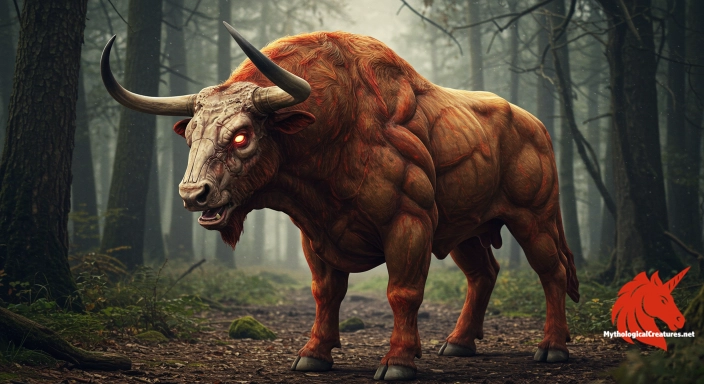
Dare to Meet the Forest Bull....
Curated by the Mythological Creatures Team
Series editor: Mythological Creatures Directory
Primary desk: Hellenic & Ancient Mediterranean Desk
(rev. November 2025)