
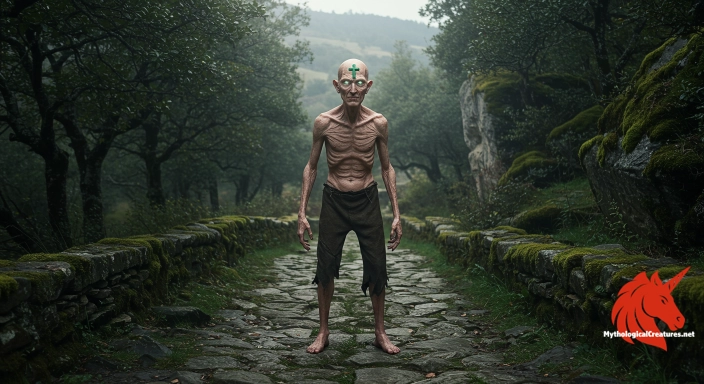
Arquetu: Arquetu is a mythological figure from Cantabrian folklore depicted as an old man marked by a green cross and seven keys on his forehead.
Arquetu
Arquetu - Acts as a moral guardian in folklore, warning against the reckless squandering of wealth and symbolising the supernatural repercussions of greed.
Origins & First Encounters
Arquetu emerges from the rich tapestry of Cantabrian mythology as an enigmatic figure who bridges the realms of fortune and retribution. His origins are rooted in local oral traditions, where he is depicted as an elderly man embodying the wisdom of bygone eras. Historical narratives describe his first attestation in the rural regions of Cantabria, where his image became synonymous with moral caution regarding the management of wealth. Representing a dual authority, he offers aid to those who have depleted their fortunes yet implores responsibility in financial affairs. The mystique of Arquetu is heightened by the symbolic markings emblazoned on his forehead, notably the green cross and seven keys. His presence in myth emphasises both charity and a stern warning against repeated extravagance. While his beneficent act of lending money is renowned, his subsequent curse of eternal poverty reinforces a deep-seated moral lesson. His enduring legacy in regional lore continues to encapsulate themes of justice and balance in the ever-evolving social fabric.
Source Texts & Tale Variants
Ancient manuscripts and local folklore collections first mentioned Arquetu as a mysterious figure in Cantabrian vernacular traditions. Oral accounts have been meticulously passed down through generations, providing a glimpse into his multifaceted role as both benefactor and enforcer. Multiple variants of his tale appear in diverse local narratives, each emphasising different symbolic attributes. Written accounts, though sparse in number, all converge on his unique iconography marked by the green cross and seven keys on his forehead. Over centuries, storytellers have incorporated subtle variations in his myth, reflecting local customs and economic challenges. Some manuscripts recount his interventions during periods of financial hardship, underlining his role as an agent of karmic justice. Anthologies of Cantabrian legends have preserved his story, ensuring that both his generous and punitive acts remain part of the region's cultural memory. These varied sources collectively contribute to a complex portrait of Arquetu, crafted by both literary tradition and oral narrative.
Form & Powers
Arquetu is consistently portrayed as an elderly man with a countenance that bears the marks of time and wisdom. His most striking feature is the drawing of a vivid green cross adorned upon his forehead, a symbol that glows with an almost otherworldly lustre. The inscription of seven meticulously crafted keys accompanies the cross, each key seemingly imbued with a power that unlocks secret facets of destiny. His facial features are etched with deep lines and wrinkles that suggest a life steeped in both joy and sorrow. He is typically depicted in traditional garb that harks back to historical Cantabrian dress, with flowing robes that add to his mystical aura. The texture of his skin and the subtle shimmer of his eyes convey an ethereal quality, hinting at his supernatural origins. Variations in his portrayal sometimes include a weathered beard and piercing, reflective eyes that seem to observe the moral choices of those around him. His overall form is both majestic and foreboding, reflecting the dual nature of his benevolent yet punitive powers.
Regional Faces
Regional interpretations of Arquetu reveal a rich diversity of local adaptations across Cantabria and its neighbouring provinces. In some localities, he is envisioned as a benevolent guardian whose interventions protect communities from the perils of financial ruin. Other regions portray him as a stern arbiter of moral conduct, punishing repeated fiscal recklessness with an unyielding curse. In neighbouring areas, literary traditions have modified his iconography, sometimes replacing the green cross with alternative symbols of luck and wisdom. Every version retains the core symbolism of the seven keys, although the number and form of these keys may differ subtly. Some variations imbue his character with a more whimsical aspect, blending elements of humour with cautionary fiscal lessons. Artistic renditions in local festivals sometimes depict him as a jovial yet enigmatic figure, a mediator between prosperity and penury. The regional adaptations of his myth exemplify how local cultures are adept at transforming a single narrative into multiple interpretations that resonate with their unique social realities.
Cultural Parallels
Comparisons between Arquetu and other mythological figures highlight common themes of wealth, fate, and moral recompense. Like numerous guardians of fortune in European folklore, Arquetu embodies the dualism of benevolence and vengeance, similar to the archetypal trickster figures found across the Mediterranean. His role as a dispenser of both financial aid and subsequent curses mirrors the parables found in various cultural narratives where luck is balanced by accountability. In a manner reminiscent of other iconographic entities such as the Celtic spirit of wealth or the Nordic huldra, his symbolic keys represent the unlocking of hidden destinies. Interdisciplinary studies have often drawn analogies between Arquetu and legendary figures who oversee the cyclical nature of prosperity and ruin. His myth stands alongside a tradition of ritualistic figures whose interventions serve as a stern reminder of the inherent risks of mismanaged fortune. The blending of moral instruction and supernatural allure in his story finds echoes in diverse cultural legends that caution against excess and imprudence. Such cultural parallels affirm that while each tradition is unique, the universal themes of human folly and redemption continue to be relevant across civilizations.
Legacy & Modern Evolution
Over the centuries, the narrative of Arquetu has undergone significant transformation while remaining firmly rooted in Cantabrian tradition. The figure has evolved from a shadowy guardian of financial prudence to a more nuanced symbol of both caution and assistance in modern reinterpretations. Early depictions concentrated solely on his punitive nature, but later retellings have celebrated his role as a mystical benefactor who offers redemption. Contemporary artists and writers have embraced his image, incorporating the green cross and seven keys into modern allegorical contexts. His myth now serves as an enduring metaphor for the impermanence of wealth and the importance of fiscal responsibility. Community festivals and cultural exhibitions frequently showcase elaborate representations of Arquetu, ensuring his continued relevance in local popular culture. Modern reinterpretations often imbue him with a softer persona, one that highlights the lessons of personal growth and financial stewardship. Arquetu’s enduring legacy illustrates the dynamic nature of myth, demonstrating how ancient narratives can adapt to reflect the evolving values of society.
Interesting Fact
It is particularly intriguing that the imagery of a green cross and seven keys on his forehead not only distinguishes his appearance but also symbolically represents the unlocking of fate and the balance between fortune and misfortune in human affairs.
For serious mythcraft
Your project belongs among the legends
If your work deepens how people understand, play with, or teach mythology, a sponsor placement here keeps it in front of the right readers all year.
Submit a sponsorship enquiryQuick Creature Info
Features:
Associations:
Our Mythic Legendary Rating:

Habitat:
Supernatural Powers:
Physical Attributes:
Abilities:
Behavior:
Lore:
Related Creatures, Tales or Lore
- MMammon (demon of wealth and greed from Christian lore)
- AAnjanas (cantabrian fairytale spirits with connections to nature and fortune)
- DDuende (mischievous folk entities in Iberian mythology)
References
Discover Another Mythical Legend You May Not Have Heard Of?
Uncover the mysteries of ancient folklore and expand your knowledge of legendary beings from cultures around the world.
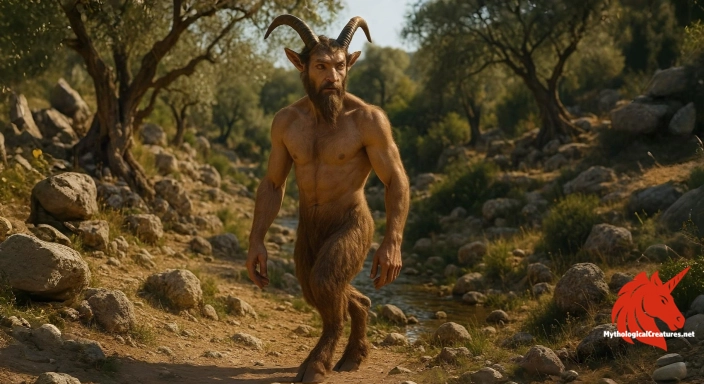
Dare to Meet the Aegipan....
Curated by the Mythological Creatures Team
Series editor: Mythological Creatures Directory
Primary desk: Hellenic & Ancient Mediterranean Desk
(rev. November 2025)