
Asrai: The asrai are mysterious aquatic fairies from English folklore.

Asrai
Asrai - The asrai symbolise the ephemeral nature of beauty and the mystery of hidden water realms in folklore.
the legend in five swipes.
the legend in five swipes.
The Beginnings of the Asrai
The asrai are a captivating embodiment of enchanting water fairies, appearing as elusive and ethereal beings within the realm of English folklore. They are traditionally portrayed as female and are said to reside in serene lakes, where the natural and supernatural merge in mysterious harmony. Their presence is marked by a delicate interplay between beauty and melancholy, a quality that has enthralled audiences for generations. Early modern literary invention, attributed to the creative spark of Robert Williams Buchanan, has since blossomed into a rich mythic tradition. Over time, the asrai have come to symbolise the transient nature of beauty and the wistfulness of hidden realms. Their stories echo a sense of quiet sorrow, as if each fleeting appearance is a lament for a lost, unattainable splendour. Although the asrai may have originated in recent literary works, they now occupy a cherished space within the wider tapestry of British mythology. The enduring allure of these water faeries reflects the perennial human fascination with the mysteries that lie beneath shimmering lake surfaces. Mystique, fragility and an innate connection to nature blend to create a narrative that bridges poetic invention and timeless folklore. Their legacy continues to inspire those who seek to understand the deeper sentiments of nature and loss.
Which versions of the Asrai story survive?
The narrative of the asrai is primarily sustained by literary sources that celebrate the enchanting qualities of aquatic fairies. Early textual references are relatively sparse, with much of their lore emerging from modern literary contributions rather than from age-old oral traditions. A pivotal moment in their mythos can be linked to the imaginative work of the Scottish poet Robert Williams Buchanan, whose creative portrayal established the asrai as a figure of quiet enchantment. His works provided a narrative framework that subsequent storytellers have carefully expanded upon. Later folklore compilations and fantasy anthologies have adopted and adapted the asrai story, often embellishing details regarding their ethereal origin. Variants of the tale explore the asrai as transient beings whose appearances are as fleeting as the morning mist over a lake. Several narrative strands mention encounters between humans and these delicate water dwellers, imbuing the tradition with a mixture of allure and warning. The fluidity of their portrayal across different texts underscores a creative legacy that is at once modern and mysteriously ancient. Contemporary accounts continue to interweave themes of existential beauty with an air of otherworldly sorrow, enriching the asrai myth. Drawing together elements from literary invention and retold legends, the asrai story remains a dynamic and evolving part of folkloric tradition.
The Appearance and Powers of the Asrai
The asrai are defined by an ethereal beauty that transcends simple description, their appearance imbued with the very translucence of water under moonlight. They are often depicted as having delicate, almost diaphanous features, with a pallor that reflects the subtle hues of a quiet lake. Their flowing hair, sometimes rendered in shades of liquid silver or soft aquamarine, cascades gently around graceful faces marked by a serene, wistful expression. Slender and graceful in build, they seem to glide effortlessly, as if their bodies were fashioned from the fineness of mist and water. Their skin is sometimes described as almost luminous, carrying a faint glow that evokes the shimmer of light on rippling water. In several traditions, their hands and feet are hinted to possess slight, webbed attributes, emphasising their intrinsic connection to aquatic realms. Variations in their portrayal exist, with some versions suggesting minute iridescent scales or subtle fin-like adornments along their limbs. Despite differences in size across various depictions, the asrai invariably exude an air of fragile, transient beauty. Every aspect of their physicality is rendered with a poetic delicacy that accentuates both their charm and their bittersweet nature. Their overall appearance captures the ephemeral quality of a dream, as though they were made to vanish with the first light of day.
Where in the world are the Asrai known?
While the asrai are most often linked to English folklore, regional adaptations have imparted distinctive nuances to their portrayal. In Scotland, for instance, local renditions often infuse the asrai with a poignant melancholy that mirrors the rugged beauty of highland lochs. In contrast, versions from the more pastoral regions of England tend to emphasise a gentle, almost hypnotic serenity in their lake-bound existence. Along the borders, some narratives blend the asrai with other water-bound spirits, creating intricate intertextual relationships between local myth and broader fairy lore. These regional variations reflect subtle differences in the creature’s behaviour and seasonal manifestations, with some tales suggesting that the asrai vanish under the glare of a summer sun while others highlight their emergence in the cool mists of early morning. Local storytellers frequently adapt their character to serve as allegories for the delicate interplay between nature’s beauty and its hidden perils. In many of these accounts, the asrai become emblems of fleeting moments—a symbol of nature’s transient grace. The cultural texture of each region contributes to a layered and multifaceted image that is ever-responsive to its environmental context. Through these varied portrayals, the asrai continue to evolve into a rich emblem of regional identity and folkloric imagination. Their adaptable narrative ensures that they remain both a mirror and a mystery of the natural world.
Asrai: Counterparts Around the World
In the expansive realm of water-dwelling myth, the asrai are frequently set alongside other aquatic entities such as mermaids, nixies, and selkies. Their presence is often compared to that of the mermaid, yet the asrai distinguish themselves through a more ephemeral and spectral quality. Unlike the mermaid, who is often portrayed with a captivating, sensual allure, the asrai exude a delicate and sometimes mournful beauty. In a manner reminiscent of the Germanic nixie, the asrai carry an enigmatic blend of charm and latent warning, evoking both desire and cautious retreat. Similar comparisons can be drawn to the Celtic selkie, although the selkie’s transformative nature contrasts with the asrai’s fixed, spectral form. The motif of a water spirit that exists in a liminal space between human and elemental is common across these cultures, yet the asrai maintain a unique focus on transience and forlorn beauty. This comparative framework enriches their identity, highlighting universal themes of nature’s allure and the cost of magical existence. Their depiction as gentle guardians of watery realms further aligns them with other mythical beings whose presence is as fleeting as it is enchanting. In blending modern literary invention with age-old folkloric elements, the asrai link a wide array of cultural narratives that continue to captivate and inspire across borders and traditions. Their enduring similarity and subtle differences with related figures underscore the timeless human fascination with the mysteries of water and the unknown.
How have the Asrai changed over time?
The evolution of the asrai myth marks a fascinating journey from a niche literary creation to a resonant element in modern fantasy and cultural symbolism. Initially emerging from the imaginative work of a single poet, they have gradually become embedded in the broader tapestry of myth and folklore. Over the decades, artists, writers and filmmakers have reimagined the asrai, granting them a depth and complexity that speaks to contemporary sensibilities. Modern reinterpretations often highlight their transient beauty and underlying sadness as metaphors for nature’s fleeting moments and the bittersweet passage of time. Visual representations in art and cinema capture their ghostly luminance and delicate allure, transforming the asrai into icons of environmental fragility and poetic loss. Their portrayal now frequently touches on themes of conservation and the impermanence of natural splendour, reflecting shifting cultural values. Contemporary fantasy literature continues to re-apply old motifs in fresh and innovative ways that magnify the asrai’s enigmatic appeal. The myth of the asrai has thus expanded beyond its literary inception to inspire a rich milieu of cultural expression, from digital art to immersive storytelling. This historical evolution underscores the transformative power of myth in adapting to the changing currents of artistic and social sensibilities. Even today, the asrai endure as both a tribute to the wonders of the natural world and a poignant reminder of beauty’s delicate, ephemeral essence.
Interesting Fact
Despite being rooted in folklore, the asrai may be more a product of literary invention than of ancient myth, highlighting the power of poetic imagination in shaping cultural legends.
Mythological Treasures
Chinese Beasts: A field guide to the dragons and demon kings of Chinese myth
From river dragons to demon kings, with the legends that shaped five thousand years of storytelling.
Japanese Yokai: A field guide to the spirits and demons of Japanese folklore
Fifteen spirits, with the signs to watch for and what the old tales say to do if you meet one.
Greek Myths: A field guide to the monsters of ancient Greece
Every monster here earned its place in legend, and each gets a full page of artwork and the story behind it.
the legend in five swipes.
For publishers and studios
Your next readers are already here
Many of our visitors are looking for books, campaigns, and resources that deepen their journey into myth. Position your title or setting here.
Discuss a placementQuick Creature Info
Features:
Associations:
Our Mythic Legendary Rating:

Habitat:
Supernatural Powers:
Physical Attributes:
Abilities:
Behavior:
Weaknesses:
Lore:
References
Discover Another Mythical Legend You May Not Have Heard Of?
Uncover the mysteries of ancient folklore and expand your knowledge of legendary beings from cultures around the world.
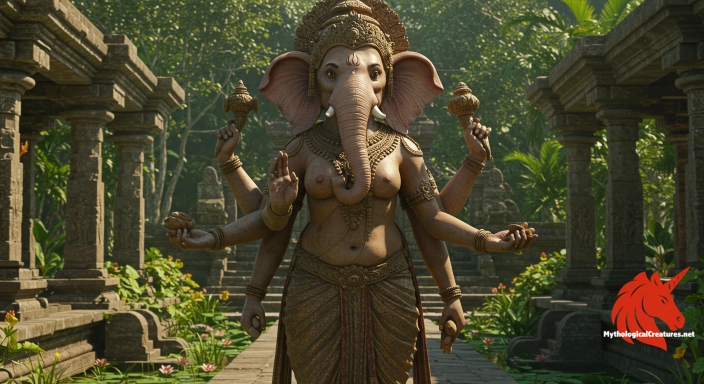
Dare to Meet the Vinayaki....
The Mythological Creatures Book Series
Yokai, Greek, Norse, Egyptian & Chinese. Five illustrated field guides to the creatures the old stories either warned or told you about.
Curated by the Mythological Creatures Team
Series editor: Mythological Creatures Directory
Primary desk: Northern & European Folklore Desk
(rev. November 2025)