
Vinayaki: Vinayaki is an enigmatic elephant-headed Hindu goddess with sparse and ambiguous iconography.
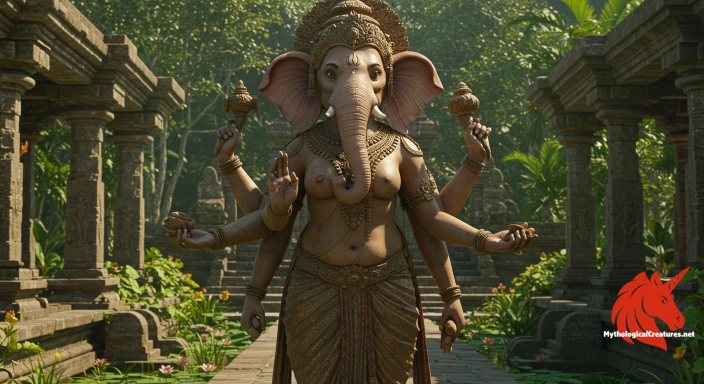
Vinayaki
Vinayaki - Vinayaki symbolizes the feminine aspect of divine wisdom and the power to remove obstacles, reflecting complex gender dynamics within Indian spirituality.
the legend in five swipes.
the legend in five swipes.
Who first told stories about Vinayaki?
Vinayaki emerges as a captivating and elusive deity within the vast panorama of Hindu mythology, her persona shrouded in mystery and symbolic depth. Her origins are not thoroughly documented, which only enhances her enigmatic appeal and invites diverse interpretations. She is traditionally recognised as an elephant-headed goddess, a form that resonates with both wisdom and the power to remove obstacles. Over time, her identity has been intertwined with that of the well-known deity Ganesha, yet she maintains an independent aura that sets her apart. The rarity of textual and iconographic evidence has contributed to a multifaceted portrayal that varies across regions and traditions. This goddess also embodies a unique expression of feminine energy, merging the strength of the elephant with the delicacy of traditional feminine attributes. Despite the sparse literary references, her presence continues to stimulate scholarly and devotional interest. Ultimately, Vinayaki stands as a potent symbol of divine femininity and transformative power within the spiritual milieu.
Vinayaki: Variants Across the Sources
Ancient scriptures offer only a fleeting glimpse into the lore of Vinayaki, and she is mentioned sparingly in the broader Hindu canon. In the limited texts that do reference her, she appears in the context of the sixty-four yoginis or as one of the matrika goddesses, highlighting an association with esoteric traditions. Traditional narratives sometimes conflate her identity with that of the female form of Ganesha, resulting in a variety of names that underscore this link. Her presence is not central in mainstream Puranic literature, which has led to numerous regional and sectarian variations in her depiction. Beyond the Hindu corpus, she makes distinctive appearances in Jain and Buddhist works, where she is celebrated as an autonomous goddess. Such cross-traditional references point to diverse storytelling traditions that have shaped her character over time. The multiplicity of her appellations, from Ganeshani to Vighneshvari, reflects this convoluted literary heritage. Consequently, the sporadic nature of her attestations lends her mythology an air of complexity that continues to intrigue both devotees and researchers alike.
What powers did Vinayaki have?
In artistic renditions, Vinayaki is portrayed with a mesmerizing amalgamation of elephantine and feminine features that set her apart from other deities. Her head, marked by the majestic form of an elephant with a gracefully curved trunk and prominent ears, is rendered with delicate precision, suggesting both power and sensitivity. The facial features often carry a serene expression, evoking wisdom while retaining an unmistakable sense of nurturing femininity. Her body is typically depicted in a lithe and elegant stance, adorned in traditional garments that enhance her divine allure. Intricate jewellery and ornamental details further accentuate her dual character, marrying the symbolisms of strength and grace. While her depictions vary, common attributes such as a subtle halo or multiple arms can occasionally be found, hinting at esoteric themes and cosmic roles. The interplay of robust elephant features with refined feminine contours creates a unique visual narrative. Overall, the limited extant imagery of Vinayaki consistently reflects her status as both a formidable and a delicately executed embodiment of divine power.
Which communities kept the Vinayaki tradition alive?
The representation of Vinayaki differs markedly across various regions of South Asia, reflecting localized cultural and religious influences. In certain parts of India, she is celebrated primarily as the female counterpart of Ganesha, with temple iconography reinforcing her role as an extension of his divine attributes. Other regions, however, treat her as an independent deity, emphasising her identity as a potent shakti in her own right. In Buddhist traditions, for instance, she is sometimes referred to as Ganapatihridaya, a title that underscores her autonomous spiritual essence. Jain interpretations offer further distinct perspectives, where subtle variations in her portrayal highlight an independent devotional significance separate from the Ganesha narrative. Localised traditions often incorporate unique ritualistic practices and artistic styles that adapt her imagery to the specific devotional context. The diverse nomenclature associated with her, including appellations like Stri Ganesha and Vighneshvari, attests to the regional adaptability of her myth. Thus, while the core aspects of her character remain recognisable, her visual and ritualistic expressions have been creatively tailored to resonate with the spiritual priorities of various communities.
Which figures are similar to Vinayaki?
Vinayaki occupies a distinctive niche among the goddesses of South Asian mythologies, especially when viewed in relation to other divine feminine figures. Her portrayal as an elephant-headed deity sets her apart, providing a striking counterpoint to the more widespread depictions of female deities like Parvati, who is frequently associated with Ganesha through maternal narratives. The tradition of equating her with a feminine aspect of a predominantly masculine god mirrors similar cross-gender reinterpretations found across different cultures. In the Tantric traditions, she is often considered alongside the sixty-four yoginis, a group of deities embodying both fierce and nurturing aspects of divine energy. This thematic overlap points to a broader cultural trend of exploring dualities and complementary forces within the sacred realm. Cultural parallels are also drawn with other mythic figures that symbolise the fusion of wisdom and protective power. Her iconography, rich with symbolism involving motifs such as the lotus and ornamental trunk, resonates with other traditions that celebrate the transformative powers of the divine feminine. Such comparisons illustrate how Vinayaki serves as both a unique manifestation of shakti and a bridge connecting various strands of mythological thought across regions and traditions.
How is Vinayaki remembered today?
Over the centuries, Vinayaki’s portrayal has witnessed a gradual evolution that reflects changing cultural and spiritual perspectives. Initially a somewhat obscure figure in early textual traditions, she has attracted renewed attention in modern times as scholars and devotees explore the multifaceted nature of divine femininity. Contemporary art and literature have increasingly revisited her iconography, reinterpreting ancient symbols to align with modern sensibilities regarding female empowerment. This revival is part of a broader trend within South Asian spirituality, where rediscovering lesser-known deities has become a means of engaging with the deep cultural reservoirs of the past. Her ambiguous narrative continues to inspire creative depictions in temple art, digital media, and academic discourse, highlighting the enduring appeal of her enigmatic form. The ambiguity that once obscured her identity now offers fertile ground for innovative reinterpretations and personal spiritual expressions. Communities and practitioners seeking to reclaim historical representations of feminine power have found in Vinayaki a symbol of resilience and transformative energy. Thus, while her worship remains less prominent than that of more mainstream deities, Vinayaki’s legacy endures as a crucial point of dialogue in discussions on gender, power, and the fluid nature of mythological identity.
Interesting Fact
Despite her infrequent depiction in canonical texts, Vinayaki's identification as the feminine counterpoint to Ganesha provides unique insights into the interplay of gender, divinity, and iconography in Hindu culture.
Mythological Treasures
Greek Myths: A field guide to the monsters of ancient Greece
Every monster here earned its place in legend, and each gets a full page of artwork and the story behind it.
Norse Sagas: A field guide to the beasts of the Viking world
Drawn from the saga accounts themselves, with the powers, weaknesses and doom of each being set out.
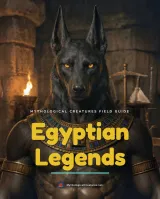
Egyptian Legends: A field guide to the gods and monsters of ancient Egypt
Guardians of the living and devourers of the dead, with the role each played in judgement.
the legend in five swipes.
For indie creators
Give your myth project a permanent home
Indie authors, artists, small studios, and makers can secure an annual, non-intrusive sponsor slot that meets readers where they explore.
Obtain more informationQuick Creature Info
Associations:
Our Mythic Legendary Rating:

Also Sometimes Known As:
Habitat:
Supernatural Powers:
Physical Attributes:
Abilities:
Behavior:
Lore:
Related Creatures, Tales or Lore
- GGanesha
- CChausathi Yogini
- MMatrika
References
Discover Another Mythical Legend You May Not Have Heard Of?
Uncover the mysteries of ancient folklore and expand your knowledge of legendary beings from cultures around the world.
Dare to Meet the Matuku-tangotango....
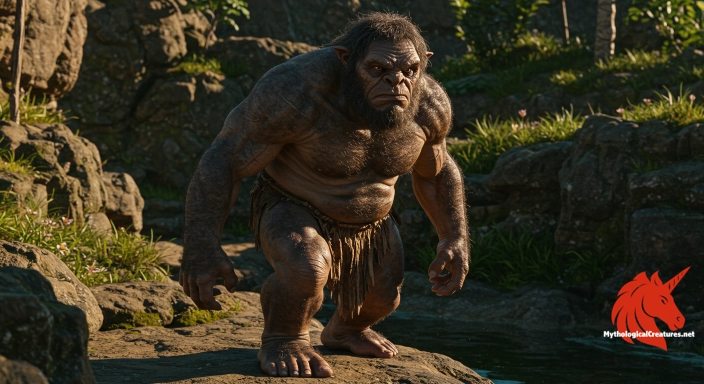
The Mythological Creatures Book Series
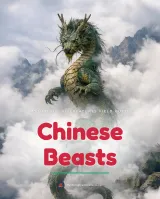
Yokai, Greek, Norse, Egyptian & Chinese. Five illustrated field guides to the creatures the old stories either warned or told you about.

Curated by the Mythological Creatures Team
Series editor: Mythological Creatures Directory
Primary desk: Asian & Pacific Myth Cycles Desk
(rev. November 2025)