
Astarte: Astarte is the Hellenized form of the ancient Near Eastern goddess ʿAʿftart, venerated across the Levant, Phoenicia, and Egypt.
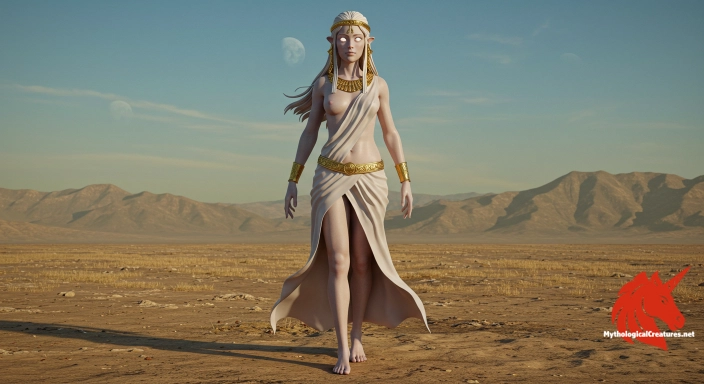
Astarte
Astarte - Astarte’s worship influenced far-reaching cultural and religious traditions, unifying diverse ancient mythological practices and contributing to later syncretic deities.
Origins & First Encounters
Astarte emerges as a figure whose legacy spans from the mists of the Bronze Age to the refined narratives of classical antiquity. She originated in the ancient Near East and quickly became a central emblem of Canaanite and Phoenician spirituality. Her early cultic presence is entwined with the traditions of Amorite cities and finds expression in the mythic settings of Ugarit and Emar. The transformation of her name into Astarte under Hellenistic influence illustrates the dynamic cultural interchanges of the period. Her role, balancing attributes of fertility, love, and martial prowess, allowed devotees to connect with a complex symbol of life and power. The goddess’s identity was carefully interwoven with the ethos of emerging cities, symbolising both creative renewal and the harsh realities of conflict. Sacred rituals attested to her profound impact on local communities and she was revered as a mediator between nature’s bounty and its potential fury. Artistic remembrances and inscriptions continue to testify to her enduring significance. Her multifaceted character has captivated the imagination of cultures across time. Astarte remains an enduring emblem of ancient divinity and the human quest for transcendental meaning.
Source Texts & Tale Variants
The narrative of Astarte is preserved through a compelling array of ancient texts, inscriptions, and iconographic records. Textual sources from Ugarit offer vivid glimpses into rituals and mythic symbolism associated with her persona. Inscriptions discovered at Mari and Ebla contribute additional fragments that illuminate her multifarious roles. Egyptian temple reliefs from the Ramesside era demonstrate how her worship was adapted to local religious frameworks. Phoenician artefacts and votive offerings in coastal colonies provide further evidence of a widespread and adaptable cult. Greek literary sources adopted her character into their own mythological traditions, enriching the heritage of her narrative. Diverse textual traditions reveal variations that underscore regional adaptations and shifting interpretations over time. Epigraphic evidence, combined with archaeological findings, weaves a layered tapestry of her divine functions. The array of primary sources reflects both the continuity and evolution of her worship. These textual and material records ensure that her story continues to engage and fascinate modern scholars and enthusiasts alike.
Form & Powers
Artistic depictions of Astarte reveal a goddess whose appearance is as refined as it is potent. She is commonly portrayed with graceful, elongated features that convey both beauty and a latent strength. Her iconography frequently includes symbols of fertility such as the crescent moon and intricately detailed rosettes. In many representations, flowing hair and elaborate headdresses accentuate her divine status. The goddess is sometimes depicted adorned in regalia that hints at her martial attributes, including the possible presence of a bow or sceptre. Variations in her portrayal can be seen in the contrasting depictions of gentle, nurturing aspects against more aggressive, warrior-like imagery. Some reliefs and sculptures suggest an idealised beauty that radiates confidence and authority over nature. Classical influences introduced subtle changes in her physiognomy, blending original Near Eastern motifs with Greek aesthetics. The rich textiles in her dress are rendered with fine detail, reflecting the opulence and sophistication of the ancient artistic traditions. Her physical imagery offers a visual synthesis of elegance, power, and the transcendence of human experience.
Regional Faces
Across the ancient world, the worship of Astarte was adapted to suit the cultural tones of each region. In the Levant, her image was intricately linked to themes of fertility and nature, resonating with the agrarian values of the local populace. Egyptian interpretations of the goddess moulded her attributes to align with indigenous deities and ritualistic practices. In Phoenician colonies, the goddess took on a maritime quality that underscored the importance of seafaring and trade. Local traditions infused her narrative with stories that emphasised aspects unique to their environment, be it the desert’s harshness or the vibrant life of coastal settlements. The cultural fabric of each region allowed Astarte to assume qualities that ranged from a benevolent nurturer to a formidable guardian of the natural order. Regional iconography, whether in carvings, inscriptions, or ritual objects, exhibits a fascinating blend of shared motifs and locally distinctive details. Her myth was continually reshaped by the needs and religious sensibilities of each new audience. These adaptations fostered a rich diversity in her portrayal that helped sustain her worship across vast geographical expanses. The regional evolution of Astarte’s cult exemplifies how ancient deities can serve as bridges between disparate cultural worlds.
Cultural Parallels
Astarte stands alongside a pantheon of ancient goddesses who encapsulate themes of love, fertility, and conflict. Her attributes closely parallel those of the Mesopotamian goddess Ishtar, with whom she shares both function and symbolism. In many respects, she mirrors the dual nature found in Inanna, whose myths of power and passion offer a similar counterbalance between creation and destruction. The Hellenistic adaptation of Astarte also draws comparisons with Greek figures such as Aphrodite, particularly in the celebration of beauty and allure. Even within the Roman tradition, elements of her character resonate with the divine aspects of Venus. Other cultural parallels emerge when considering the goddess Hathor in Egypt, who, like Astarte, embodies the interplay between nurturing love and fierce protection. The blending of her traits with regional deities has prompted modern studies to explore the interconnection of ancient female archetypes. Astarte’s narrative, therefore, occupies a unique crossroads where multiple cultural streams converge. Comparative analysis reveals that while variations exist, a common essence persists across these interconnected traditions. Her enduring appeal across diverse mythologies speaks to a universal recognition of the complex dimensions of the feminine divine.
Legacy & Modern Evolution
The evolution of Astarte’s legacy is a vivid example of the timeless power inherent in ancient myth. Over the centuries, her character transformed from a local goddess of the Levant into a symbol of universal femininity and strength. As cultures mingled and boundaries shifted, her depictions absorbed new influences while retaining core elements of fertility and martial prowess. The gradual integration of her narrative into Greek and later Western traditions reflects an ongoing dialogue between ancient religiosity and modern cultural identity. Despite the rise of monotheistic paradigms, echoing vestiges of her worship have survived in literary, artistic, and occult traditions. Contemporary reinterpretations often position her as an advocate for female empowerment and the balance between creation and destruction. Modern artistic and literary depictions draw on her enigmatic aura to explore themes of transformation and resilience. Scholars and enthusiasts alike find in her myth a rich source of inspiration for understanding the evolution of divine femininity. Ritual practices in modern neo-pagan circles sometimes invoke her name as a bridge to the past. Thus, the legacy of Astarte endures as a dynamic symbol that continues to shape cultural and spiritual narratives in the present day.
Interesting Fact
Astarte’s attributes were so influential that they were assimilated into various other deities, marking her as a pivotal figure in the syncretism of ancient Near Eastern and Mediterranean religions.
For indie creators
Give your myth project a permanent home
Indie authors, artists, small studios, and makers can secure an annual, non-intrusive sponsor slot that meets readers where they explore.
Obtain more informationQuick Creature Info
Associations:
Our Mythic Legendary Rating:

Also Sometimes Known As:
Habitat:
Supernatural Powers:
Physical Attributes:
Abilities:
Behavior:
Lore:
Related Creatures, Tales or Lore
- IIshtar
- IInanna
- AAphrodite
References
Discover Another Mythical Legend You May Not Have Heard Of?
Uncover the mysteries of ancient folklore and expand your knowledge of legendary beings from cultures around the world.
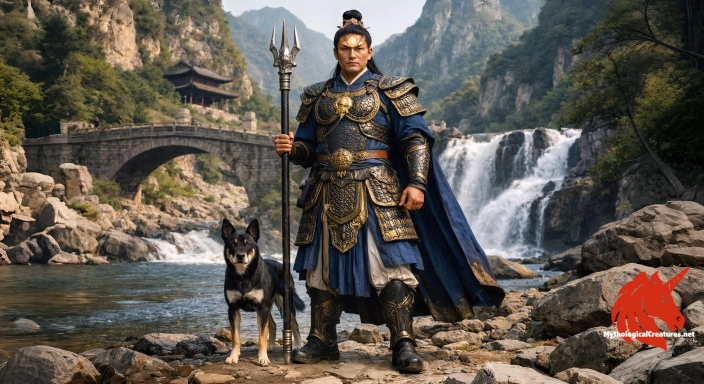
Dare to Meet the Erlang Shen....
Curated by the Mythological Creatures Team
Series editor: Mythological Creatures Directory
Primary desk: Hellenic & Ancient Mediterranean Desk
(rev. November 2025)