
Atago Gongen: Atago Gongen is a Japanese syncretic deity revered as both a kami and a tengu, embodying divine protection and martial prowess.
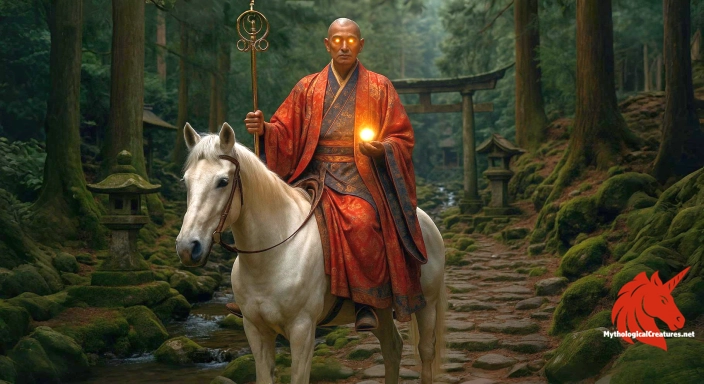
Atago Gongen
Atago Gongen - Central figure in Shugendō practices; revered by samurai as a guardian of fire and a deity of martial triumph.
the legend in five swipes.
the legend in five swipes.
Atago Gongen: Origins and First Sightings
Atago Gongen is a complex and layered deity whose origins stem from the intermingling of Shinto spirituality and Buddhist tradition in Japan. Born on the sacred slopes of Mount Atago in Kyoto, this divine figure emerged through the mystical practices of Shugendō, where ascetics straddled the boundaries between the earthly and the celestial. His earliest attestations are woven into local shrine records and oral lore, presenting him both as the local avatar of Buddhist bodhisattva Jizō and as an embodiment of the primordial Shinto goddess Izanami. The deity’s myth encapsulates a delicate balance between destructive force and nurturing care, symbolising protection against fire, martial might, and spiritual resilience. Over the centuries, his worship became interlaced with the cultural fabric of feudal Japan, especially among samurai whose quests for victory elevated his status. His persona reflects a harmonious duality, merging the compassion of a saviour with the rigorous discipline of a warrior. As communities sought divine intervention in both everyday challenges and martial endeavours, Atago Gongen’s appeal broadened, drawing diverse followers. The spiritual legacy of this deity continues to resonate as an emblem of both ancestral power and contemporary guardianship. His enduring presence illustrates the dynamic synthesis of religious traditions that has long defined Japan’s unique cultural landscape.
How many versions of the Atago Gongen story are there?
The narratives surrounding Atago Gongen are drawn from a variety of ancient texts, temple chronicles, and enduring oral traditions that have been handed down through generations. Sacred manuscripts of the Shugendō tradition record his miraculous feats on Mount Atago, blending elements of Buddhist compassion with indigenous spiritual fervour. Despite the passage of time, shrine inscriptions and local legends preserve multiple layers of his myth, offering a glimpse into the adaptability of his dual identity. Variants of his story appear in regional folklore, where differing emphasis is placed on his roles as both protector against calamities and a fierce warrior in battle. Some texts highlight his interventions during times of disaster, particularly in deflecting the ravages of fire, while other sources focus on his martial vigour. Examinations of these sources reveal a fluid narrative that has been reshaped by local cult practices and societal needs. The varied accounts serve not only as religious documents but also as cultural artifacts that mirror the historical evolution of spiritual syncretism. This multiplicity of sources ensures that his legend remains a dynamic and deeply rooted aspect of Japan’s mythological heritage.
What was Atago Gongen believed to be capable of?
In artistic depictions, Atago Gongen is portrayed as an imposing figure whose physical form melds divine elegance with martial strength. He is typically shown mounted on a striking white horse, a symbol of purity and celestial speed that enhances his aura of invincibility. His hands often grasp a ringed staff, a potent emblem of authority which signifies mastery over both human desires and elemental forces. The deity’s countenance reflects a rare blend of gentleness and unwavering resolve, with facial expressions that convey both serene compassion and fierce determination. Intricate details in his attire, often depicted in flowing robes adorned with subtle emblematic patterns, hint at his mystic origins and his ties to ascetic traditions. Variations in artistic style across different periods and regions have led to a range of interpretations, with some images emphasising his ethereal qualities and others accentuating his warrior aspect. His possession of a desire-cancelling jewel further underscores his role in quelling base impulses and promoting spiritual clarity. The visual amalgamation of human and mythic attributes in his depictions invites contemplation of the deeper symbolic meanings behind his form. Each portrayal serves as both an artistic expression and a ritual reminder of his enduring power and divine protection.
What regional forms of Atago Gongen exist?
Throughout Japan, the veneration of Atago Gongen has evolved to reflect the distinctive cultural and geographical nuances of different regions. In the vicinity of Kyoto and Mount Atago, where his cult first took root, worship is deeply entwined with the ascetic practices of Shugendō and the spiritual rhythms of mountain life. Northern and rural regions have adapted his iconography to highlight his attributes as a god of victory and a protector against the destructive force of fire. Local communities often blend his myth with regional traditions, integrating unique ritual practices and festival celebrations that honour his multifaceted personality. Some Atago shrines infuse the deity’s worship with additional deific aspects that resonate with local agricultural, martial, or natural themes. These regional adaptations demonstrate the flexibility of his myth, which has been shaped over time to serve the specific needs and aspirations of each community. In places where the tradition of samurai remains a cherished memory, ceremonial practices accentuate his role as a martial protector. His diverse regional portrayals not only accentuate the local identity but also enrich the broader narrative of his legend, cementing his status as a deity adaptable to a wide array of spiritual and cultural contexts.
What figures resemble Atago Gongen?
The multifaceted nature of Atago Gongen invites rich comparisons with other syncretic deities in Japanese and East Asian mythology. Much like the revered Hachiman, whose legacy bridges the realms of Shinto divinity and martial tradition, Atago Gongen embodies both spiritual benevolence and the rigour of the warrior spirit. His dual identity as both a guardian and a compassionate saviour mirrors similar mythic constructs where divine figures assume protective roles in times of crisis. The conceptual framework of gongen, which utilises a single form to manifest multiple divine aspects, is shared by a number of deities across Japan, reinforcing the cultural emphasis on harmony between opposing forces. In a broader cross-cultural context, parallels can be drawn with figures who represent the union of ascetic wisdom and martial prowess in traditions as diverse as Hinduism and Daoism. These comparative analyses reveal that the themes of duality and transformation are central to the spiritual ethos of many societies. Atago Gongen, therefore, stands as a testament to the universal appeal of protection through the balance of opposites. His mythic attributes and the enduring symbolism they carry continue to resonate with those who seek to reconcile inner strength with outward valour.
Atago Gongen in Modern Culture
The evolution of Atago Gongen’s myth spans centuries, reflecting broader shifts in Japanese society from feudal times to the modern era. Emerging from the isolated mountain ascetic practices of the early Shugendō tradition, his persona was reshaped during periods of military strife and cultural consolidation. As political and social dynamics shifted, depictions of Atago Gongen transitioned from austere, ritualistic representations to more accessible images that resonated with a wider public seeking guidance and protection. In modern Japan, his enduring legacy is celebrated at nearly nine hundred Atago shrines scattered across the country, where rituals have been adapted to both preserve tradition and appeal to contemporary sensibilities. His image now pervades not only religious ceremonies but also popular culture, inspiring artworks, literature, and even cinematic portrayals that underscore themes of resilience and renewal. Modern devotees continue to invoke his protection against disasters, a tradition that links the ancient with the present-day concerns of urban living. The narrative of Atago Gongen encapsulates historical transitions from isolated religious practices to a celebrated cultural symbol that bridges ancient and modern ideals. Today, he embodies an enduring reminder of the power of spiritual synthesis and the timeless human quest for balance between strength and compassion.
Interesting Fact
Atago Gongen's dual identity as both a kami and a tengu exemplifies the rich syncretism in Japanese religious tradition, merging martial bravery with spiritual benevolence.
Mythological Treasures
Japanese Yōkai: A field guide to the spirits and demons of Japanese folklore
Fifteen spirits, with the signs to watch for and what the old tales say to do if you meet one.
Egyptian Legends: A field guide to the gods and monsters of ancient Egypt
Guardians of the living and devourers of the dead, with the role each played in judgement.
Chinese Beasts: A field guide to the dragons and demon kings of Chinese myth
From river dragons to demon kings, with the legends that shaped five thousand years of storytelling.
the legend in five swipes.
For serious mythcraft
Your project belongs among the legends
If your work deepens how people understand, play with, or teach mythology, a sponsor placement here keeps it in front of the right readers all year.
Submit a sponsorship enquiryQuick Creature Info
Features:
Associations:
Our Mythic Legendary Rating:

Also Sometimes Known As:
Habitat:
Supernatural Powers:
Physical Attributes:
Abilities:
Behavior:
Lore:
Related Creatures, Tales or Lore
- HHachiman
- TTengu
References
Discover Another Mythical Legend You May Not Have Heard Of?
Uncover the mysteries of ancient folklore and expand your knowledge of legendary beings from cultures around the world.
Dare to Meet the Cranto....

The Mythological Creatures Book Series
Yōkai, Greek, Norse, Egyptian & Chinese. Five illustrated field guides to the creatures the old stories either warned or told you about.

Curated by the Mythological Creatures Team
Series editor: Mythological Creatures Directory
Primary desk: Asian & Pacific Myth Cycles Desk
(rev. November 2025)