
Austri, Vestri, Norðri and Suðri: Austri, Vestri, Norðri and Suðri are four dwarfs from Norse mythology tasked with holding up the sky, which was fashioned from the skull of the primordial jötunn Ymir.
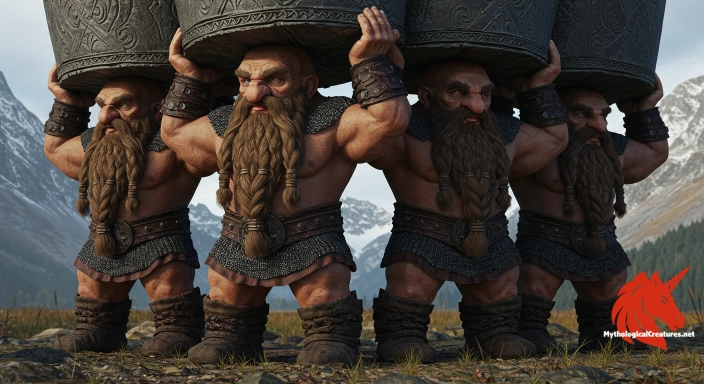
Austri, Vestri, Norðri and Suðri
Austri, Vestri, Norðri and Suðri - They are crucial figures in Norse cosmogony, representing the order and structure of the universe by physically supporting the sky.
Origins & First Encounters
The four dwarfs, Austri, Vestri, Norðri and Suðri, are fascinating personifications in Norse mythology who bear the monumental responsibility of upholding the celestial dome. They emerged from a cosmological narrative where the gods fashioned the sky from the skull of the primordial jötunn Ymir, thereby attributing a physical structure to the cosmos. Their names, which evoke the cardinal directions, suggest an intrinsic connection to the orientation and order of the universe. These beings are depicted not merely as mythological figures but as essential structural supports that articulate the delicate balance between chaos and order. The early attestations of these dwarfs, notably within the Prose Edda’s Gylfaginning, position them at the very heart of Nordic cosmogony. Their mythic role illustrates a profound cultural symbolism, where even the smallest constructs have vast cosmic functions. Over time, their narrative has been enriched by various interpretations that view them as both literal and allegorical pillars of the world. The enduring presence of these dwarfs illuminates aspects of ancient Nordic views on architecture, nature, and the interplay of cosmic forces.
Source Texts & Tale Variants
Ancient texts, particularly the Prose Edda, serve as the primary literary repository for the tales of Austri, Vestri, Norðri and Suðri. Their appearance in the Gylfaginning is one of the most significant attestations, framing the dwarfs as steadfast supports of the sky. In addition to literary narratives, these mythic figures are referenced in kennings woven throughout skaldic poetry, which further embed them into the fabric of Norse lore. Although details in the original texts may be sparse, later folkloric traditions have expanded on their functional symbolism in cosmic and architectural contexts. Different manuscript traditions have occasionally provided variant spellings or roles, underscoring the fluid nature of oral transmission in a pre-literate culture. Some accounts integrate them into broader traditions associated with dvergar, emphasising their connection to craftsmanship and the manipulation of material reality. The multiplicity of sources reveals a rich tapestry where the dwarfs’ mythic duties were interlaced with themes of natural order and human ingenuity. By examining these texts and their subsequent reinterpretations, one gains insight into how ancient societies viewed the intersection of myth, nature, and built environments.
Form & Powers
Though scant visual descriptions are preserved in the ancient sources, the dwarfs are traditionally envisaged as compact and robust entities with an aura of formidable strength. Their physical stature, while diminutive compared to gods or giants, is rendered in myth as possessing an almost superhuman capacity to bear the weight of the heavens. They are often imagined with rugged, earthy features, such as weathered faces and dense, unkempt beards, which evoke the timeless quality of mountain and stone. Artistic interpretations over the centuries have imbued them with a sense of gravitas, suggesting that their seemingly unremarkable dimensions are belied by immense fortitude. Some illustrations, influenced by later traditions, portray them adorned in simple but durable garments that resonate with the natural elements of the earth. There is an enduring sense that their physical form is not merely about aesthetic representation, but a symbolic embodiment of resilience and structural integrity. The dwarfs’ appearance thus serves as a metaphor for the profound support they provide in the cosmic order, bearing responsibilities that far exceed their size. Their visual depiction, even if only hinted at in the texts, conveys the essential truth that power in myth can reside in forms that defy conventional expectations of grandeur.
Regional Faces
The myth of these four dwarfs is chiefly associated with the Norse and wider Scandinavian cultural milieu, yet echoes of their role can be detected in various regional traditions. In different parts of the Norse world, subtle discrepancies emerge in how these beings are portrayed, with local folklore sometimes attributing additional responsibilities to them beyond merely supporting the sky. In certain areas, they are also seen as custodians of the main beams of hallowed halls, linking cosmic architecture with domestic and communal spaces. Variations in their names and the specific cardinal directions assigned to each reflect regional linguistic adaptations and local cosmological interpretations. Some communities have merged their identities with that of other mythical beings, thereby creating a syncretic version of cosmic order that blends architecture with spirituality. These regional adaptations often highlight not only the dwarfs’ role in the celestial structure but also their broader symbolic representation as foundational protectors. The shifting narratives across the Scandinavian landscape illustrate the dynamic way in which myth adapts to the social and environmental context of its audience. Such regional variants underscore the versatility of Norse myth and the enduring appeal of its archetypal symbols.
Cultural Parallels
When placed in dialogue with other mythological traditions, Austri, Vestri, Norðri and Suðri invite comparisons with figures such as Atlas from Greek mythology, who similarly is tasked with supporting the celestial sphere. While Atlas is portrayed as a singular giant burdened by cosmic weight, the Nordic tradition disperses this duty amongst four dwarfs, symbolising a distributed foundation that upholds the universe. This comparison reveals cultural nuances; while Greek mythology often favours a narrative of individual heroism or sorrow, the Norse account celebrates the communal and understated strength found in modest, unassuming beings. Moreover, parallels can be drawn with mythic pillars or supports in various traditions—ranging from the buttresses of ancient Middle Eastern cosmologies to the symbolic supports in Mesoamerican creation stories. Such cross-cultural connections emphasise a universal human fascination with the idea of invisible forces or entities that maintain the order of the world. Each tradition imbues its supports with regional character, yet the central theme of cosmic sustenance remains a common thread. These dwarfs, much like other mythic supports, encapsulate a deep understanding of the fragile balance between order and chaos. Their comparative study highlights how elemental forces are personified in diverse cultures, offering a rich field of enquiry into the shared human experience of myth-making.
Legacy & Modern Evolution
The portrayal of Austri, Vestri, Norðri and Suðri has evolved considerably over the centuries, transitioning from their original mythic roles to becoming enduring symbols of cosmic structure and stability. In the Middle Ages, their image, though peripheral in the broader corpus of Norse myth, resonated with those constructing and inhabiting sacred spaces, as their association with the main beams of halls lent a tangible connection between the divine and the mortal realms. As the modern era ushered in a renewed interest in Viking heritage and Norse mythology, these dwarfs have found a new audience in literature, art, and popular culture. Contemporary fantasy works, role-playing games, and graphic novels often reimagine them in ways that both respect and creatively extend their ancient functions. Modern interpretations tend to highlight their understated power and the idea that even the smallest figures can be fundamentally important in sustaining the fabric of the cosmos. This evolution reflects a broader cultural shift towards appreciating the silent, foundational forces that underpin our understanding of the universe. Their legacy is also evident in academic scholarship, where a renewed focus on the architectural metaphors in myth has provided fresh insights into medieval Scandinavian worldviews. Over time, these dwarfs have transcended their mythic origins to become archetypes of resilience, echoing the timeless interplay between human creativity and cosmic order.
Interesting Fact
Their names not only denote the cardinal directions but also reflect the ancient Norse understanding that the cosmos is upheld by seemingly modest yet fundamentally crucial forces.
For myth educators and toolmakers
Built a resource for mythology learners?
If you offer courses, teaching tools, or research platforms focused on myth and folklore, consider a discrete placement on our reference pages.
Introduce your resourceQuick Creature Info
Origin:
Features:
Associations:
Our Mythic Legendary Rating:

Habitat:
Supernatural Powers:
Physical Attributes:
Abilities:
Behavior:
Lore:
References
Discover Another Mythical Legend You May Not Have Heard Of?
Uncover the mysteries of ancient folklore and expand your knowledge of legendary beings from cultures around the world.
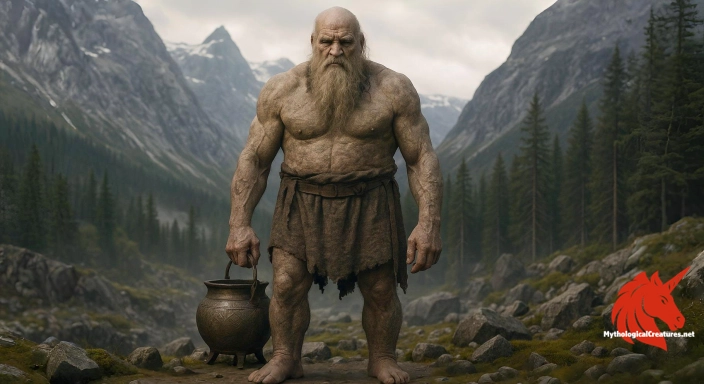
Dare to Meet the Hymir....
Curated by the Mythological Creatures Team
Series editor: Mythological Creatures Directory
Primary desk: Northern & European Folklore Desk
(rev. November 2025)