
Awanyu: Awanyu, also known as Avanyu, is a revered water deity of the Tewa and Pueblo peoples.
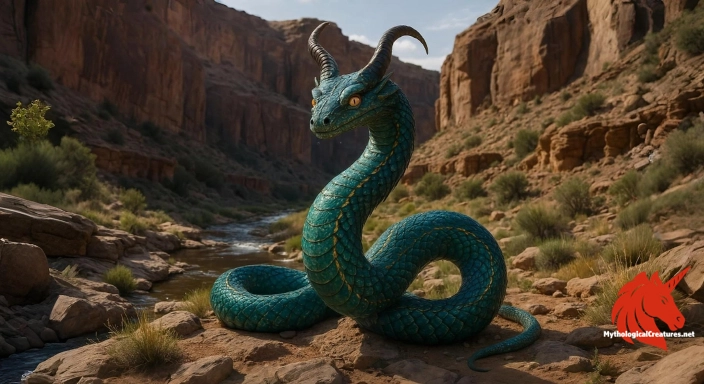
Awanyu
Awanyu - Awanyu plays a central role as a protector of water sources and is revered for his ability to bring both life-giving rain and destructive floods.
Origins & First Encounters
Awanyu is celebrated as a distinguished water guardian among the Tewa people, whose mythic presence has long influenced the cultural landscape of the American Southwest. His emergence as a divine figure is interwoven with the natural rhythms of water and storm, symbolising both life’s sustenance and nature’s formidable power. In the ancient traditions of the region, Awanyu embodies a dynamic interplay between fluidity and resilience, making him a central emblem of spiritual strength. His origins can be traced to indigenous oral histories and ritual practices that honour the vital resources of water. Early artistic expressions and ceremonial depictions serve as enduring attestations of his role in protecting vital waterways. The enchanting imagery of his sinuous, horned form has been immortalised on cave walls and pottery, underscoring his timeless appeal. His cultural narrative bridges the realms of myth and nature, uniting communities through shared reverence for life-giving forces. As a guardian who presides over both gentle rains and torrential storms, Awanyu represents a balance between nurturance and the unpredictable might of the elements. Over centuries, his enduring symbolism has reinforced the connection between ancestral wisdom and the natural world.
Source Texts & Tale Variants
Ancient records and archaeological findings provide a fascinating glimpse into the multifaceted myth of Awanyu. Early representations of this divine serpent appear on Mimbres pottery, dating back to around 1000 AD, where his characteristic zigzag body was first immortalised. Subsequent depictions from the Mogollon and Casa Grande districts, spanning from 1200 to 1450 AD, further attest to his evolving role within indigenous spirituality. The narratives associated with Awanyu have been preserved in a plethora of local oral traditions among Tewa and Tiwa speaking communities. Diverse accounts have also emerged within neighbouring cultures, with variations of his name—such as Kolowisi for the Zuni and Paaloloqangw for the Hopi—each adding unique layers of interpretation. These artistic expressions and spoken legends collectively underline his significance as a deity of water and storm. The interplay between tangible artefacts and intangible folklore creates a rich repository of stories that seek to explain and celebrate the mysteries of nature. Through centuries of transmission, the myth of Awanyu has been continually enriched, reflecting the resilience and adaptability of indigenous belief systems.
Form & Powers
The physical form of Awanyu is an exquisite blend of serpentine grace and elemental power. His elongated, sinuous body mirrors the meandering flow of water, while its zigzag patterns evoke the sudden flash of lightning in stormy skies. Distinctive horns or feathered plumes often crown his head, subtly merging reptilian traits with avian elegance. Intricate scales that shimmer with nuanced textures and hues accentuate his body, reinforcing his connection to the natural liquid medium he protects. Some depictions highlight delicate ornamental features along his spine, suggesting an ethereal quality that transcends the physical realm. Variations in artistic style have led to depictions where his form fluctuates between a realistic naturalistic serpent and an almost abstract manifestation of water in motion. His eyes are rendered as deep reservoirs of ancient wisdom, reflecting the mystique of enduring natural cycles. Overall, every element of his physical portrayal—from the curve of his body to the flare of his horns—serves as a symbolic representation of nature’s dual capacity for gentleness and overwhelming force. The artistic choices in depicting Awanyu invite observers to appreciate the harmonious blend of beauty and raw power inherent in natural phenomena.
Regional Faces
Across the diverse cultural realms of the American Southwest, Awanyu takes on a variety of nuanced forms that mirror local spiritual and environmental perspectives. In Tewa communities, his image is a steadfast emblem of water’s essence, while among the Hopi and Zuni peoples, subtle regional modifications enhance his role as a divine protector. His portrayals on ancient cave walls and pottery reflect distinct regional aesthetics, with each community adapting his form to symbolise particular natural features or seasonal phenomena. In some areas his design is accentuated by pronounced horns and a more visibly sinuous contour, whereas other traditions emphasize elaborate feathered adornments that denote his exalted status. These regional variations are not merely artistic differences but also echo unique interpretations of the cycles of rain, fertility, and renewal. Local adaptations of his myth provide insights into how different indigenous groups understood and revered the mysteries of water and weather. The convergence of these local traditions creates a vibrant tapestry of belief, where Awanyu’s consistent role as a water guardian is enriched by culturally specific symbolism. Thus, his enduring legacy is not static but dynamically reshaped by the distinctive spiritual narratives of each region.
Cultural Parallels
The myth of Awanyu invites a compelling dialogue with other serpentine deities from across the Americas and beyond. His close association with water, storm and renewal draws notable parallels with figures such as Quetzalcoatl, the celebrated feathered serpent whose symbolism likewise straddles the earthly and the divine. In both cases, the serpent motif emerges as a powerful emblem of life’s cyclical nature and the balanced forces of creation and destruction. This archetype resonates globally, finding echoes in the Rainbow Serpent of Aboriginal Australian lore, where water and land reclaim a narrative of cosmic emergence. The striking similarities between these deities underscore recurring themes such as regeneration, cosmic order, and the bridging of different natural realms. Yet, while regional interpretations may vary in detail, the core attributes of these serpentine figures consistently point to an underlying respect for the unpredictable forces of nature. By comparing these traditions, one can discern a shared human endeavour to interpret natural phenomena through symbolic representations of serpents. Such comparative analysis not only highlights universal themes but also celebrates the unique cultural contexts from which these legends arise.
Legacy & Modern Evolution
The evolution of Awanyu from ancient iconography to a modern symbol of cultural pride illustrates his enduring significance. Early images carved into cave walls and impressed on pottery have been reinterpreted over generations, reflecting the shifting artistic and spiritual sensibilities of indigenous communities. Over time, his image has transcended its traditional roots to inspire contemporary art, public installations, and cultural festivals in the Southwest. Modern depictions continue to celebrate his dual nature as both a benevolent guardian of water and a formidable force of nature. This transformation mirrors broader changes in cultural identity, where historical spirituality is interwoven with present-day environmental and social concerns. In current times, artists and cultural practitioners often reimagine Awanyu as a symbol of ecological balance and resilience in the face of natural challenges. His legacy is further enriched through interdisciplinary studies that connect archaeological findings with living traditions. As a timeless icon, Awanyu remains a bridge between ancient myth and modern cultural expression, inspiring a renewed appreciation for the natural world and indigenous wisdom.
Interesting Fact
Awanyu's unique depiction as a horned serpent interweaves the symbolism of water and lightning, reflecting an ancient belief in the interconnected forces of nature beneath the earth's surface.
Advertising opportunity
Showcase your mythology project
We offer limited sponsor placements for books, courses, games, and creators aligned with our audience.
View partnership optionsQuick Creature Info
Origin:
Associations:
Our Mythic Legendary Rating:

Also Sometimes Known As:
Habitat:
Supernatural Powers:
Physical Attributes:
Abilities:
Behavior:
Lore:
Related Creatures, Tales or Lore
- QQuetzalcoatl
- KKukulkan
- RRainbow Serpent
References
Discover Another Mythical Legend You May Not Have Heard Of?
Uncover the mysteries of ancient folklore and expand your knowledge of legendary beings from cultures around the world.
Dare to Meet the Mare....
-7a4af074-9174-4733-adf5-0956e7bd8182_small.webp "Depiction of Mare")
Curated by the Mythological Creatures Team
Series editor: Mythological Creatures Directory
Primary desk: Americas & Indigenous Traditions Desk
(rev. November 2025)