
Azukiarai: Azukiarai is a ghostly entity from Japanese folklore known for its eerie azuki bean-like sounds near water.
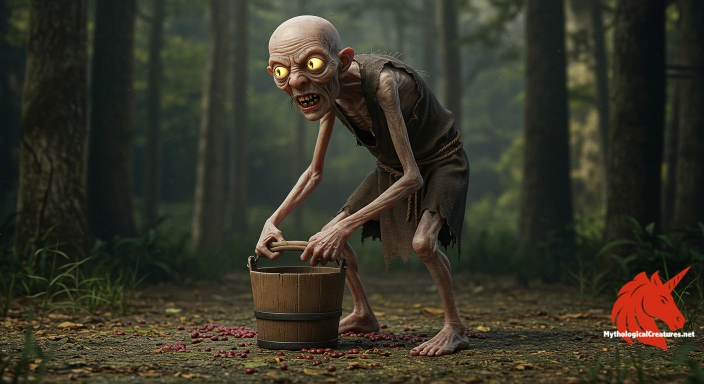
Azukiarai
Azukiarai - Serves as a cautionary emblem warning individuals about the dangers near water and the mysterious forces at play in nature.
Origins & First Encounters
Azukiarai, also known as Azukitogi, is a ghostly phenomenon in Japanese folklore that has captivated listeners and stirred both fear and fascination along the waterways of rural Japan. Its name, which means 'azuki bean washing' or 'azuki bean grinding', hints at the mysterious sound that mimics the gentle clatter of beans being cleaned near water. The origins of this legend are deeply rooted in the local practices and supernatural beliefs of ancient communities, though its precise beginnings are shrouded in the mists of time. Many traditional accounts suggest that villagers first noticed these anomalous sounds during the quiet of dusk, when nature itself seemed to awaken its hidden voices. The narrative quickly grew to embody a complex blend of cautionary advice and playful mischief, warning both children and adults of the unseen presence near rivers. Over time, the tale evolved to reflect the intricate relationship between humanity and the natural elements, representing water as both a life-giving and mysterious force. The enduring appeal of Azukiarai is a testament to the way local traditions transform ordinary occurrences into stories laden with symbolic meaning. Its legacy serves to remind listeners of the ever-present border between the known and the mystical, making the mundane act of washing beans a conduit for supernatural intrigue. In this way, Azukiarai remains a compelling fixture in the rich tapestry of Japanese myth.
Source Texts & Tale Variants
The tale of Azukiarai is drawn from a mosaic of oral traditions, regional folklore, and fragmentary historical texts that have been passed down through generations. Local storytellers have kept the legend alive by recounting the eerie sounds heard near rivers, which over time have acquired a life of their own in the communal imagination. Variations of the story appear in records from the Edo period, where descriptions of mysterious washing sounds and spectral voices hint at the phenomenon’s early recognition. Some communities preserve the tale via rhythmic chants and verses, including the famous line that challenges whether the creature will grind beans or capture a person. This flexible narrative structure, shifting seamlessly between mischievous pranks and ominous warnings, is a hallmark of its transmission. In different regions, the story has been enriched with local details, further diversifying the account of what might otherwise be a singular ghostly presence. The fluidity of these sources, from spontaneous oral recitations to more structured folk compilations, underscores the adaptive nature of the myth. Traditional storytelling sessions, often held during communal gatherings, have played a significant role in preserving and embellishing the legend. As a result, the Azukiarai continues to thrive in modern retellings, bridging historical texts with the living oral traditions of Japan.
Form & Powers
Descriptions of Azukiarai characterise it as a diminutive yet extraordinarily distinctive figure whose physical appearance is both unsettling and memorable. It is commonly depicted as a short-statured man with a disproportionally large, balding head, a detail that immediately sets him apart from ordinary human forms. His face is marked by crooked, uneven teeth and a thin moustache that contributes to his grotesque yet almost comical appearance. The creature’s large, bulging yellow eyes are often highlighted as they seem to glow with an unearthly light, adding to the aura of eerie vigour. Clad in ragged and threadbare garments, his attire suggests a life steeped in neglect and a connection to an earlier, less refined era. The most iconic image of Azukiarai features him bent over a pail, perpetually engaged in the act of washing or grinding azuki beans, a ritual that appears both symbolic and interminable. This blend of exaggerated human features with spectral elements serves to create a character that is simultaneously familiar and frightening. While core physical traits remain consistent, subtle variations in his depiction highlight regional differences and the mutable nature of folklore. In essence, the creature’s physical form is designed to invoke a sense of uncanny mirth and dread, capturing the very essence of Japan’s rich mythological landscape.
Regional Faces
Regional interpretations of the Azukiarai legend reveal a fascinating spectrum of variations that reflect local landscapes and cultural idiosyncrasies throughout Japan. In some areas, especially in the heartland of rural Japan, the tale is told with a playful tone that emphasises the mischievous nature of the spirit. Other regions paint a more cautionary picture, using the ghostly washing sound as a warning to keep children away from dangerous waters. The story is sometimes intertwined with local beliefs about water deities and forest spirits, allowing the myth to adapt to various natural settings such as gentle streams, rugged riverbanks, and secluded ponds. In certain communities, the Azukiarai is even associated with other local creatures like the tanuki or the weasel, integrating their characteristics into the lore. This regional blending of narratives results in a fluid mythos that adapts its details to the specific environmental and cultural context of each area. Local dialects and idiomatic expressions further colour the retellings, making the legend uniquely identifiable with particular regions. Community festivities and seasonal rituals occasionally incorporate performances that re-enact the eerie act of washing azuki beans, highlighting its role as a cultural touchstone. Such regional adaptations not only sustain the legend but also underscore its importance as a mirror of local life and natural phenomena.
Cultural Parallels
When compared with other global folklore, the Azukiarai shows intriguing parallels with various water-associated spirits and washerwomen legends that traverse cultural boundaries. Similar to some European legends where spectral figures haunt riverbanks with eerie domestic rituals, the Azukiarai employs the everyday act of washing as a bridge between the mundane and the mysterious. The figure shares a common thematic link with legends such as the British Jenny Greenteeth, who similarly lurks near water to ensnare the unwary, blending caution with mythic allure. Across different cultures, the repetitive motif of washing or grinding conveys a sense of purification, yet it is often juxtaposed with ominous undertones that warn of lurking dangers. Like many mythological creatures, the Azukiarai embodies a duality—simultaneously personifying both benevolent and malevolent traits. This duality resonates with the universal human experience of nature as a powerful, inexplicable force that both nurtures and endangers. Comparative analysis of such spirits reveals that local myths tend to imbue common everyday actions with supernatural significance. The shared motif of water as a mystical environment is prevalent in many cultural narratives, emphasising a collective need to explain the natural world's unpredictable elements. Thus, despite differences in detail, the Azukiarai fits neatly within a global tapestry of folklore that transforms simple rituals into portals of the uncanny.
Legacy & Modern Evolution
The legend of Azukiarai has evolved considerably over the centuries, reflecting a dynamic interplay between tradition and modern reinterpretation. Early versions of the myth served as cautionary tales, intended to warn locals—especially children—of the perils of wandering too close to water. As societal views shifted, the narrative gradually embraced a more nuanced portrayal that combined elements of mischief with melancholic mystery. In contemporary Japanese culture, Azukiarai has emerged as a symbol rich in cultural and artistic significance, often featured in manga, anime, and visual arts. Modern portrayals sometimes soften the figure’s terrors, reimagining him as a quirky emblem of the natural world’s hidden eccentricities. Urban and contemporary retellings have expanded his character to encompass themes of transformation and the enduring clash between modernity and tradition. Community festivals and local theatre still celebrate the legend, using it as a means to connect audiences with the rich heritage of regional folklore. The ghostly washing sound itself has become a potent metaphor for the elusive boundary between the human and supernatural worlds. In this evolving legacy, Azukiarai stands as a living testament to how myth can adapt and endure, continuously inspiring both awe and reflection in an ever-changing society.
Interesting Fact
An intriguing aspect of Azukiarai is how its identity sometimes overlaps with that of tanuki or weasel, highlighting the blurred boundaries in Japanese folklore between animal spirits and ghostly apparitions.
Mythology commerce, done carefully
Align your store with our global myth audience
If you sell myth-inspired jewellery, prints, decks, or collectibles, we can feature your brand without overwhelming the reading experience.
Partner with usQuick Creature Info
Associations:
Our Mythic Legendary Rating:

Also Sometimes Known As:
Habitat:
Supernatural Powers:
Physical Attributes:
Abilities:
Behavior:
Lore:
Related Creatures, Tales or Lore
- KKappa
- YYurei
References
Discover Another Mythical Legend You May Not Have Heard Of?
Uncover the mysteries of ancient folklore and expand your knowledge of legendary beings from cultures around the world.
Dare to Meet the Mahishasura....
Curated by the Mythological Creatures Team
Series editor: Mythological Creatures Directory
Primary desk: Asian & Pacific Myth Cycles Desk
(rev. November 2025)