
Balor: Balor is a formidable Irish mythological giant renowned for his destructive eye and tyrannical leadership of the Fomorians.
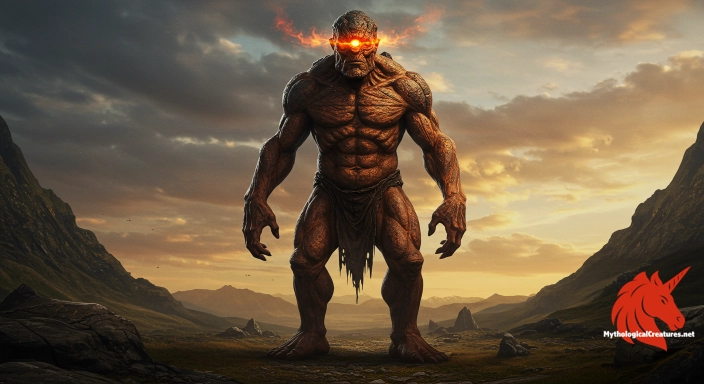
Balor
Balor - Balor embodies destructive power and the old order's tyranny, and his myth highlights the conflict between the Fomorians and the Tuatha Dé Danann.
the legend in five swipes.
the legend in five swipes.
Balor Origins: The Earliest Accounts
Balor emerges as one of the most formidable and enigmatic figures in Irish mythology, embodying both the raw destructive forces of nature and the turbulent strife of ancient times. He is revered as the towering leader of the Fomorians, a race of malevolent supernatural beings whose dark legend has echoed through the ages. His origins are entwined with the oral traditions of early Ireland, later immortalised in medieval manuscripts that capture his tyrannical reign. Often depicted as a giant with a single, devastating eye, Balor’s presence signalled impending doom and cosmic imbalance. His myth speaks to themes of decay and rebirth, positioning him as a personification of the scorching, relentless sun. The narratives of his early days evoke a world where nature, chaos, and ancient curses collided with the aspirations of emerging heroic cultures. His story is not merely that of a monster but also of an elemental force that challenges order with chaos. Many tales recount the inevitable clash between his destructive might and the restorative heroes of later generations, particularly his downfall at the hands of Lugh. Thus, Balor’s character stands as a stark reminder of the eternal struggle between creation and ruination in both the natural world and human existence.
Balor: The Written Sources
Balor’s saga is preserved in a diverse array of ancient texts and oral traditions that illuminate the depths of early Irish lore. Texts such as the Cath Maige Tuired vividly recount his reign of terror and the dramatic battles that defined his era. The Lebor Gabála Érenn and other medieval compilations serve as crucial sources, offering intricate details of his lineage and fearsome attributes. Over time, a rich tapestry of folklore emerged around his myth, with storytellers embellishing his character to reflect local prejudices and societal concerns. Different versions of his tale highlight varying details, from his ominous eye to his eventual overthrow by familial ties. In some narratives, the destructive power of his gaze is portrayed as both a literal and allegorical force, emblematic of nature’s dual power to nurture and devastate. Oral traditions passed down through generations have added layers of complexity, adapting his story to the needs of differing audiences. These vibrant accounts provide a multiplicity of perspectives, ensuring that Balor’s legend remains as varied as it is enduring. Collectively, these sources underscore the timeless appeal of his myth and its central place in the mythic heritage of Ireland.
Balor: Form, Powers and Weaknesses
Balor is consistently depicted as a towering giant whose very form radiates an aura of menace and ancient power. His most arresting feature is the single, blazing eye that dominates his countenance, reputed to unleash a destructive force when set upon its target. The descriptions of his physique often emphasise a robust, muscular build that dwarfs ordinary men, suggesting both physical dominance and an elemental force. His face, marked by deep furrows and a savage expression, reflects the harshness and decay associated with his kind. Wild, unkempt hair and a grim countenance further enhance his image as a primordial embodiment of chaos. Ancient illustrations and literary depictions alike capture the raw intensity of his burning eye, a symbol of both light and destruction. His appearance is cloaked in a sense of foreboding, with every carved line and shadow hinting at a curse that has tainted him for eternity. Artistic renditions typically employ contrasting colours of flame and darkness to evoke his dual nature as both a bringer of light and an agent of ruin. Overall, Balor’s physical form is a powerful visual allegory for the overwhelming and often uncontrollable forces of nature.
How far did the story of Balor spread?
Across the varied landscapes of Ireland and the broader Celtic world, Balor’s myth has undergone numerous adaptations that reflect local cultural nuances and evolving spiritual sensibilities. In some regional traditions, he is portrayed not only as a fearsome warlord but also as a solar entity whose blazing eye mirrors the unforgiving power of the midday sun. Localised stories often incorporate elements of natural cycles, linking his rise and fall to agrarian and seasonal rhythms. Certain communities add layers of mystery to his character, painting him as a tragic figure driven by fate as much as by malice. In contrast to the stark brutality noted in some texts, other accounts present him as a complex symbol of both the dead and the living, where his destructive prowess carries a shadow of inevitable rebirth. Variations in his narrative also reflect regional attitudes toward authority and chaos, with some adaptations imbuing him with a quasi-sacred role in the cosmic order. These localized interpretations underscore a shared cultural memory that balances awe with caution toward such unbridled power. The fluidity of his legend across different regions highlights how central symbols in mythology are often reimagined to resonate with community-specific values. Through these regional lenses, Balor’s story remains dynamic, continually adapted to reflect both historical legacy and contemporary folklore.
Balor: Shared Themes in World Myth
Balor’s myth finds intriguing parallels with monstrous figures in other cultural traditions, revealing shared human themes in the portrayal of chaos and order. His singular, devouring eye draws comparisons with the Cyclopes of Greek mythology, whose own formidable presence symbolised untamed natural force. Similarities can also be seen with the Welsh figure Ysbaddaden, both incarnations serving as archetypal representations of destructive tyranny. Across these diverse cultures, the motif of a lone, potent eye functioning as an instrument of devastation recurs with notable frequency. This shared imagery underscores a common fascination with the power of vision as an agent of both revelation and ruin. In comparative analyses, Balor is often juxtaposed with other mythic titans whose narratives revolve around the theme of generational conflict and the inevitable cycle of downfall. Such parallels not only highlight the universal nature of mythic storytelling but also reveal deep-seated cultural anxieties about power, legacy, and transformation. The intertextual echoes between these myths weave a broader tapestry of how ancient societies conceptualised cosmic threats. Ultimately, Balor’s myth stands as a testament to the enduring human preoccupation with the dualities of creation and destruction across time and geography.
Where do you see Balor today?
Over centuries, Balor’s myth has evolved from a stark account of a monstrous ruler into a multifaceted symbol that resonates with modern sensibilities. His early depictions have been reimagined by contemporary writers and artists, transforming him into both a cautionary figure and a source of dark inspiration in popular culture. Modern adaptations frequently explore the psychological dimensions of his character, delving into themes of inherited power and the burdens of legacy. The once purely destructive gaze has become a metaphor in literature and art for the blinding nature of unchecked authority and internal corruption. His myth has been readily embraced by the fantasy genre, where his image is reinterpreted in graphic novels, films, and role-playing games. These modern retellings often imbue Balor with a tragic dimension, suggesting that his demise was as much the result of internal decay as it was of heroic intervention. As society’s understanding of myth evolves, so too does the character of Balor, reflecting contemporary concerns about power, identity, and transformation. His enduring presence in modern media underscores a collective fascination with ancient symbols that continue to inform our cultural narratives. In this way, Balor remains a potent reminder of the timeless interplay between myth, history, and modernity.
Interesting Fact
An intriguing facet of Balor's legend is the duality of his nature, as his destructive eye symbolizes both a devastating force and a connection to the life-giving power of the sun.
Mythological Treasures
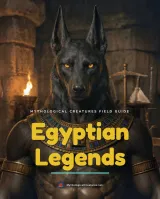
Egyptian Legends: A field guide to the gods and monsters of ancient Egypt
Guardians of the living and devourers of the dead, with the role each played in judgement.
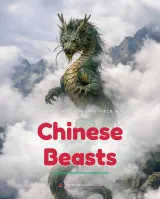
Chinese Beasts: A field guide to the dragons and demon kings of Chinese myth
From river dragons to demon kings, with the legends that shaped five thousand years of storytelling.
Japanese Yokai: A field guide to the spirits and demons of Japanese folklore
Fifteen spirits, with the signs to watch for and what the old tales say to do if you meet one.
the legend in five swipes.
Partner with us
Sponsor this space
Reach thousands of mythology enthusiasts with a curated placement on our creature pages.
Learn about sponsorshipQuick Creature Info
Features:
Associations:
Our Mythic Legendary Rating:

Also Sometimes Known As:
Habitat:
Supernatural Powers:
Physical Attributes:
Abilities:
Behavior:
Lore:
Related Creatures, Tales or Lore
- WWelsh Ysbaddaden
- GGreek Cyclops
References
Discover Another Mythical Legend You May Not Have Heard Of?
Uncover the mysteries of ancient folklore and expand your knowledge of legendary beings from cultures around the world.
Dare to Meet the Mermaid....
The Mythological Creatures Book Series
Yokai, Greek, Norse, Egyptian & Chinese. Five illustrated field guides to the creatures the old stories either warned or told you about.

Curated by the Mythological Creatures Team
Series editor: Mythological Creatures Directory
Primary desk: Northern & European Folklore Desk
(rev. November 2025)