
Baloz: Baloz is a legendary character in Albanian mythology known for his antagonistic role against heroic figures.
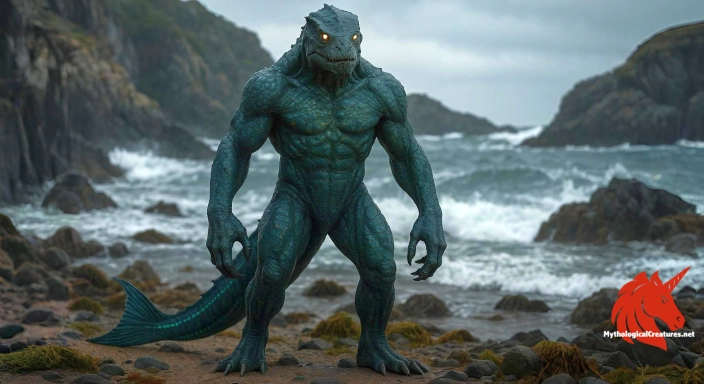
Baloz
Baloz - Represents the chaotic forces in Albanian legend and serves as a foil to heroic figures.
the legend in five swipes.
the legend in five swipes.
Baloz Origins: The Earliest Accounts
Baloz, an enigmatic figure in Albanian mythology, has a storied presence as a formidable antagonist in the grand narratives of legendary heroes. Born from the rich tapestry of Albanian folklore, his character emerged from oral traditions that have been passed down through generations. He is traditionally depicted as a dark and menacing force, often challenging the valour and integrity of heroic protagonists. His origins, while shrouded in the mists of myth, are intimately linked with the ancient narratives that celebrated both the terrestrial and the maritime realms. The very first attestations of Baloz are found in epic ballads and folklore recited in remote villages, where his name evoked both fear and fascination. He is often portrayed as a bridge between the natural world and supernatural danger, linking the unpredictable power of the sea with the human struggle for order. His dual identity, sometimes as a rugged terrestrial demon and at other times a colossal sea monster, adds layers of complexity to his character. Throughout centuries of storytelling, Baloz has symbolised the chaotic challenges that heroes must overcome to achieve greatness. This timeless figure not only enriches Albanian myth but also resonates with wider themes of conflict, fate, and the interplay between nature and civilisation. As a result, Baloz remains a compelling element in the cultural and mythical landscape of Albania.
Who wrote down the legend of Baloz?
The primary narratives surrounding Baloz are deeply rooted in a mixture of oral recitals and folkloric texts, with the character appearing in various forms over time. Early versions of his legend were preserved in epic poetry and ballads, where the cadence of recited verse lent an almost musical quality to his sinister exploits. In several documented accounts, Baloz emerges as both a physical and symbolic opponent to the heroic figures, underscoring the moral and existential battles within the folklore. Although written sources are relatively limited, the depth and variety of oral traditions have provided a tableau of story variants that reveal multiple interpretations. Some early texts hint at a hybrid figure, one that merges human attributes with monstrous sea qualities, thus blurring the lines between man and beast. Travellers’ accounts and folklore compendiums from the Balkans have also touched on his character, occasionally highlighting his amphibious powers. Variants of his tale often revolve around encounters with heroes, emphasising the contrast between the noble and the nefarious. Across these sources, subtle differences in his narrative reflect regional influences and varying levels of threat that Baloz poses in each tale. Over time, the retelling of his adventures has further enriched and diversified the myth, making him a figure of both fear and fascination. This mosaic of sources, while fragmented, collectively portrays a legendary figure whose enduring legacy has captivated generations.
Baloz: Form, Powers and Weaknesses
In the vivid portrayals of Baloz, his physicality is as mutable as it is imposing, often reflecting the elemental forces he represents. Some depictions describe him as a towering, sinewy figure with dark, weather-beaten skin reminiscent of the storm-tossed sea. His eyes, glowing with an otherworldly intensity, are said to instil dread in both heroes and ordinary folk alike. In narratives where he is depicted as a sea monster, his form takes on aquatic traits, with scales intermingling with human-like features that suggest a hybrid existence. He is sometimes depicted with elongated limbs and webbed digits, hinting at a life equally bound to the ocean’s depths as to terrestrial battlefields. The texture of his demeanour often shifts, portraying him as both ferocious and cunning, with an appearance that seems to defy precise categorisation. At times, ancient illustrations and poetic descriptions have hinted at a mane or crest that flows like the turbulent waves, further solidifying his connection with maritime imagery. Variations in his portrayed size are not uncommon, with some traditions elevating him to a colossal figure capable of summoning tempests, while others leave him more ambiguously humanoid yet undoubtedly formidable. The interplay of human and monster in his anatomy not only adds to his mystique but also symbolises the blurred boundaries between civilisation and chaos. In every rendition, Baloz’s physical presence serves as a powerful reminder of nature’s untamed aspects and the perpetual struggle against looming darkness.
How did location shape the story of Baloz?
Regional interpretations of Baloz reveal a fascinating spectrum of attributes that vary with local cultural influences and environmental contexts. In the rugged highland areas, he is often portrayed as a relentless adversary whose presence amplifies the existential challenges faced by local heroes in brutal, often unforgiving landscapes. Coastal communities, on the other hand, tend to emphasise his aquatic origins and fearsome sea-monster characteristics, linking him to the sudden tempests and unpredictable dangers of the open waters. In some parts of Albania, narratives imbue him with a more ambiguous moral character, suggesting that his malevolence might be a reaction to environmental disturbances or ancient grievances. The oral traditions in these regions might emphasise his deep connection with the forces of nature, illustrating how his form adapts to the local terrain—be it the vast sea or the isolated mountains. From one region to another, his name and attributes shift subtly, reflecting local linguistic nuances and combined influences from neighbouring mythologies. This multiplicity of perspectives has allowed his legend to evolve organically, maintaining cultural relevance through continual reinterpretation. Whether marked by an association with maritime disaster or as a symbol of untamed wilderness, regional variations of Baloz enrich the overall fabric of Albanian lore. These local adaptations serve to underscore the universality of myth while highlighting the unique aspects of regional belief systems. Ultimately, the diverse depictions of Baloz demonstrate how folklore can be both a shared heritage and a canvas for localized expression.
Does another culture have a figure like Baloz?
Baloz shares intriguing similarities with a number of mythological adversaries found across European and neighbouring traditions, forming a fascinating network of cross-cultural parallels. Much like the krakens of Northern European lore or the sea serpents that once haunted ancient Greek mariners, Baloz embodies the latent dangers of the ocean and the perils of venturing into the unknown. His antagonistic role mirrors that of various chthonic monsters, where his very essence becomes a test of a hero’s worth and resilience. In comparisons with other mythic foes, his dual nature as both creature and symbol resonates with figures like the Slavic Vodyanoi, who also blur the borders between human deception and natural calamity. Both Baloz and these analogous creatures perform crucial narrative functions by representing the chaotic forces of nature that are external to the order of human society. The layered portrayal—oscillating between human traits and monstrous exaggeration—can be found in many cultures, demonstrating a shared human instinct to personify environmental challenges. While the Baloz of Albanian tradition is uniquely celebrated for his specific interactions with national heroes, his similarities with counterparts elsewhere underscore a common mythological theme: the hero’s journey is invariably marked by encounters with the monstrous Other. These comparative analyses highlight how folklore often employs parallel motifs to explore universal truths about power, morality, and the interplay between man and the natural world. Thus, the study of Baloz enriches the broader understanding of myth, demonstrating that while the legends might differ in detail, they speak a common language of human experience and symbolic representation. The cross-cultural echoes found in his character further affirm the timeless nature of myth as it evolves across different societies.
Baloz: The Modern Legacy
The myth of Baloz has evolved dramatically from its early oral beginnings to a vibrant element of modern cultural imagination. Over the centuries, his portrayal has shifted from a concrete antagonist in traditional ballads to a symbol of the uncontrollable forces that challenge societal order. In recent times, writers and artists have reimagined Baloz, using his myth to explore themes such as environmental disruption, the clash between progress and tradition, and the duality of nature. Contemporary adaptations have presented him not only as a fearsome beast but also as a complex character whose existence provokes questions about the balance of power in the natural world. Modern reinterpretations in literature, theatre, and even visual arts have drawn on his maritime and terrestrial extremes to articulate modern anxieties and timeless struggles. The figure of Baloz continues to inspire creative expression, often serving as a metaphor for internal and external conflicts in both individual and societal narratives. His character has been revisited in academic circles as well, where scholars examine how the evolution of his myth reflects broader historical transformations within Albanian and Balkan cultures. As media and digital storytelling techniques have broadened the reach of folklore, Baloz’s legacy has found new audiences in formats that blend traditional narratives with modern aesthetics. His enduring presence in popular culture attests to the timeless appeal of myth and the persistent human fascination with the monstrous and the mysterious. Ultimately, Baloz remains a potent reminder of how ancient legends can be revitalised to mirror contemporary realities, ensuring that the myth continues to evolve while staying rooted in its storied past.
Interesting Fact
Baloz's portrayal as both a land adversary and sea monster highlights the fluid boundaries in mythological narratives, where creatures transcend simple classifications to embody multifaceted symbols of chaos.
Mythological Treasures
Greek Myths: A field guide to the monsters of ancient Greece
Every monster here earned its place in legend, and each gets a full page of artwork and the story behind it.
Norse Sagas: A field guide to the beasts of the Viking world
Drawn from the saga accounts themselves, with the powers, weaknesses and doom of each being set out.
Egyptian Legends: A field guide to the gods and monsters of ancient Egypt
Guardians of the living and devourers of the dead, with the role each played in judgement.
the legend in five swipes.
For publishers and studios
Your next readers are already here
Many of our visitors are looking for books, campaigns, and resources that deepen their journey into myth. Position your title or setting here.
Discuss a placementQuick Creature Info
Associations:
Our Mythic Legendary Rating:

Also Sometimes Known As:
Habitat:
Supernatural Powers:
Physical Attributes:
Abilities:
Behavior:
Lore:
Related Creatures, Tales or Lore
References
Discover Another Mythical Legend You May Not Have Heard Of?
Uncover the mysteries of ancient folklore and expand your knowledge of legendary beings from cultures around the world.
Dare to Meet the Goram and Vincent....

The Mythological Creatures Book Series
Yokai, Greek, Norse, Egyptian & Chinese. Five illustrated field guides to the creatures the old stories either warned or told you about.

Curated by the Mythological Creatures Team
Series editor: Mythological Creatures Directory
Primary desk: Hellenic & Ancient Mediterranean Desk
(rev. November 2025)