
Bardha: Bardha, known as 'the white one', is an Albanian mythological figure who appears as a nymph or a fate goddess.
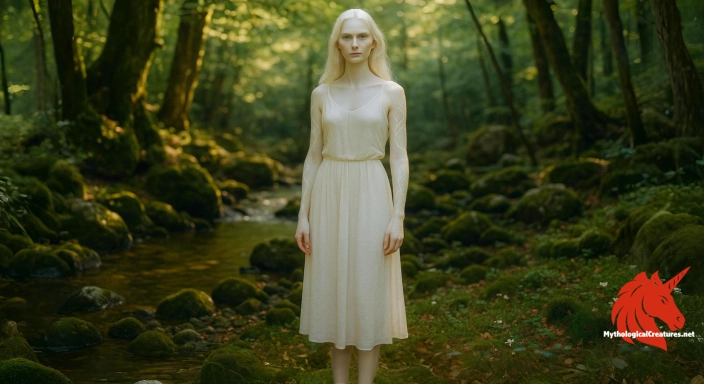
Bardha
Bardha - Revered for her association with good luck and destiny, Bardha embodies both nurturing spirit and divine fate in Albanian folklore.
the legend in five swipes.
the legend in five swipes.
Bardha Origins: The Earliest Accounts
Bardha, known as 'the white one', occupies a cherished place in Albanian myth where light and fate intertwine with daily life. Her name, a symbol of purity and clarity, evokes images of a luminous figure who guides souls with benevolent grace. Emerging from an oral tradition that stretches back centuries, she is portrayed both as a delicate zana—a nature sprite—and as a potent ora, a goddess who steers destiny. In local lore, her presence is often associated with moments of change, bringing hope and the promise of good fortune to those she encounters. Early attestations of Bardha appear woven into the fabric of communal gatherings and ancient rituals, capturing a spirit that transcends the mundane. She is celebrated not only for her divine beauty but also for her ability to influence the course of human events. Stories handed down through generations praise her for intervening in times of peril, offering protection and guidance. Her gentle yet powerful influence has rendered her an enduring emblem of luck and transformation within Albanian cultural consciousness.
The cultural context of Bardha reflects a society in tune with the cycles of nature and the mystique of fate, with her myth evolving alongside the community’s hopes and fears. The duality of her character, balancing whimsy with solemnity, invites those who listen to her stories to revere both natural beauty and the profound mysteries of destiny.
The Documented Accounts of Bardha
The narrative of Bardha has largely survived through the rich tapestry of oral tradition, where elder storytellers have kept her legend alive. Traces of her myth can be found in folklore recitations and ballads that were performed during both sacred ceremonies and festive occasions. Although written records are sparse, scattered references in regional manuscripts offer glimpses of her revered status as both a nurturer of luck and a deity of fate. Some ancient texts hint at ritual invocations meant to call upon her benevolent power during times of need. Variants of her story have been recorded by travellers and folklorists over the centuries, each adding subtle layers to her character. In certain accounts, Bardha appears as a mysterious guiding force in enchanted forests and high mountain passes. Other versions present her as an essential part of seasonal celebrations, where local healers and diviners honour her memory. Though direct sources are limited, the enduring oral narratives across Albanian communities have ensured that her myth continues to inspire and enchant. Collected folklore from the 19th and 20th centuries has further solidified her image as a multifaceted figure blending both beauty and fate.
This mosaic of story variants enriches our understanding of Bardha, revealing how her myth adapts to the needs and beliefs of different communities.
What did Bardha look like?
Bardha’s epithet, ‘the white one’, is mirrored in her physical depiction, which is both ethereal and captivating. She is often envisioned with a radiant complexion that seems to glow from within, accentuating her connection to purity and divine light. Her long, flowing hair—sometimes described as silver or pristine white—frames a face that is both gentle and mysterious. Many accounts detail her luminous eyes, as if capturing the sparkle of starlight, hinting at secrets of fate and fortune. Her attire is portrayed as a delicate, diaphanous garment that shimmers with an otherworldly gleam, evoking the natural translucence of mist or moonlight. Some descriptions accentuate a subtle aura surrounding her, a soft halo that imbues the surrounding air with peace and blessing. Bardha’s stature is neither imposing nor diminutive; instead, she embodies an ageless quality, merging the vibrancy of youth with the wisdom of ancient lore. Local illustrations sometimes present her with floral motifs, symbolising nature’s eternal renewal and the cyclical rhythm of life. Variations in her appearance—as a youthful nymph in some tales, or as a stately goddess in others—illustrate her flexible role in the mythic imagination, making her a timeless emblem of both beauty and fate.
How did location shape the story of Bardha?
Across the diverse landscapes of Albania, Bardha’s portrayal shifts subtly to reflect local traditions and the environment’s mood. In the rugged highlands, she is remembered as a steadfast spirit who protects wanderers and shepherds, a guiding light against the harshness of nature. In contrast, communities rooted in the fertile lowlands often celebrate her as a benevolent fate goddess, whose unseen hand steers the fortunes of families and fields alike. Tales recounted by villagers sometimes place her in moonlit glades or beside ancient springs, where her white luminescence mirrors the purity of natural water. Regional versions of her myth also highlight her role in seasonal festivities, linking her to harvests and the renewal of life with the changing of the seasons. In some narratives, she appears as a youthful nymph adorned with local flora, while in others she is depicted as a dignified, ageless deity. The differences across regions underscore how environmental and cultural factors help mould the myth, allowing her character to resonate with both pastoral and mountainous dwellers. Her regional variations illustrate a dynamic interplay between nature and belief, where Bardha’s enduring charm bridges local identities with a broader mythic heritage.
These adaptations provide a rich tapestry of reinterpretations, ensuring her myth remains a living part of Albanian cultural identity.
Is Bardha unique, or found elsewhere?
Bardha’s multifaceted character invites comparison with similar figures found throughout various mythological traditions around the world. Her dual identity as both a luminous nymph and a fate goddess echoes the complexities of Greek mythological figures, where deities and spirits alike influence human destiny. In many ways, her gentle benevolence and association with good fortune hark back to the roles of minor Celtic deities known for their connection to nature and renewal. Eastern European folklore also offers parallels, with mysterious female entities who preside over the cycles of life and destiny often marked by a distinguishing white radiance. Like the Slavic rusalki or the Greek Charites, Bardha occupies a space between the mortal and the divine, acting as a conduit for blessings and cosmic order. These cross-cultural connections reinforce the universal human fascination with the themes of purity, fortune, and the interplay between fate and nature. Her myth transcends geographical boundaries, reflecting a common symbolic language in which white, as a colour, embodies both the potential for transformation and the promise of divine intervention. The comparative study of such figures reveals how disparate cultures use similar archetypes to address the mysteries of life and destiny, underscoring Bardha’s enduring appeal worldwide.
This shared symbolism and thematic resonance establish Bardha as part of a broader mythological dialogue that spans continents and centuries.
Bardha: The Legend's Second Life
The myth of Bardha has journeyed through time from its origins in ancient oral traditions to its vibrant presence in modern Albanian culture. Today, she is celebrated not only as a relic of the past but as an enduring symbol of hope, purity, and the regenerative power of nature. Contemporary artists, writers, and filmmakers have reimagined her story, infusing it with modern sensibilities while maintaining its mystical allure. Her image often appears in visual art and literature as a beacon of renewal in times of social and cultural transformation. Modern reinterpretations frequently highlight her dual role as both a nurturing spirit and a subtle arbiter of fate, resonating with today’s audiences that value both tradition and innovation. Events and festivals sometimes evoke her presence through dance and ritual, connecting modern celebrants with a deep ancestral past. As scholarly interest in folklore grows, Bardha is increasingly recognized as a figure with both historical significance and contemporary relevance. Her legend continues to evolve, paralleling the changing landscape of cultural identity in Albania and beyond. The blend of ancient myth and modern reinterpretation ensures that Bardha remains a living, dynamic symbol of good luck and ethereal beauty.
This evolution from mythic tradition to modern cultural iconography reflects how enduring legends adapt to and inspire successive generations.
Interesting Fact
An interesting aspect of Bardha is her fluid identity, which allows her to transition between being a nurturing nature spirit and a powerful fate goddess, highlighting the dynamic nature of mythological roles in Albanian culture.
Mythological Treasures
Japanese Yokai: A field guide to the spirits and demons of Japanese folklore
Fifteen spirits, with the signs to watch for and what the old tales say to do if you meet one.
Greek Myths: A field guide to the monsters of ancient Greece
Every monster here earned its place in legend, and each gets a full page of artwork and the story behind it.
Norse Sagas: A field guide to the beasts of the Viking world
Drawn from the saga accounts themselves, with the powers, weaknesses and doom of each being set out.
the legend in five swipes.
Mythology-aligned partners
Showcase your myth-friendly brand here
Run a store, studio, or platform that lives in the world of myth and folklore? A curated sponsor panel on these pages may fit.
Explore partnership optionsQuick Creature Info
Features:
Associations:
Our Mythic Legendary Rating:

Habitat:
Supernatural Powers:
Physical Attributes:
Behavior:
Lore:
Related Creatures, Tales or Lore
- TTyche
- FFortuna
- AAine
References
Discover Another Mythical Legend You May Not Have Heard Of?
Uncover the mysteries of ancient folklore and expand your knowledge of legendary beings from cultures around the world.
Dare to Meet the Ghoul....
The Mythological Creatures Book Series
Yokai, Greek, Norse, Egyptian & Chinese. Five illustrated field guides to the creatures the old stories either warned or told you about.


Curated by the Mythological Creatures Team
Series editor: Mythological Creatures Directory
Primary desk: Hellenic & Ancient Mediterranean Desk
(rev. November 2025)