
Bata: Bata is an Egyptian bull-god from the New Kingdom renowned for his divine strength and immortality.
-056a6682-385f-4a7d-ab4d-110f0c67e78e_small.webp "Bata - Worshipped as a bull-god symbolizing strength, fertility, and divine guardianship in regional culture.")
Bata
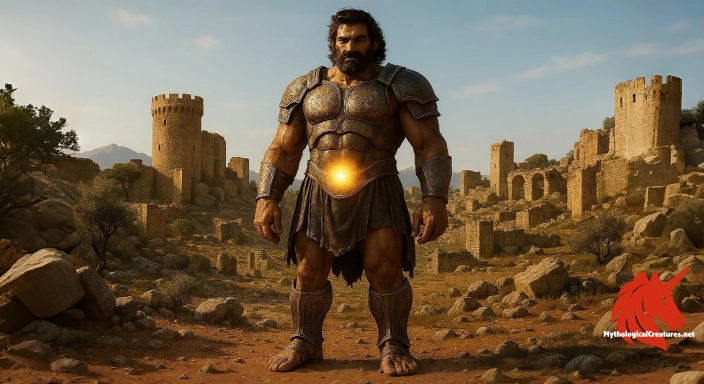
Bata - Worshipped as a bull-god symbolizing strength, fertility, and divine guardianship in regional culture.
Origins & First Encounters
Bata emerges as a striking figure within the Egyptian pantheon, embodying the formidable spirit of the bull and the complex interplay of life, strength, and regeneration. His origins are traced to the New Kingdom, a period marked by dynamic cultural synthesis that saw minor deities rise to significant local prominence. The myth of Bata, associated with the 17th Upper Egyptian Nome, highlights his localised worship and his unique partnership with his brother, Anubis, reflecting a duality of protective and transformative energies. His presence in the religious landscape hints at a confluence of indigenous beliefs and possible influences from external groups, as suggested by the reference to Saka. Bata was venerated not only as a symbol of fertility and vitality but also as an intermediary between the mortal world and the divine. His early depictions, carved on temple walls and inscribed on stelae, capture a deity whose strength and benevolence were integral to the cosmic order. He is celebrated for his immense physical power and spiritual presence, elements that resonated deeply with communities seeking continuity and protection. The amalgamation of elemental power, regal dignity, and local significance makes Bata a compelling figure in Egyptian religious thought.
Source Texts & Tale Variants
Primary insights into Bata’s myth come from a handful of inscriptions and temple reliefs discovered in the 17th Upper Egyptian Nome, which offer tantalising glimpses into his worship and significance. These sources, though fragmentary, document a series of rituals and iconographical depictions that place Bata among the revered bull deities of the New Kingdom. His cult features in a variety of folklore narratives, where multiple story variants depict him as a protector of fertility and a guardian of the cosmic cycle. Some ancient texts hint at ceremonies where Bata is invoked alongside his brother Anubis, creating a symbolic bridge between the dynamics of life and death. The surviving artefacts, including papyri fragments and tomb inscriptions, suggest that his myth was adapted over time to meet local spiritual needs. Variations in his story indicate that regional priests might have moulded his character to fit the evolving religious landscape of Upper Egypt. While the primary sources are limited, their colourful depictions and ritual references provide a foundation for understanding his role in the ancient world. These multifaceted sources, together with later interpretations by local storytellers, guarantee that Bata's myth continues to inspire and intrigue. The layered nature of these accounts testifies to an enduring legacy that is both historically significant and mythologically rich.
Form & Powers
The visual portrayals of Bata reveal a deity of magnificent corporeal power and a magnificently sculpted form, exuding both divine grace and raw strength. His depictions frequently evoke the grandeur of a noble bull, with a robust, muscular frame that is emblematic of vitality and agility. Artists often illustrate his head crowned with a pair of elegantly curved horns that rise with a subtle flare, symbolising power and authority in the heavens. His body is rendered with smooth lines and intricate hieroglyphic patterns that lend an aura of sacred regality to his form. Bata’s eyes, sometimes imbued with a piercing luminous quality, are thought to reflect the internal fire of divine energy. Many artistic renditions include additional ornamentation, such as decorative collars and ceremonial symbols, which further underscore his significance within the pantheon. In some representations, his scale and posture are exaggerated to highlight the union of earthly force and spiritual transcendence. Variations in his portrayal capture not only his physical robustness but also the cultural ideal of animal power residing in a divine entity. The lasting imagery of Bata, thus, bridges the realms of art, religion, and the enduring symbolism of the bull in ancient Egyptian society.
Regional Faces
Bata’s worship exhibits intriguing regional variations that reflect the diverse cultural currents flowing across ancient Egypt. In the 17th Upper Egyptian Nome, his character is depicted in a manner that emphasises fertility, protection, and the close ties to the earth and the life cycle. Local communities imbued his image with attributes that resonated with their agrarian lifestyles, such as abundance and renewal. Meanwhile, in other parts of Egypt, subtle adjustments in his iconography are visible, suggesting an assimilation of Bata with native traditions and local deities. For example, in some localised worship centres, his form might blend aspects of the more widely known Apis bull while retaining his distinctive features. Artistic interpretations varied considerably, with regional sculptors adapting his horns, posture, and attendant symbols to fit local artistic preferences and spiritual themes. Such modifications underline the fluidity of deity worship in ancient Egypt, where gods often took on different roles to mirror the specific needs of a community. His association with Anubis in the regional narratives further cemented his role as a complementary cosmic figure across various locales. Bata’s regional adaptations demonstrate how a single mythological figure can reflect the manifold identities of a diverse cultural landscape.
Cultural Parallels
Bata’s character invites an analysis of similar bull deities across ancient mythologies, revealing common themes of strength, virility, and cosmic order. Much like the Apis bull, whose worship in Egypt was central to themes of resurrection and fertility, Bata’s iconography also conveys a powerful synergy between the mortal and divine. Comparisons with other ancient cultures further highlight these shared motifs; for instance, the Minoan Bull of Crete and various Near Eastern bovine figures similarly embody the fusion of earthly potency with heavenly energy. These cross-cultural parallels illustrate how the bull has long symbolised the essence of life, offering both protection and a conduit to the spiritual realm. In many mythological traditions, the bull is seen as a guardian of sacred mysteries, a role that Bata fulfills with a distinctive Egyptian flavour. His partnership with Anubis, a god associated with the afterlife, further differentiates him from his counterparts, suggesting a unique dual role that balances creation with transformation. This comparative insight enriches our understanding of how the motif of the sacred bull transcends cultural boundaries, adapting to the specific religious and societal contexts. By examining Bata alongside other bull deities, one can appreciate the universal power attributed to the animal as a symbol of strength, renewal, and protection. The enduring nature of these themes speaks to a shared mythological heritage that spans continents and epochs.
Legacy & Modern Evolution
The myth of Bata has evolved significantly from its origins in the New Kingdom, continuing to captivate audiences both in academic circles and popular culture. In ancient times, his image was carefully preserved in temple carvings and ritual practices that underscored the Egyptian preoccupation with cycles of life, death, and rebirth. Throughout centuries, Bata’s visual and symbolic representations underwent a transformation, often merging with those of other prominent bull deities, thus broadening his cultural resonance. Modern artistic interpretations have reimagined him as both a relic from a bygone era and as a dynamic symbol of enduring spiritual energy. Contemporary scholars and enthusiasts of Egyptian mythology have revived interest in his lore, linking his traditional attributes to universal themes of power and regeneration. Exhibitions, literary works, and even digital media have incorporated elements of Bata’s iconography as a bridge between ancient mysticism and modern aesthetics. The evolving legacy of Bata demonstrates a continuous dialogue between the past and present, where ancient symbols are repurposed to articulate modern understandings of identity and existence. His story has come to represent not only the artistic brilliance of ancient Egyptian culture but also the timeless nature of myth in addressing the challenges of human experience. Through this ongoing reinterpretation, Bata remains a potent reminder of the power of myth to transcend time and place.
Interesting Fact
Despite sharing his regional representation with the better-known Anubis, Bata’s distinctive bovine form and inherent divinity make him a uniquely significant figure in the Egyptian pantheon.
Curated sponsor space
One subtle banner. Thousands of myth lovers.
We offer a small number of curated sponsor spots for relevant books, courses, games, and art. No clutter, just well-matched partners.
Partner with usQuick Creature Info
Origin:
Associations:
Our Mythic Legendary Rating:

Also Sometimes Known As:
Habitat:
Supernatural Powers:
Physical Attributes:
Abilities:
Behavior:
Lore:
References
Discover Another Mythical Legend You May Not Have Heard Of?
Uncover the mysteries of ancient folklore and expand your knowledge of legendary beings from cultures around the world.
Dare to Meet the Ferragut....
Curated by the Mythological Creatures Team
Series editor: Mythological Creatures Directory
Primary desk: Hellenic & Ancient Mediterranean Desk
(rev. November 2025)