
Ferragut: Ferragut is a legendary Saracen paladin featured in medieval epic literature, renowned for his near-invulnerability and imposing stature.
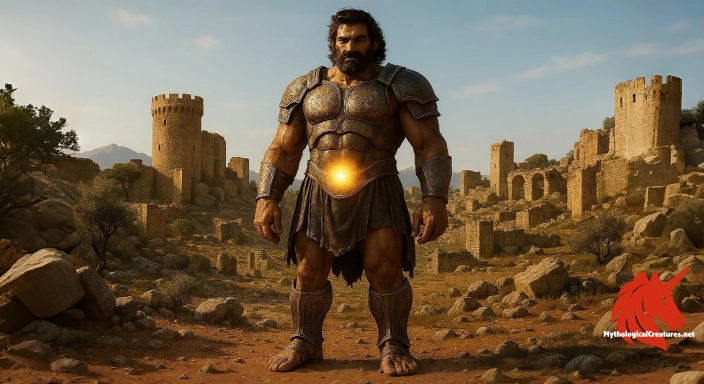
Ferragut
Ferragut - Ferragut is a symbol of near-invincibility in medieval epic literature, embodying the paradox of an overwhelmingly powerful warrior with one fatal flaw.
Origins & First Encounters
Ferragut emerges from medieval romance as a towering Saracen paladin whose legend weaves together elements of heroism and fatal vulnerability. His origins are embedded in the rich tapestry of the Matter of France, where he stands out as both a formidable warrior and a symbol of exotic otherness. Rooted in narratives that span both French and Italian literary traditions, his story reflects the complexities of cultural conflict and admiration. Early literary depictions present him as a mighty combatant whose physical prowess defies common mortal limits. His near invulnerability, marred only by a single weak point at his navel, introduces an intriguing paradox within his character. The earliest attested accounts, such as in the Historia Caroli Magni, cemented his status as a legendary foe. Subsequent adaptations in epic poems further elaborated his persona, underscoring both his supernatural strength and his singular susceptibility. The enduring nature of his myth continues to capture the imagination, making him a captivating figure in the history of medieval literature.
Source Texts & Tale Variants
The narrative of Ferragut is primarily drawn from a range of medieval texts, with the Historia Caroli Magni standing as one of the earliest sources to introduce his formidable character. His exploits are also richly recounted in Italian epics like Orlando Innamorato and Orlando Furioso, where literary embellishment further heightens his stature. These texts, written in different cultural milieus, reveal variations in his portrayal, reflecting the diversity of medieval storytelling. With a number of alternate names such as Ferragus, Ferracutus, and Ferraguto, his legend permeates various manuscript traditions. Each source contributes unique details, from his renowned giant-like presence to the narrative focus on his singular vulnerability. Some accounts detail his seemingly impenetrable armour and physical strength, while others emphasise the dramatic tension of his fatal flaw. Variations in his depiction also illustrate the evolving relationship between Christian and Saracen ideals in medieval literature. This wealth of primary materials offers a multifaceted look at a character who has left an indelible mark on epic tradition.
Form & Powers
Descriptions of Ferragut's physical form are as varied as they are vivid, often portraying him as a colossus among men. He is typically depicted with a towering stature and a muscular build that exudes both raw power and noble bearing. His armour and attire, rendered in elaborate detail, seem to echo the grandeur of mythical titans rather than everyday soldiers. Despite the overwhelming strength suggested by every aspect of his appearance, a careful observer finds that his invulnerability hinges on one singular vulnerability: a weak spot at his navel. This detail adds a layer of delicate imperfection to an otherwise formidable exterior. Constant references to his battle-worn scars and the gleam of his polished armour enhance his legendary status while grounding him in the brutal realities of combat. The physical descriptions are not merely ornamental; they symbolise the tension between might and frailty, a recurring theme in his saga. Such robust imagery continues to resonate, drawing readers into a world where even the mightiest possess a hidden Achilles’ heel.
Regional Faces
Ferragut’s myth has been adapted to reflect the cultural and literary sensibilities of different regions throughout medieval Europe. In French narratives, he is often portrayed as the epitome of a fearsome adversary, an almost supernatural force set against the backdrop of chivalric ideals. Italian adaptations, particularly in the works of Boiardo and Ariosto, infuse his character with a blend of romanticism and gravitas that elevates his role to that of a mythic giant. These regional renditions adjust his attributes to suit local tastes, emphasising varied elements from his raw physicality to his enigmatic vulnerability. In some Mediterranean interpretations, his Saracen identity is accentuated to mirror the era’s complex interaction between differing cultural and religious worlds. Other regional variations may temper his overwhelming strength with added layers of introspection and fatal destiny. Each cultural milieu contributes a unique flavour to his legend, showcasing his flexibility as a symbol within different narrative frameworks. This diversity underscores the dynamic nature of folklore, where a single character can serve as a mirror to the values and conflicts of multiple societies.
Cultural Parallels
Ferragut’s portrayal invites comparison with other legendary figures who embody the concept of near invincibility shadowed by a critical vulnerability. His single point of weakness is reminiscent of Achilles, whose heel similarly symbolises the profound interplay between power and mortality. Like the giants and titanic warriors of broader European folklore, Ferragut stands as a testament to the mythic tradition of heroes and antiheroes who defy ordinary human limits. His epic clashes with figures such as Roland underpin a narrative tradition where the invincible are rendered mortal by a solitary flaw. This motif resonates across cultures, linking Ferragut with other invincible warriors whose fates pivot on a minor imperfection. The duality present in his character—the melding of unyielding physical might with an inherent susceptibility—mirrors that found in many mythological narratives across both Eastern and Western traditions. In contrasting his story with more uniformly heroic figures, Ferragut’s tale enhances our understanding of the medieval ethos where even the mightiest are not beyond reproach. Through such comparisons, his character illuminates the timeless tension between idealised power and the inevitable human condition.
Legacy & Modern Evolution
The legend of Ferragut has transcended the confines of medieval epic, evolving into a rich symbol of the paradoxical nature of invincibility. Over the centuries, his portrayal has undergone significant reinterpretation, from a nearly mythical enemy in medieval romance to an enduring archetype in modern narrative traditions. Contemporary adaptations often focus on the nuanced interplay between his overwhelming physical prowess and his singular weakness, echoing timeless themes of vulnerability and hubris. Modern literature, film, and even graphic novels have found inspiration in his story, reprising his character as both a cautionary tale and a study in the limits of power. As new generations rediscover his narrative, Ferragut’s story is frequently used to explore the broader human condition and the inevitable susceptibility that accompanies even the greatest strengths. His myth has been reframed to address modern questions of identity, morality, and the balance between strength and fragility. This evolution in his depiction highlights the adaptability of ancient legends within contemporary cultural discourse. Through ongoing reinterpretation, Ferragut endures as a potent metaphor in the modern imagination, bridging the gap between medieval myth and current explorations of heroic complexity.
Interesting Fact
Ferragut's unique vulnerability has often been compared to Achilles' heel, illustrating the timeless concept that even the strongest heroes harbor a singular, defining weakness.
Curated sponsor space
One subtle banner. Thousands of myth lovers.
We offer a small number of curated sponsor spots for relevant books, courses, games, and art. No clutter, just well-matched partners.
Partner with usQuick Creature Info
Origin:
Our Mythic Legendary Rating:

Also Sometimes Known As:
Habitat:
Supernatural Powers:
Physical Attributes:
Abilities:
Behavior:
Weaknesses:
Lore:
Related Creatures, Tales or Lore
- AAchilles
- SSiegfried
References
Discover Another Mythical Legend You May Not Have Heard Of?
Uncover the mysteries of ancient folklore and expand your knowledge of legendary beings from cultures around the world.
Dare to Meet the Doris....
-057bacf2-5ee9-4005-959f-468e4d5c9cbf_small.webp "Depiction of Doris")
Curated by the Mythological Creatures Team
Series editor: Mythological Creatures Directory
Primary desk: African & Diaspora Traditions Desk
(rev. November 2025)