
Behemoth: Behemoth is a colossal, primeval beast from the Biblical Book of Job, created by God as a manifestation of untamable natural power.
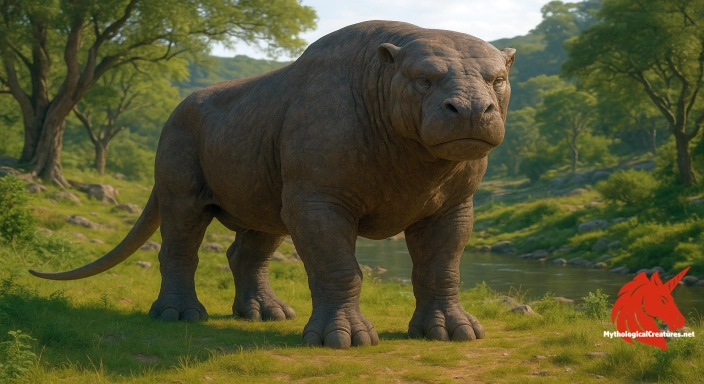
Behemoth
Behemoth - Serves as a symbol of the untamable forces of nature and is prophesied to be food for the righteous at the end-time.
Origins & First Encounters
Behemoth stands as one of the most enigmatic beings in ancient mythological literature, originating in the sacred texts of the Hebrew tradition. Its first attestation appears in the Book of Job, where it is depicted as a creature of immense power and primordial strength. Over time, the figure of Behemoth has evolved into a symbol of untamed nature and divine craftsmanship. In its earliest cultural context, the beast embodied the chaotic forces present at the dawn of creation, balanced with the equally formidable Leviathan. Ancient narratives present Behemoth not solely as an animal but as a representation of nature’s overwhelming potency. This creature reflects the human struggle to comprehend the vast, uncontrollable forces of the natural world. Its portrayal has stirred imaginations for centuries, merging the literal with the symbolic in discussions of cosmic order. Behemoth remains a compelling emblem of the mysterious interplay between divine creation and the wilderness beyond human control.
Source Texts & Tale Variants
The primary source detailing Behemoth is found in the biblical Book of Job, where it is portrayed amid poetic descriptions of divine power. Various strands of Jewish literature, including midrashic and Talmudic texts, later expanded on its character and symbolic end-time role. These ancient documents offer differing narrative variants, at times portraying it as a literal beast and at other moments as an allegorical representation of chaos. Additional folklore and liturgical traditions embellish its story, often linking it with eschatological feasts and cosmic battle imagery. Some historical accounts offer parallels with large terrestrial animals, invoking natural observations alongside spiritual insights. Interpretations have varied widely, reflecting regional understandings and the evolving symbolism of a creature born of divine creation. Through centuries, commentators have debated whether Behemoth was meant to invoke fear, respect, or both. The layered nature of these sources has enriched the myth, encouraging constant reinterpretation and scholarly discussion.
Form & Powers
Descriptions of Behemoth, while sparse in explicit anatomical detail, evoke an image of overwhelming size and raw physical power. The creature is often imagined as possessing a robust, muscular frame that dwarfs any conventional beast known to man, with proportions that defy the natural order. Some interpretations suggest that its physical form is reminiscent of an enormous land mammal, its structure built to endure both the forces of nature and the rigours of divine design. It is depicted with limbs of staggering strength and a body that exudes an almost tangible energy. Artistic renditions sometimes include a sweeping tail and powerful jaws, elements which underscore its dominion over the wild. Scholars have speculated that its might could symbolise natural elements such as the earth’s stability, contrasting with the fluid, chaotic nature of its counterpart, Leviathan. The physical presence of Behemoth consistently provokes awe, inspiring images of a creature that is as much a natural marvel as it is a mythic icon. Its size and commanding presence serve as a metaphor for untamed natural forces, elevating it beyond the realm of ordinary animals.
Regional Faces
Regional reinterpretations of Behemoth have led to a fascinating array of depictions and symbolic meanings across different cultures. In Jewish tradition, Behemoth is often interpreted as an emblem of the chaotic forces tamed by divine order, serving as a cautionary symbol of nature’s might. European medieval bestiaries adapted these ideas, sometimes merging the creature’s attributes with those of familiar large mammals, thereby making it a mediator between biblical myth and observable wildlife. In the Eastern Mediterranean and Near Eastern traditions, the creature’s portrayal intertwines local natural history with allegorical significance, highlighting both fertility and destruction. Various artistic and literary adaptations reflect local flora and fauna, reinforcing the idea that nature’s power can be both creative and devastating. In some regions, Behemoth is reimagined in tandem with regional mythic beasts, becoming a canvas for explaining natural phenomena. Such diverse depictions reflect a common human desire to personify and understand the immense forces of the natural world. Through these regional lenses, the legend of Behemoth continues to grow in complexity and cultural resonance.
Cultural Parallels
Behemoth shares intriguing similarities with other mythological creatures that symbolise chaos and untamable force, most notably its biblical counterpart, Leviathan. Both creatures serve as metaphors for the raw power inherent in the early cosmos, each representing different elements of nature. While Leviathan is typically associated with the watery abyss, Behemoth is conceived as its terrestrial equivalent, emphasizing the balance between water and earth in mythic narratives. Comparative analysis with creatures from other cultural traditions, such as Typhon in Greek mythology or the serpentine dragon in Eastern legends, reveals common themes of nature’s indomitable will. In many accounts, these entities are invoked to illustrate the boundaries between order and chaos, a duality that recurs in mythological symbolism worldwide. They capture the human imagination through depictions of mystery, strength, and often an inherent danger that challenges divine order. Similar to other grand mythic animals, Behemoth represents an existence that is both a part of the natural world and an embodiment of its uncontrollable forces. This cross-cultural dialogue enriches our understanding of how ancient societies grappled with the might and mystery of nature.
Legacy & Modern Evolution
Over the centuries, the depiction of Behemoth has evolved from a literal embodiment of chaos to a more broadly symbolic icon of sheer power and overwhelming force. Early interpretations in religious texts laid the groundwork for a tradition that viewed natural extremes as both a divine gift and a potential source of catastrophe. Medieval scholars and artists infused the legend with additional layers, often portraying Behemoth as a cautionary figure in the context of an ordered cosmos. In modern times, the term has transcended its ancient origins to become a metaphor for anything that is excessively large or powerful, be it an institution, corporation, or natural occurrence. Contemporary literature, cinema, and art continue to draw on the myth, reimagining the creature in settings that speak to modern concerns about nature, technology, and the limits of human control. Behemoth’s evolution reflects a broader trend in mythology, wherein ancient symbols are reinterpreted to provide insight into current cultural and existential challenges. Its enduring appeal lies in its capacity to encapsulate the awe and terror inspired by the forces of nature. Today, the legacy of Behemoth serves as both a reminder of humankind’s place in the natural order and a testament to the timeless power of myth.
Interesting Fact
Despite its grounded depiction as a terrestrial beast, Behemoth’s imagery has transcended its biblical origins, influencing art and literature as a metaphor for any immensely powerful or vast entity.
Mythology-aligned partners
Showcase your myth-friendly brand here
Run a store, studio, or platform that lives in the world of myth and folklore? A curated sponsor panel on these pages may fit.
Explore partnership optionsQuick Creature Info
Origin:
Features:
Associations:
Our Mythic Legendary Rating:

Habitat:
Supernatural Powers:
Physical Attributes:
Abilities:
Behavior:
Lore:
Related Creatures, Tales or Lore
References
Discover Another Mythical Legend You May Not Have Heard Of?
Uncover the mysteries of ancient folklore and expand your knowledge of legendary beings from cultures around the world.
Dare to Meet the Nuberu....
Curated by the Mythological Creatures Team
Series editor: Mythological Creatures Directory
Primary desk: Hellenic & Ancient Mediterranean Desk
(rev. November 2025)