
Black Donald: Black Donald is the colloquial name for the Devil in Scottish mythology, known for his ability to assume disguises.
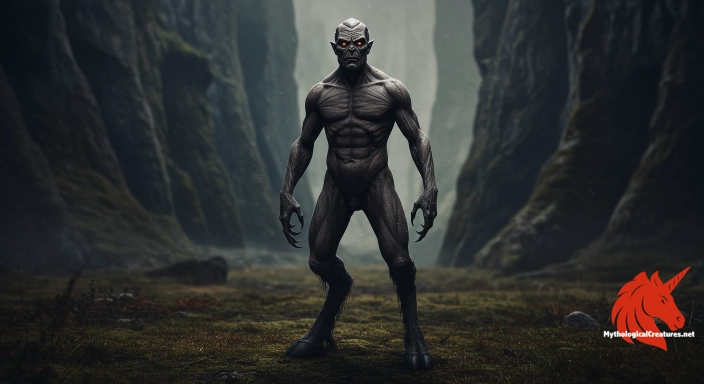
Black Donald
Black Donald - Black Donald embodies the pervasive presence of evil and deception in Scottish folklore, serving as a cautionary figure whose true identity is betrayed by his cloven feet.
Origins & First Encounters
Black Donald emerges in Scottish myth as a captivating embodiment of the Devil, woven into the rich tapestry of Highland lore. His name, rendered in Scottish Gaelic as Domhnall Dubh or Domnuill-dhu, conjures both mystery and menace, hinting at deep-rooted cultural narratives. Tales of his origins intertwine elements of ancient pagan superstition and later Christian demonology, reflecting a synthesis of diverse belief systems. Early attestations reveal him as a spectral force who prowls the remote glens and misty highlands of Scotland, leaving a lasting impression on local imagination. His notorious cloven feet, a physical hallmark, serve as an unyielding signature that unravels any deceptive guise he might assume. Many narratives portray him as a trickster who appears in unexpected forms, an attribute that reinforces his capricious and malevolent nature. Over the centuries, Black Donald has occupied a liminal space within folklore, simultaneously a cautionary figure and a symbol of the eternal conflict between light and darkness. His enduring presence in myth and popular lore illustrates the power of cultural imagination to transform abstract evil into a recognisable character. The legend of Black Donald continues to evoke both dread and fascination, inspiring storytellers and artists alike. His myth offers a window into the complex interplay of folklore, morality, and the human fascination with the unknown.
Source Texts & Tale Variants
Accounts of Black Donald are scattered across a range of Highland folklore and oral traditions that have been passed down through generations. Early written records, often fragmented and intermingled with local legends, emphasise his role as a diabolic figure whose disguises are invariably betrayed by his unique cloven feet. Various ballads and cautionary tales recount encounters with a mysterious traveller whose true nature was revealed by subtle, supernatural signs. Some narratives stem from medieval sources that amalgamate pagan motifs with the burgeoning influence of Christian iconography. These sources reveal a multiplicity of interpretations, where Black Donald is depicted both as a tempter and as a punisher of moral transgressions. The oral tradition contributes richly to his mythos, offering several variants that adjust his role from a fearsome demon to a mischievous trickster. Stories passed on by local storytellers often stress the importance of recognising his disguises, a lesson meant to caution against deceit. References to him appear in various folklore compilations and regional manuscripts, enriching the tapestry of his legend. His character frequently emerges in narratives that blend historical events with myth, making him a versatile figure in the Scottish supernatural tradition. This diverse array of primary sources underscores the fluid and evolving nature of his story over time.
Form & Powers
One of the most striking elements of Black Donald's depiction is his unmistakable pair of cloven feet, marking him as otherworldly even when he adopts a human guise. His body is often portrayed as an intriguing blend of human and beast, reflecting a duality that is both enchanting and alarming. Descriptions in the folklore literature paint a picture of a dark, brooding figure whose appearance is as mutable as his intentions. Some accounts depict him as tall and imposing, a towering presence that commands attention, while others describe a diminutive form designed to elude suspicion. His eyes are frequently reported to shimmer with an inner luminescence, a subtle hint to his supernatural origins. In various traditions, small yet significant details such as a ruddy complexion or a shadowed, angular face add to his menacing allure. When he disguises himself, he adopts unremarkable, rustic attire that stands in stark contrast to the unmistakable marks of his true nature. The interplay of light and shadow in artistic renderings further accentuates his ephemeral yet powerfully sinister presence. His overall depiction, fluid and adaptable, invites endless reinterpretation in visual and literary arts. Through these vivid physical descriptions, Black Donald becomes an enduring symbol of the hidden evils lurking beneath even the most benign surfaces.
Regional Faces
Local variations of Black Donald's legend reveal fascinating regional particularities that reflect distinct Highland cultural nuances. In areas where Scottish Gaelic prevails, the name Domhnall Dubh carries connotations that are steeped in native tradition and local superstition. In remote glens, villagers recount encounters with a mysterious figure whose appearance signals impending misfortune or divine retribution. Coastal communities sometimes blend his story with maritime folklore, suggesting that his presence is felt in mysterious phenomena on foggy shores and dim summer nights. Border regions with English influences offer narratives that slightly shift his character towards a more broadly European devil figure. In some parts of the Highlands, he is not only a sinister force but also a tester of character, rewarding or punishing travellers based on their virtue. The tales adapt to differences in social structure, with rural depictions emphasising his role as an enforcer of local moral codes. Urban retellings, on the other hand, place him amid the backdrop of societal change, where his ancient symbolism is reinterpreted in more modern contexts. Despite the regional disparities, the core motif of a deceitful entity marked by cloven feet pervades all versions of his legend. This fusion of distinctly local folklore with overarching themes of evil illustrates how adaptable and dynamic myth can be across different cultures.
Cultural Parallels
Comparisons between Black Donald and other diabolical figures in European folklore reveal striking similarities in the depiction of malevolent entities. Much like the notorious Old Nick of English tradition, Black Donald embodies the archetype of a deceptive spirit whose true nature is concealed beneath an alluring facade. His shapeshifting capabilities evoke parallels with a range of mythological tricksters, from the cunning faeries of Celtic lore to the sinister demons of continental legends. The presence of cloven feet, a recurring motif, mirrors similar characteristics found in depictions of the Devil throughout Christian art and literature. His role as both a seducer and a punisher resonates with the dual nature of figures like Satan who embody both temptation and retribution. Comparative analysis often highlights how his narrative encapsulates the tension between pre-Christian pagan beliefs and later Christian doctrine. Just as some traditions invoke the image of demonic figures to explain natural and moral misfortunes, Black Donald serves as a cultural cautionary tale. His ability to mask his identity while betraying it with a defining physical trait links him to a broader framework of supernatural warning signs. This cross-cultural dialogue enriches our understanding of how myth evolves to address timeless human anxieties. In many ways, his legacy is a testament to the universality of evil as a concept, transcending regional boundaries and specific cultural contexts.
Legacy & Modern Evolution
The myth of Black Donald has experienced a notable evolution over the centuries, shifting from a solely terrifying presence to a multifaceted symbol in modern storytelling. His narrative, once a stark warning against the temptations of evil, now also inspires creative reinterpretations across various art forms. Modern depictions often humanise him, imbuing his character with layers of irony and a reflective critique of contemporary society. Artists and writers have embraced him as a canvas onto which they project both historical fears and modern dilemmas. His iconic cloven feet remain a potent emblem of inescapable truth, a detail that continues to incite fascination and debate. Contemporary literature and performances frequently explore the ambiguous line between seduction and repulsion in his character. As urban and digital narratives reshape folklore, Black Donald emerges not only as a relic of the past but also as a symbol of ongoing cultural transitions. His image has been adapted in various media, from graphic novels to theatrical performances, each reflecting changing societal values and fears. The transformation of his representation mirrors broader shifts in how we conceptualise and confront the nature of evil. Even today, his enduring appeal lies in his ability to evoke both horror and deep, reflective intrigue, ensuring that the myth of Black Donald lives on in the collective imagination.
Interesting Fact
An interesting aspect of Black Donald is that no matter how perfectly he disguises himself, his cloven feet always expose his true demonic nature, symbolising the idea that evil cannot completely hide its true form.
Curated sponsor space
One subtle banner. Thousands of myth lovers.
We offer a small number of curated sponsor spots for relevant books, courses, games, and art. No clutter, just well-matched partners.
Partner with usQuick Creature Info
Features:
Associations:
Our Mythic Legendary Rating:

Also Sometimes Known As:
Habitat:
Supernatural Powers:
Physical Attributes:
Abilities:
Behavior:
Weaknesses:
Lore:
Related Creatures, Tales or Lore
- LLucifer
- BBeelzebub
- OOld Nick
References
Discover Another Mythical Legend You May Not Have Heard Of?
Uncover the mysteries of ancient folklore and expand your knowledge of legendary beings from cultures around the world.
Dare to Meet the Alkonost....
Curated by the Mythological Creatures Team
Series editor: Mythological Creatures Directory
Primary desk: Northern & European Folklore Desk
(rev. November 2025)