
Blue men of the Minch: The Blue men of the Minch are mythological blue-skinned humanoid beings from Scottish folklore.
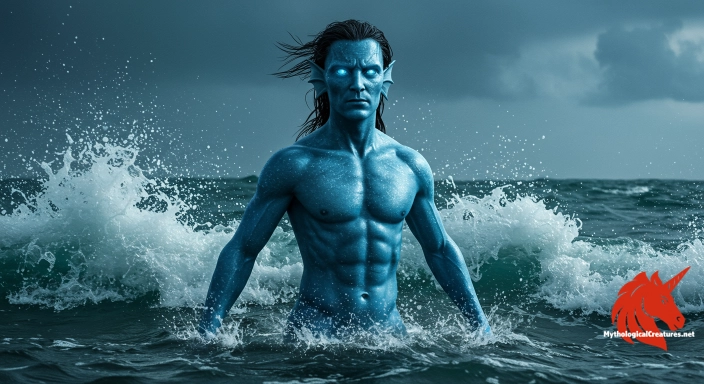
Blue men of the Minch
Blue men of the Minch - They embody the dangerous and unpredictable nature of the sea and serve as a personification of maritime hazards.
How did the Blue men of the Minch enter folklore?
The blue men of the Minch are enigmatic figures whose legend has been woven into the maritime fabric of northern Scotland. Born from the swirling tales of the Hebrides and mainland seafaring communities, these spectral entities have fascinated locals for centuries. Their early mentions hint at a deep connection with the unpredictable moods of the ocean, blending natural phenomena with myth. The legends emerged in a cultural context where the sea was both a provider and a peril, embodying mystery and danger. Their distinctive blue hue and human-like form set them apart as unique denizens of the deep, capable of stirring tempests and luring unwary sailors. Over time, their character has expanded beyond mere cautionary tales to become personifications of nature’s untamed force. They first appear in oral traditions that later became recorded in folklore collections and ballads. The legends not only reflect the physical environment of the Minch but also resonate with ancient beliefs regarding the spirit and power of the natural world.
Blue men of the Minch: How the Tale Was Told and Retold
The primary sources for the blue men of the Minch are rooted in a rich tradition of oral storytelling and maritime folklore. Accounts from seafaring communities, preserved in ballads and local narratives, portray these beings as both terrifying and intriguing. Various folklore collections have recounted their uncanny habit of challenging ship captains with verses before summoning a storm. Some literary texts and mid-20th century compilations of Scottish myth have further elaborated these stories, adding layers of complexity to their character. Variants of the tale appear in different coastal regions, where the blue men are depicted with slight variations in tone and purpose. Historical narratives often intersect with local poetic traditions, where the recitation of challenge verses plays a central role. Over time, their myth has been enriched by contributions from modern folklorists and cultural historians, who have reinterpreted earlier accounts. Though documentation is not uniform, the cumulative account across sources solidifies their place in Scottish mythos.
Blue men of the Minch: Size, Shape and Strange Features
The blue men are often depicted as strikingly human in appearance, yet their most arresting feature is their vivid blue skin. Their physical form is almost equal in size to a typical human, yet they possess an otherworldly grace in the water. Descriptions detail a robust, athletic build that aids in their ability to swim while keeping their torsos above the surface of the waves. Their skin seems to shimmer under the moonlight, resonating with the deep blues of the surrounding sea. The creatures are said to exhibit fluid, twisting motions in the water, reminiscent of porpoises, which adds to their spectral allure. Despite their humanoid structure, they often exude an aura of the marine, with hints of aquatic adaptations that suggest a life spent in constant interaction with the ocean. Their eyes and expressions sometimes reflect the tempestuous nature of the sea, hinting at deep inner power. This blend of human traits with quintessential elements of the ocean gives the blue men a timeless, almost hypnotic presence in the folklore of the region.
How does the Blue men of the Minch legend change from place to place?
The portrayal of these blue beings has varied significantly across different coastal communities in Scotland. In some areas, particularly along the Minch and Outer Hebrides, they are revered as both guardians and omens, controlling the sea’s capricious mood. Local adaptations of the myth emphasise different attributes: while some tales focus on their storm-summoning capabilities, others highlight their penchant for engaging sailors in cryptic poetic duels. Variations in the legend also reflect historical influences, such as potential ties to Pictish warriors or even North African influences brought by Viking raiders. In mainland lore, they are sometimes seen as a manifestation of the sea itself, embodying the beauty and danger of maritime life. Regional storytellers have, over generations, infused their versions of the myth with local landmarks and events, thereby personalising the legend for each community. These adaptations ensure that while the core elements of the blue men remain consistent, the details continue to evolve with local culture. Such dynamic regional variations keep the myth both relevant and adaptable to the changing environments and experiences of seafarers.
What figures resemble the Blue men of the Minch?
The blue men of the Minch occupy a unique space in myth, yet they share compelling similarities with water spirits in other cultural traditions. Comparable to the selkies of Scottish and Irish lore, which are also half-human and intimately connected with the sea, the blue men embody both beauty and treachery. In broader Mediterranean and Nordic myths, similar figures emerge as personifications of the natural world’s unpredictable might, blending human form with elemental forces. These parallels reveal an underlying human need to explain and control the forces of the ocean through anthropomorphic representations. Unlike many water spirits who may focus solely on seduction or benevolence, the blue men combine the elegance of artistic expression with a lethal intent by way of poetic challenges. Their dual nature—both inviting and menacing—resonates with other mythological figures who bridge the gap between civilization and nature’s wild domains. This comparative examination highlights how diverse cultures use similar narrative tools to encapsulate the mysteries and dangers of the sea. The blue men thus serve as a cultural mirror, reflecting a balance of allure and peril that is common in mythologies worldwide.
The Lasting Influence of the Blue men of the Minch
Over the centuries, the blue men have transitioned from ominous omens in the lives of seafarers to emblematic figures in modern folklore and cultural expression. Their myth has evolved in tandem with the changes in maritime practices and the growing interest in mythical interpretations of natural phenomena. Contemporary depictions often celebrate them as symbols of the untamed, transformative power of the sea, blending ancient caution with modern environmental sensibilities. Artistic reinterpretations in literature, visual arts, and even digital media have revived and reimagined their persona for new audiences. Festivals and local tourism initiatives along the Scottish coast sometimes invoke the blue men’s legacy, turning legends into cultural celebrations that honour maritime heritage. Modern scholarship, while recognising their mythic origins, continues to explore the layers of historical and cultural symbolism embedded in these tales. The continuous dialogue between old lore and modern reinterpretation ensures that the blue men remain a potent symbol of the mysterious and the unpredictable. In essence, their enduring legacy captures the profound relationship between humankind and the sea, inspiring both reverence and creative exploration.
Interesting Fact
Despite their human appearance, the blue tint and storm-wielding abilities of these creatures highlight their supernatural connection to the sea, making them both fascinating and formidable.
Advertising opportunity
Showcase your mythology project
We offer limited sponsor placements for books, courses, games, and creators aligned with our audience.
View partnership optionsQuick Creature Info
Features:
Associations:
Our Mythic Legendary Rating:

Also Sometimes Known As:
Habitat:
Supernatural Powers:
Physical Attributes:
Abilities:
Behavior:
Lore:
References
Discover Another Mythical Legend You May Not Have Heard Of?
Uncover the mysteries of ancient folklore and expand your knowledge of legendary beings from cultures around the world.
Dare to Meet the Argia....
-c0b09d8f-45e8-40ed-82c6-653e80249999_small.webp "Depiction of Argia")
Curated by the Mythological Creatures Team
Series editor: Mythological Creatures Directory
Primary desk: Northern & European Folklore Desk
(rev. November 2025)