
Bogeyman: The Bogeyman is a mythical creature used across various cultures to frighten children and enforce proper behavior.
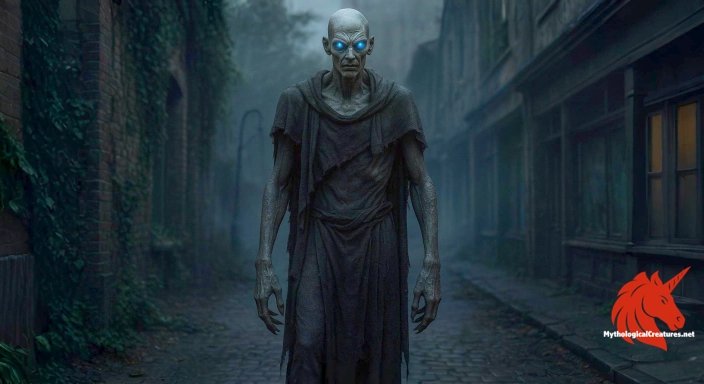
Bogeyman
Bogeyman - Serves as a personification of fear and a disciplinary tool used by authority figures.
The Earliest Known Accounts of the Bogeyman
The bogeyman is a mysterious and enduring figure woven into the fabric of folklore, often emerging as an unsettling warning to misbehaving children. Its origins are lost in the mists of ancient oral traditions, where cautionary tales served both to discipline and to explain the inexplicable. Legends of the bogeyman have evolved over time, absorbing local fears and societal changes while remaining a potent symbol of hidden terror. Early attestations appear in regional rhymes and bedtime stories, where its undefined nature allowed it to embody the ever-changing anxieties of a community. Despite its elusive beginnings, the creature has maintained a presence across generations, reflecting the human instinct to personify abstract dangers. Over centuries, the bogeyman has morphed to address contemporary concerns, from the dark recesses of rural homesteads to the modern digital age. Its role in culture is as much about the power of storytelling as it is about the enforcement of acceptable behaviour. The flexible identity of the bogeyman ensures that it remains a captivating embodiment of the unknown and a timeless guardian of moral boundaries.
Where can you read about the Bogeyman?
Ancient manuscripts and local compilations occasionally hint at a shadowy figure whose elusive nature mirrors that of the bogeyman. Diverse folklore collections have preserved fragmented narratives that present this creature as a spectral enforcer meant to instil caution in young minds. Oral traditions from various parts of the world record differing accounts, each adapted to local beliefs and social mores. In one variant, the creature lurks just beyond the edge of light, a silent reminder of the consequences of misbehaviour. Storytellers and folklorists of the nineteenth century gathered these dispersed tales, helping to codify a figure that, by design, defies a single, consistent portrayal. Over time, local legends have expanded the character’s repertoire, blending ancestral myth with emerging societal fears. Even in modern literature, retellings of the bogeyman draw on a rich tapestry of cultural sources, each emphasising a different facet of his ominous persona. These multifarious accounts underscore the bogeyman’s role as a mutable emblem of terror, one that continuously adapts to the fears of its audience.
The Described Form of the Bogeyman
Descriptions of the bogeyman are as varied as the cultures that evoke his presence, with each retelling offering a unique glimpse into his spectral form. Often, he is imagined as a shadowy, formless being whose features shift in the light of different fears. Some portrayals suggest a lanky silhouette with elongated limbs that seem to stretch unnaturally in the dark. Other accounts hint at a more corporeal presence, featuring a gaunt face with deep-set eyes and a murky countenance that blends into the night. His attire is frequently depicted as tattered and indistinct, mirroring the chaotic nature of the stories that birthed him. The lack of concrete physical form is a deliberate aspect of his design, allowing local storytellers to adapt his appearance to the prevailing cultural fears. In some regions, the bogeyman is thought to be small enough to hide under a bed, while in others he is a towering figure shrouded in mystery. Regardless of the specific details, each description reinforces his role as a being that embodies the unpredictable nature of the unknown and the fears that dwell there.
Bogeyman: Local Variations in the Story
Across different parts of the world, the bogeyman takes on distinct characteristics that reflect local histories and cultural nuances. In many European regions, he is depicted as a formless menace lurking in the peripheries of family life, his vague appearance shaped by centuries of oral tradition. In North America, the figure often attains a more defined and sometimes even grotesque appearance, aligning with modern horror sensibilities. In parts of Latin America, a similar spirit sometimes merges with the myth of the Coco, creating a narrative that blends traditional warning tales with regional superstition. This cultural plasticity allows the creature to serve varied roles, from a benign cautionary figure to a more aggressive embodiment of terror. Regional storytellers have adapted his image to mirror local fears—be it the isolation of rural life or the anxieties of urban modernity. The shifts in his portrayal serve as a reminder of the ways in which folklore is interwoven with the social and historical context of a community. Thus, while the core concept remains unchanged, the regional variations of the bogeyman provide a fascinating insight into the diverse tapestry of human belief.
Bogeyman: Echoes in Other Mythologies
When examined alongside comparable figures in global folklore, the bogeyman stands out for his chameleon-like ability to adapt to the fears of different cultures. His role as a harbinger of moral consequence finds echoes in other mythological beings such as the Slavic Baba Yaga, the Mediterranean Coco, and even the more modern Gremlin of urban legend. Each of these entities operates on the principle of the unknown, exerting control over the behaviour of the vulnerable. Like many of his counterparts, the bogeyman is not confined by a single narrative or form, allowing him to intersect with multiple cultural themes of fear and retribution. His amorphous nature enables a fluid comparison with demons and spirits that have served as cautionary tales throughout history. In contrasting him with similar figures, it becomes clear that his enduring appeal lies in his capacity to embody both the promise of punishment and the terror of the inexplicable. This comparative fluidity underscores a shared human desire to project internal anxieties onto external characters. Ultimately, the bogeyman and his cultural siblings form a collective mythos that both frightens and instructs, transcending geographic boundaries and historical periods.
His multifaceted presence continues to inspire cross-cultural analyses that reveal underlying commonalities in the ways societies process fear and discipline.
What happened to the legend of the Bogeyman?
The historical evolution of the bogeyman reflects a broader narrative of how folklore adapts in response to shifting social mores and technological advancements. Initially a product of oral tradition meant to instil cautious behaviour in children, the bogeyman gradually made the transition into written literature and visual media. His ghostly image and mutable character began to find life in early children’s books and later in cinema and television, cementing his role as a cultural icon. As modern society moved into an era of rapid change, the creature’s image was reinterpreted to capture both nostalgic fear and contemporary anxieties. In many modern narratives, the bogeyman serves as a reminder of the past while also addressing modern issues, from the alienation of childhood to the omnipresent nature of digital dangers. His enduring legacy is apparent in the myriad ways he continues to be reinvented by artists, writers, and filmmakers alike. Modern depictions often blend horror with a sense of dark humour, reflecting a complex relationship with the concept of fear itself. Moreover, his evolution underscores the power of myth to persist and transform, ensuring his relevance in an ever-changing cultural landscape. The bogeyman’s continuing presence in popular culture reaffirms his role as a timeless symbol, one that encapsulates the eternal struggle between discipline and the chaotic unknown.
Interesting Fact
An interesting aspect of the bogeyman is that its portrayal changes dramatically from one culture to another, reflecting local societal fears and the evolving methods of admonishing children.
For indie creators
Give your myth project a permanent home
Indie authors, artists, small studios, and makers can secure an annual, non-intrusive sponsor slot that meets readers where they explore.
Obtain more informationQuick Creature Info
Features:
Associations:
Our Mythic Legendary Rating:

Also Sometimes Known As:
Habitat:
Supernatural Powers:
Physical Attributes:
Abilities:
Behavior:
Weaknesses:
Lore:
References
Discover Another Mythical Legend You May Not Have Heard Of?
Uncover the mysteries of ancient folklore and expand your knowledge of legendary beings from cultures around the world.
Dare to Meet the Blue men of the Minch....

Curated by the Mythological Creatures Team
Series editor: Mythological Creatures Directory
Primary desk: Northern & European Folklore Desk
(rev. November 2025)