
Božić: Božić is a Slavic pagan personification of the sun, symbolising the New Year, spring, and youth.
-38c5946c-766a-4bed-adc8-f58e84c713f1_small.webp "Božić - Symbolises the eternal cycle of death and rebirth of the sun, and represents the rejuvenation of nature and the arrival of spring.")
Božić
Božić - Symbolises the eternal cycle of death and rebirth of the sun, and represents the rejuvenation of nature and the arrival of spring.
the legend in five swipes.
the legend in five swipes.
The First Records of Božić
Božić emerges as a striking mythological figure within ancient Slavic pagan traditions, embodying the themes of the New Year, spring, and youthful vigour. His origins appear rooted in the deep reverence for celestial cycles and the natural renewal of life, which was central to early Slavic cosmology. Over time, his myth was interwoven with the cult of Svarog, the celestial smith, hinting at a reverence for the forging power of the sun. This figure is celebrated as the personification of the sun, highlighting narratives where the stellar body seemingly perishes only to rise reborn. Early attestations of Božić are believed to have been preserved in oral recitations and ritual practices, gradually documented by later folklore collectors. His integration into winter and spring festivals marked a subtle yet profound merging of pagan and emerging Christian traditions. The cultural context of Božić reflects a period where the cycles of nature were deeply intertwined with the communal and spiritual life of the Slavic peoples. Thus, his enduring presence testifies to the universal human admiration of natural regeneration and the eternal promise of rebirth.
The Source Texts Behind Božić
Narratives concerning Božić are primarily transmitted through a rich tapestry of oral traditions and subsequent folkloric records, which capture his evolving role in seasonal observances. While direct ancient texts offer limited insight, later manuscripts and folk songs preserve the essence of his character and its ritual significance. Variants of his legend appear in the Christmas customs of the South Slavic regions, where his myth is intricately linked with the advent of a new life phase. Certain accounts articulate that he is accompanied by a golden-horned deer and a pig, each symbolising prosperity and vitality at the inception of a new year. Multiple story strands coexist, with some emphasising his solar attributes and others his embodiment of youthful exuberance. Over successive generations, local storytellers have adapted his persona to align with emerging cultural and religious nuances. The dialogue between these versions enriches the figure’s history, creating a layered narrative that is as multifaceted as the cultural landscape of the Slavic world. In this way, the diverse sources and variants collectively build a mosaic that captures both the ancient origins and the dynamic reinterpretations of Božić.
What abilities did Božić have?
The visual representation of Božić is a blend of symbolic radiance and anthropomorphic charm, evoking the warmth and brilliance of the sun. Artistic depictions often illustrate him with a lithe yet robust form that exudes both vitality and a sense of natural authority. His attire is sometimes rendered in hues of gold and red, colours that mirror the sun’s fiery splendour and the promise of a new dawn. In various portrayals, distinctive solar motifs such as sunbursts or rays embellish his garments, underscoring his celestial connection. Although specific anatomical details can vary, he is generally envisioned as possessing an ageless face, one that bridges the gap between youthful exuberance and timeless wisdom. The inclusion of symbolic companions like the golden-horned deer further accentuates his association with nature’s bounty. Some regional interpretations even allow for variations in size and stature, ranging from a human-like figure to a more majestic, otherworldly presence. These detailed physical descriptions help to encapsulate the dual role of Božić as both a personified spirit and a cosmic force, emblematic of perpetual renewal.
Where is the legend of Božić strongest?
Regional interpretations of Božić reveal a fascinating spectrum of adaptations that mirror the local cultural landscapes across the Slavic world. In the lands of the South Slavs, his very name has permeated daily language, evolving into the modern term for Christmas in countries such as Serbia, Croatia, and Slovenia. This linguistic transfer underscored the deep-seated integration of his myth into seasonal celebrations. Some regions emphasise his connection with agrarian renewal, where he is celebrated as the harbinger of both spring and a prosperous New Year. In other areas, however, the focus is drawn to his solar qualities, wherein he is revered as a majestic figure whose cyclical death and rebirth symbolise the inevitable passage of time. Variability in iconography—with different attributes like accompanying animals, ceremonial costumes, and regional ritual practices—demonstrates how local traditions have each reimagined his narrative. Differences in regional folklore also highlight a broader interplay between ancient pagan rituals and the later overlay of Christian symbolism. Ultimately, although local adaptations may accentuate distinct aspects of his persona, a unifying theme of renewal and cosmic order remains central to every version of Božić.
Božić: Parallels in Other Cultures
In comparative mythology, Božić occupies a space akin to that of other sun deities and figures of seasonal rebirth around the world. His myth bears a striking resemblance to the Roman celebrations of Sol Invictus, where the unfailing cycle of the sun was similarly revered. This cross-cultural motif of the solar body dying and being reborn is a recurrent theme across diverse ancient societies. Like many mythological characters, Božić encapsulates the human fascination with the eternal dance between life and death, echoing narratives found in cultures as varied as the Celtic and the Greco-Roman. The delicate balance between light and darkness, as embodied by his figure, holds parallels with the seasonal festivals that celebrate winter’s end and the arrival of spring. His evolution from a pagan solar deity into a recognised marker of Christmas festivities also mirrors the broader trend of pagan symbols being assimilated into Christian traditions. In this way, his myth enhances our understanding of how fundamental natural cycles can forge common ground among seemingly disparate cultural paradigms. Furthermore, the intermingling of his identity with emerging Christian iconography provides a rich field for exploring the dialogue between old and new religious practices.
Božić in Books, Film and Games
The historical evolution of Božić is a narrative of remarkable adaptability and cultural resilience. Initially revered as a potent symbol of the sun and seasonal rejuvenation, his myth gradually absorbed layers of spiritual meaning as the region’s religious landscape shifted with the advent of Christianity. This transition saw many ancient pagan symbols, Božić included, being repurposed to fit within the framework of Christian celebrations, particularly those associated with Christmas. Over the centuries, his image has been refined and reinterpreted, blending the raw, elemental power of nature with the more tempered, communal spirit of modern festive traditions. Contemporary depictions often retain the solstitial attributes of his persona, yet they are intermingled with iconography that speaks to the broader themes of hope and renewal celebrated each year. In modern cultural expressions—be it art, literature or public celebrations—the legacy of Božić continues to evoke a sense of timeless wonder about the cycles of life. His myth serves as a reminder of the intrinsic connections between nature, time, and cultural identity. Today, Božić remains an enduring symbol of continuity and resurgence, captivating the imagination of those who seek to understand the profound interplay between tradition and transformation.
Interesting Fact
Božić not only symbolizes the solar cycle and seasonal change, but its legacy has also influenced the modern naming and celebration of Christmas across various Slavic cultures.
Mythological Treasures
Greek Myths: A field guide to the monsters of ancient Greece
Every monster here earned its place in legend, and each gets a full page of artwork and the story behind it.
Norse Sagas: A field guide to the beasts of the Viking world
Drawn from the saga accounts themselves, with the powers, weaknesses and doom of each being set out.
Egyptian Legends: A field guide to the gods and monsters of ancient Egypt
Guardians of the living and devourers of the dead, with the role each played in judgement.
the legend in five swipes.
Sponsor this space
Tasteful, fixed-fee placements for myth projects
No bidding wars or flashing banners. We offer simple placements for a small set of creators and brands aligned with our readers.
Request further detailsQuick Creature Info
Associations:
Our Mythic Legendary Rating:

Also Sometimes Known As:
Habitat:
Supernatural Powers:
Physical Attributes:
Abilities:
Behavior:
Lore:
References
Discover Another Mythical Legend You May Not Have Heard Of?
Uncover the mysteries of ancient folklore and expand your knowledge of legendary beings from cultures around the world.
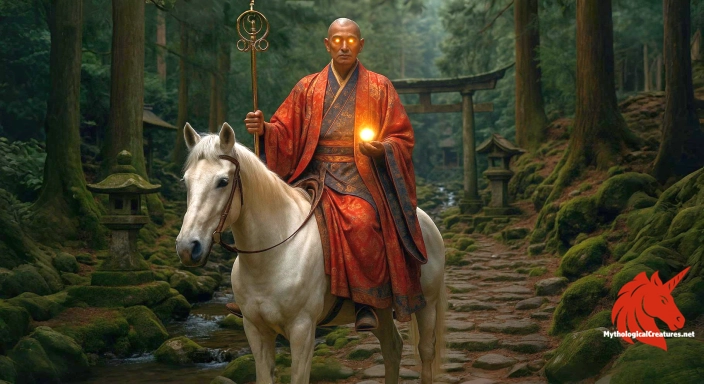
Dare to Meet the Atago Gongen....
The Mythological Creatures Book Series
Yokai, Greek, Norse, Egyptian & Chinese. Five illustrated field guides to the creatures the old stories either warned or told you about.
Curated by the Mythological Creatures Team
Series editor: Mythological Creatures Directory
Primary desk: Northern & European Folklore Desk
(rev. November 2025)