
Căpcăun: The Căpcăun is a monstrous ogre from Romanian folklore, known for its distinctive dog-like head and brutal nature.
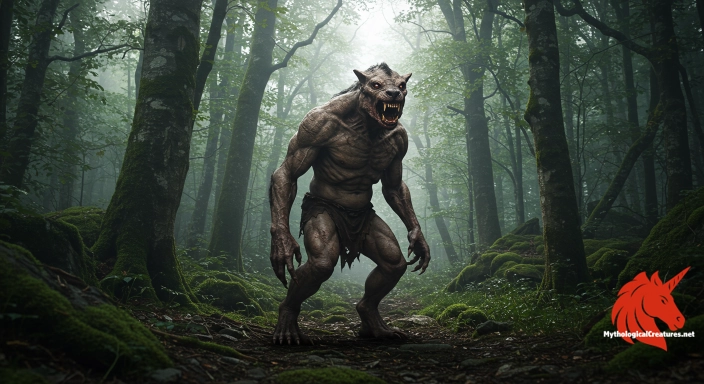
Căpcăun
Căpcăun - Serves as a symbol of malevolence and a cautionary figure against danger in traditional stories
Origins & First Encounters
Căpcăun emerges as a formidable figure in Romanian folklore, its very name evoking images of terror and monstrous defiance. It is traditionally depicted as a brutish ogre with a distinctive canine head, a symbol of otherworldly menace. The creature is rooted in a rich tapestry of myth, having been mentioned in oral tales long before its appearance in literary texts. It became renowned for its predilection for abducting children and young maidens, particularly princesses, weaving narratives of horror and caution across generations. This mythic being was not merely a source of fright, but also a personification of the malevolent forces that awaited those who strayed from the safety of civilisation. Over centuries, its portrayal has evolved while retaining key characteristics such as its hybrid physical form and penchant for anthropophagy. The cultural context of the Căpcăun reflects broader European traditions where monstrous entities served as guardians of moral and societal boundaries. Its origins may stretch back to the interactions between the local peoples and invading Central Asian tribes, adding layers of historical intrigue to its myth.
Source Texts & Tale Variants
The stories surrounding the Căpcăun have been preserved through a blend of oral tradition and literary works. Folktales and ballads recounted by village storytellers provided early attestations that have been later documented in medieval manuscripts. Different regions of Romania feature variants of this narrative, where the creature appears in slightly altered forms but always embodies raw savagery. Over time, European publications began translating similar ogre or troll figures as Căpcăun, reflecting its deep impact on the local imagination. Some texts highlight its role as both a monstrous kidnapper and a symbolic enemy, aligning it with other fearsome entities like Zmeu and the Balaur. Folklorists have noted that its depiction carries a dual identity, representing both an animalistic terror and the malign influence of foreign invaders. Various story variants emphasise the creature’s uncanny physical traits, further cementing its position in the pantheon of mythic beings. The narrative traditions thus weave diverse strands of historical, cultural, and symbolic meanings within the accounts of the Căpcăun.
Form & Powers
The physical form of the Căpcăun is both bizarre and terrifying, distinguished by its dog-like head that lends the creature a wild, feral appearance. Descriptions often mention this head as being disproportionate to its body, sometimes adorned with additional eyes that exude a haunting, otherworldly glow. In some accounts, the creature possesses four eyes, with an unexpected pair situated at the nape, adding to its menacing mystique. The body itself is typically noted for its monstrous proportions, often portrayed with an intimidating bulk and extra limbs such as four robust legs for unsettling mobility. Its facial features meld the ferocity of a canine with anthropomorphic traits, suggesting both intelligence and savagery. The skin may be depicted as rough and weathered, a tactile testament to its notorious lifestyle of violence and predation. Variations in descriptions indicate that size and exact form can differ widely across tales, underscoring the symbolic rather than literal nature of its portrayal. The emphasis remains on its unmistakable hybridity, bringing together animalistic and human-like features in a single daunting presence.
Regional Faces
Within Romanian folklore, regional variations of the Căpcăun offer a fascinating glimpse into the diversity of local myth-making. In some areas, its representation is interwoven with historical accounts of invading tribes, leading to associations with titles like 'Tatar chieftain' or 'Turk chieftain'. These interpretations reflect local memories of foreign domination and the consequent adaptation of the creature’s image. In the mountainous and rural regions, oral traditions have emphasised its role as a spectral predator lurking in the wilderness, embodying the perils of venturing too far from the village. Other regions have embellished its features, adding elements such as extra eyes or limbs, which symbolise both its supernatural origin and its implacable hunger. Variants of the tale also differ in narrative tone, with some regions portraying the Căpcăun as a corruptive force while others view it as a cautionary embodiment of untamed nature. As a result, its myth transcends a singular portrayal, becoming a composite of various cultural anxieties and environmental metaphors. This regional adaptability underlines the creature’s enduring impact and its ability to encapsulate local histories and fears.
Cultural Parallels
The Căpcăun shares striking similarities with monstrous beings found throughout European folklore, yet it retains a distinct Romanian identity. Like the ogres and trolls of Western and Northern Europe, it is cast as a malevolent kidnapper with a predilection for violence, reinforcing archetypes of untamed wilderness and moral transgression. Notably, its hybrid appearance—melding human and animalistic features—is a recurring motif seen in both Slavic and Celtic mythologies. While creatures such as the French ogre or the Scandinavian troll often serve as cautionary figures, the Căpcăun carries an additional layer of historical insinuation tied to Central Asian invasions. This additional nuance aligns it with themes of foreign influence and the anxieties surrounding cultural invasion. Both the similarities and differences serve to enrich its myth, as the creature simultaneously mirrors universal fears and articulates a uniquely local narrative. The comparative analysis illuminates how regional legends adapt common motifs to local histories, resulting in a form that is as variable as it is enduring. Such parallels across mythologies underscore the shared human experience of confronting the unknown and dangerous other.
Legacy & Modern Evolution
Over the centuries, the depiction of the Căpcăun has undergone significant evolution, reflecting shifts in cultural attitudes and historical contexts. Initially a terrifying figure in oral traditions, its image was later shaped by the written folklore that sought to preserve the darker aspects of Romanian mythology. In more recent times, it has transcended its role as a simple bogeyman to become a potent symbol of resistance against foreign domination and the corruption of power. Contemporary adaptations in literature and visual arts often portray the Căpcăun with a blend of horror and dark humour, allowing modern audiences to engage with ancient fears through a new lens. The creature’s enduring legacy is evident in its recurring presence in stories, stage plays, and even films, where it is reimagined as both a monstrous villain and an emblem of historical injustice. As interpretations continue to evolve, the Căpcăun remains a versatile icon, rich in allegorical potential and cultural commentary. Its transformation from a fearsome ogre in traditional tales to a symbol laden with modern existential and political meanings speaks to its timeless relevance. Thus, the Căpcăun has secured an enduring position in the collective imagination, bridging the past and the present in the realm of myth and folklore.
Interesting Fact
An intriguing aspect of the Căpcăun is that its very name, meaning 'dog head', hints at both its monstrous appearance and historical significance, as it was also used to refer to Tatar or Turk chieftains in some contexts.
Support the directory
Promote your myth project and fund more research
Sponsor placements help keep this directory growing and free to use while giving your work a focused, relevant audience.
Learn how sponsorship worksQuick Creature Info
Features:
Our Mythic Legendary Rating:

Also Sometimes Known As:
Habitat:
Supernatural Powers:
Physical Attributes:
Abilities:
Behavior:
Lore:
References
Discover Another Mythical Legend You May Not Have Heard Of?
Uncover the mysteries of ancient folklore and expand your knowledge of legendary beings from cultures around the world.
Dare to Meet the Dybbuk....
Curated by the Mythological Creatures Team
Series editor: Mythological Creatures Directory
Primary desk: Northern & European Folklore Desk
(rev. November 2025)