
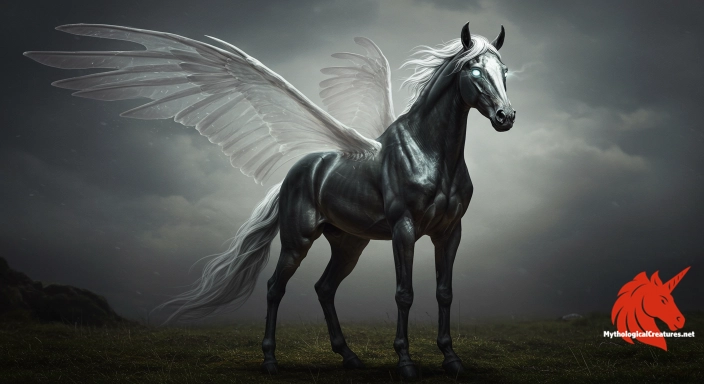
Ceffyl Dŵr: Ceffyl Dŵr is a mythical water horse from Welsh folklore known for its deceptive allure and fatal nature.
Ceffyl Dŵr
Ceffyl Dŵr - Embodies the dangerous allure of natural water bodies and serves as a cautionary symbol in Welsh myth.
the legend in five swipes.
the legend in five swipes.
Ceffyl Dŵr: Origins and First Sightings
The ceffyl Dŵr is a legendary water horse rooted deeply in Welsh folklore, celebrated for its mystique and perilous charm. Born from the mists of the rugged Welsh landscape, it has captivated generations with tales of beauty woven into a deadly fate. Emerging from ancient oral traditions and medieval manuscripts, this spectral steed was often depicted as both a magnificent and treacherous presence. Its earliest attestations reflect a culture steeped in the belief that the boundary between nature and the supernatural was unusually thin. The creature embodies the fascination with natural phenomena that are as beguiling as they are dangerous. Over time, it has come to symbolise the unpredictable forces of water and the wild landscapes of Wales. Its dual nature of alluring elegance and hidden menace has made it a perennial subject in local storytelling. In the tales passed down through the centuries, the ceffyl Dŵr serves as a reminder that beauty in the wild often conceals hazard and sorrow. Its legacy continues to be a touchstone of Welsh myth, echoing through the valleys and waterfalls of a land steeped in ancient magic.
How did the story of the Ceffyl Dŵr change over time?
Historical manuscripts, folk songs, and oral narratives provide a rich tapestry of accounts detailing the ceffyl Dŵr. A number of medieval texts mention mysterious water horses, all hinting at a spirit that took on an equine form to tempt the unwary. Variations of the story have evolved over time, each adding unique detail to the creature’s supernatural abilities. While early sources often described it in austere and grim terms, later accounts imbued the legend with elements of the faerie or otherworldly realm. The recorded encounters span diverse settings, from the seclusion of mountain pools to the roaring cascades of hidden waterfalls. In some recensions, the creature is portrayed as a cursed spirit condemned to roam the liminal spaces between land and water. These varied narratives underline the complexity of the myth and the adaptability of its themes across centuries. Despite the discrepancies between sources, the common thread remains a warning against the seductive power of nature. The ceffyl Dŵr is thus painted by folklore as both a cautionary tale and a piece of living cultural heritage.
How would you recognise the Ceffyl Dŵr?
Descriptions of the ceffyl Dŵr tend to evoke an image of both beauty and peril, blending the elegance of a noble steed with features that betray its supernatural origins. The creature is frequently portrayed with a coat of dark, somber shades—most commonly grey or black—and is accentuated by a striking white mane that seems to glisten like moonlight on a still lake. Some accounts attribute to it a ghostly glow, a quality that renders its presence unmistakable even in the dim light of dawn or dusk. Its form is not confined to the ordinary; at times, detailed narratives include hints of ethereal wings or a subtle, mist-like aura that shrouds its body in mystery. The ceffyl Dŵr is said to possess eyes that burn with an inner light, conveying both wisdom and a dire warning. Muscular and swift, the creature embodies the kinetic energy of the wild, with every aspect of its physique seemingly designed for sudden, lethal speed. Observers have noted that its appearance can variably shift depending on its environment, suggesting that the creature is as much a part of the water and air as it is of the earth. The amalgamation of strength, spectral beauty, and an almost palpable air of menace makes it an unforgettable figure in the pantheon of mythological creatures. Such detailed physical portrayals add layers to its character, enticing the imagination while warning of the dangers hidden beneath its stunning guise.
What regional forms of the Ceffyl Dŵr exist?
The ceffyl Dŵr enjoys a particularly prominent place in Welsh tradition, yet its legend has also been coloured by regional nuances and adaptations. In the more remote parts of north Wales, for example, it is often depicted as a merciless temptress, luring solitary travellers away from familiar paths. In central regions, however, some local legends introduce a tragic dimension to its character, suggesting that the beast is haunted by an ancient curse or unfulfilled longing. Localised stories sometimes grant the creature an almost regal presence, complete with embellishments that raise its status to a quasi-noble spirit of the waters. Border regions, where influences from neighbouring Celtic traditions intermingle, illustrate how the ceffyl Dŵr shares traits with a host of water-associated sprites and spectres. Tales recounted by villagers frequently mention unique geographical markers such as ancient bridges, secret waterfalls, or mist-shrouded mountain pools where the beast is known to appear. This blending of local lore has led to a variety of depictions, each adjusting the creature’s temperament to reflect the character of the region. These regional perspectives enrich the overarching myth, providing a multiplicity of angles from which the ceffyl Dŵr is understood. Such diversity not only underscores the fluidity of folklore over time but also highlights the deep connections between the creature, the land, and the local spirit of the people.
Which myths echo the story of the Ceffyl Dŵr?
A comparative exploration of water horse legends reveals that the ceffyl Dŵr shares striking similarities with tales from other Celtic regions. Its narrative is reminiscent of the Scottish kelpie, an equally beguiling yet dangerous water spirit known to lure unsuspecting riders to a swift demise. There are also resemblances to the Irish púca and the each uisge from both Ireland and Scotland, where each embodiment of the water horse myth carries the dual motifs of irresistible allure and hidden threat. These parallel creatures, despite arising from distinct cultural contexts, converge on the idea of nature’s inherent ambivalence—a blend of beauty and fatality that warns humans against the seductive pull of the wild. In the traditions of the Manx, the glaistyn mirrors many of the ceffyl Dŵr’s characteristics, hinting at deep-seated mythological archetypes that stretch across the Celtic landscape. The similarities in their attributes—from the choice of dark, haunting colours to the miraculous, supernatural abilities—suggest a common motif that has been adapted to different local environments. While each creature is unique in its regional lore, the recurring themes of enchanting appearance and treacherous outcomes tie these legends together. Such comparative insights enrich our understanding of how cultural exchange and the shared human experience with nature foster parallel mythmaking. The ceffyl Dŵr thereby stands as one manifestation of a broader, pan-Celtic tradition of water spirits, each echoing a universal cautionary tale.
The Lasting Influence of the Ceffyl Dŵr
Over the centuries, the ceffyl Dŵr has evolved from a fearsome spectral terror into a multifaceted symbol steeped in both historical and modern interpretations. Early depictions emphasised its role as an omen of disaster and a caution against the seductions of untamed nature. During the Romantic period, it became a muse for poets and artists, who were captivated by the creature’s blend of beauty and darkness. Modern portrayals in literature, film, and visual arts have continued to reinvent the ceffyl Dŵr, sometimes presenting it as a misunderstood spirit caught between worlds. Contemporary narratives often explore its complex duality—an embodiment of both the wonder and the wrath of the natural environment. This evolution mirrors changing societal attitudes towards nature and the supernatural, shifting from pure terror towards a more nuanced, sometimes even sympathetic view. In various cultural festivals and local re-enactments, the ceffyl Dŵr is celebrated as an emblem of Welsh heritage and the enduring power of myth. Its enduring presence in modern media and popular culture reaffirms its status as a vital link between ancient lore and the persistent human fascination with the mysterious forces that shape our world. As new generations reinterpret its legend, the ceffyl Dŵr remains a timeless symbol, continually regenerating its mythic presence in the narrative tapestry of a nation.
Interesting Fact
An intriguing facet of the Ceffyl Dŵr myth is that, even when captured and temporarily subdued, the creature invariably escapes, underscoring the idea that nature—represented by this spectral steed—cannot be tamed or controlled.
Mythological Treasures
Egyptian Legends: A field guide to the gods and monsters of ancient Egypt
Guardians of the living and devourers of the dead, with the role each played in judgement.
Chinese Beasts: A field guide to the dragons and demon kings of Chinese myth
From river dragons to demon kings, with the legends that shaped five thousand years of storytelling.
Japanese Yokai: A field guide to the spirits and demons of Japanese folklore
Fifteen spirits, with the signs to watch for and what the old tales say to do if you meet one.
the legend in five swipes.
Advertising opportunity
Showcase your mythology project
We offer limited sponsor placements for books, courses, games, and creators aligned with our audience.
View partnership optionsQuick Creature Info
Features:
Associations:
Our Mythic Legendary Rating:

Also Sometimes Known As:
Habitat:
Supernatural Powers:
Physical Attributes:
Abilities:
Behavior:
Weaknesses:
Lore:
Related Creatures, Tales or Lore
- KKelpie
- PPúca
- EEach Uisge
- GGlaistyn
References
Discover Another Mythical Legend You May Not Have Heard Of?
Uncover the mysteries of ancient folklore and expand your knowledge of legendary beings from cultures around the world.
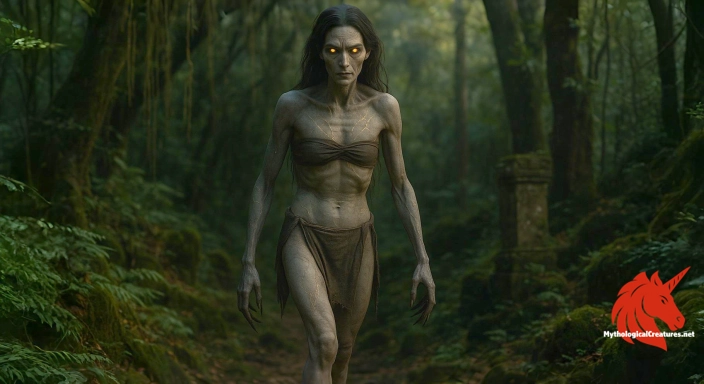
Dare to Meet the Tlahuelpuchi....
The Mythological Creatures Book Series
Yokai, Greek, Norse, Egyptian & Chinese. Five illustrated field guides to the creatures the old stories either warned or told you about.
Curated by the Mythological Creatures Team
Series editor: Mythological Creatures Directory
Primary desk: Northern & European Folklore Desk
(rev. November 2025)